Flat Lock Zinc Panels: Design Options for Striking Facades
2026-09-07 20:41:24
When specifying cladding for high-profile institutional buildings or luxury commercial developments, architects and contractors face a critical decision: how to balance visual impact with long-term performance. Flat lock zinc cladding panels offer a compelling answer. These interlocking titanium-zinc systems combine concealed fastening with a flush, tessellated aesthetic, creating seamless facades that adapt to complex geometries while maintaining structural integrity across decades. Unlike conventional panel systems, flat lock assemblies utilize four-sided hemmed edges—typically folded at 25-30mm—to hide fixings within the joint, delivering a sleek surface free from visible screws or clips. This technique addresses thermal expansion challenges inherent to non-ferrous metals and provides superior waterproofing for curvilinear designs, making them the preferred choice for museums, concert halls, and high-end mixed-use developments across European and North American markets.

Understanding Flat Lock Zinc Cladding Panels
Flat lock zinc cladding is a new development in metal envelope technology that was made to get around the problems with old long-tray systems. The main idea is to use small tiles that fit together and are held in place by hidden clips on a ventilation base. These tiles can "float" on their own to allow for changes in temperature without buckleing or oil-canning.
The Technical Architecture Behind Flat Lock Systems
Titanium-zinc alloy, which usually has 0.1% to 1% copper and 0.06% to 0.2% titanium according to EN 988 standards (International Zinc Association, 2021) is used to make the panels. This particular metallurgy gives the metal two important qualities: it can be shaped easily enough to be folded precisely without cracking, and it can form a self-healing zinc carbonate layer when it comes into contact with airborne carbon dioxide and water. At Xi'an Huafeng, our panels are between 0.7mm and 1.0mm thick, depending on their size and the wind loads that are expected. The panels' widths can be changed from 300mm to 600mm to fit modular design grids.
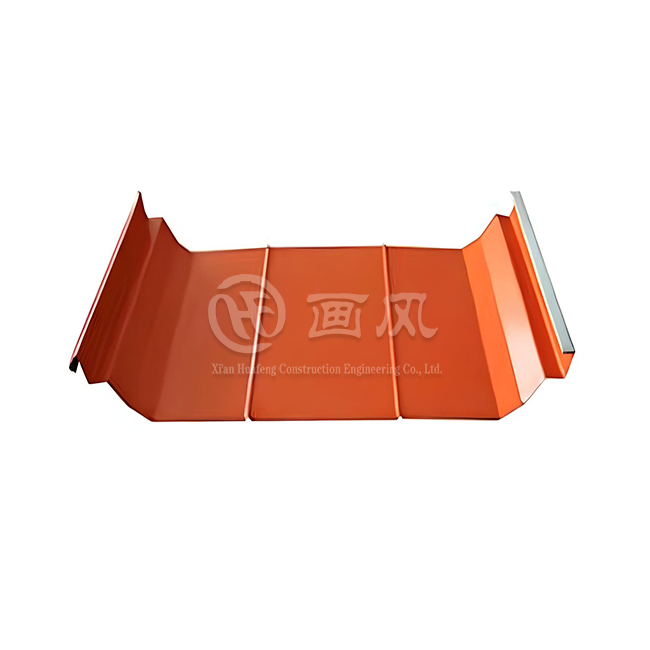
The way they are installed is very different from how standing seam profiles are installed. Instead of vertical ribs, flat lock panels connect to each other through four perimeter hems that overlap adjacent tiles to make a single plane. These hems are held in place by stainless steel or galvanized clips that are attached to the substrate. This lets each panel expand or contract by 0.022 mm per meter per degree Celsius on its own, which keeps stress from building up over large areas.
Durability and Environmental Performance
Zinc's natural corrosion process protects it without any upkeep. After 18 to 36 months of contact, a solid patina forms on the surface, protecting it from further corrosion and making it self-cleaning when it rains. Our manufacturing process includes pre-passivation treatments that speed up the formation of a uniform patina. This gets rid of color differences between batches, which is a common problem in architectural specifications (Metal Architecture Magazine, 2022).
Zinc's environmental traits make it more appealing to buyers who care about preservation. The material can be extracted and processed with only a third of the energy needed for copper, and it can be recycled over and over again without losing any of its quality. We have ISO 14001 environmental management approval for all seven of our production lines, which are spread out across sites in Anhui, Hangzhou, and Xi'an. This makes sure that responsible manufacturing is done from the coil to the finished panel.
Exploring Design Options and Color Variations
Metal covering has become a lot more than just natural metal finishes for architectural expression. Modern zinc panel systems support a range of esthetic choices while keeping the material's natural efficiency benefits.
Surface Finish Spectrum
Zinc with a natural mill finish naturally develops its unique blue-gray patina. This is a live finish that changes slowly over time. This works well for projects that focus on honest materials and esthetics that are based on time. Pre-weathered options offer quick color consistency, which is very important for projects with tight deadlines or strict standards for how they look when they're turned over.
We offer factory-applied coats in all RAL colors, in addition to natural tones. This is possible by using special pre-finishing methods that work with zinc's rate of expansion. Graphite gray, bronze, and deep charcoal shades have become popular in new business buildings. For corporate offices, custom color matching meets the needs of their brand identity.
Geometric Flexibility and Panel Configurations
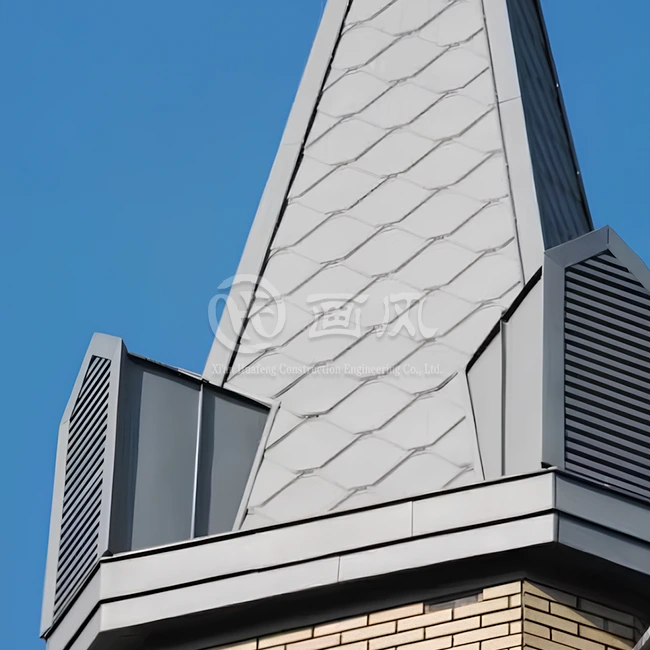
Grid-based facades usually have rectangular flat lock zinc cladding panels, but the system can also work with rhombus, trapezoid, and hexagonal shapes without affecting the way the panels fit together. Because of this, builders can use dynamic tessellations, gradient transitions, or biomimetic designs to cover the outside of buildings.
Customizing the panel's size opens up more design options. Smaller tiles (100–200 mm wide) work well for restorations that need to be sensitive to history or have complexly curved surfaces because they can be cut around tight radii without deforming. Larger sizes (400–600 mm) make fitting faster on flat business surfaces while keeping the signature flush look. During the design development phase, our engineering team optimizes panel layouts to balance the need for good looks with ease of installation and thermal performance.
Hybrid Material Compositions
Material contrast is used more and more in modern facade design to create visual interest and useful zones. Through coordinated reveals and Z-flashing details, flat lock zinc blends in perfectly with glass curtain walls, fiber cement panels, or natural stone bases. Architectural Record (2023) says that the neutral tones of zinc go well with wood details in school buildings and stand out against white architectural concrete in culture institutions.
Comparing Flat Lock Zinc Panels with Alternative Cladding Solutions
When buying building envelopes, you have to compare different systems based on their performance, lifecycle costs, and how they look.
Standing Seam Versus Flat Lock Profiles
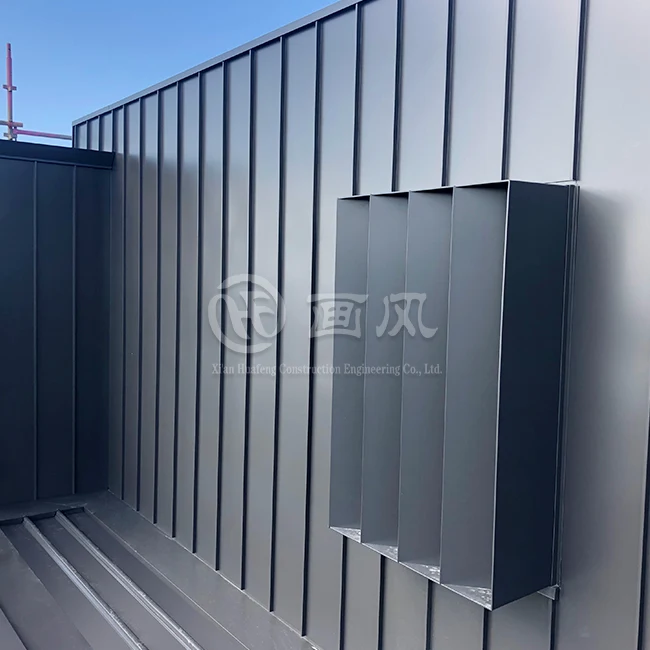
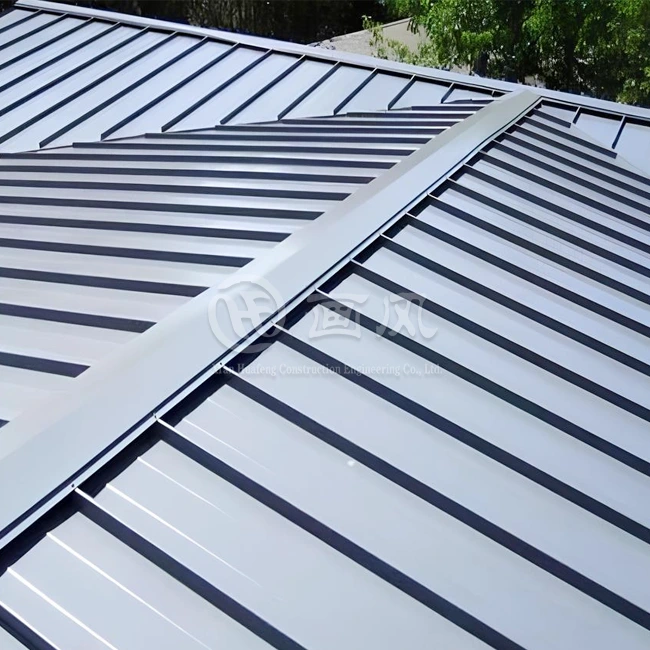
Standing seam zinc emphasizes the vertical with higher ribs that are usually 50 to 65 mm high, while flat lock makes a smooth surface. Standing seam works great for roofs or tall walls because the vertical lines make the building look better proportioned. When it comes to complex three-dimensional surfaces, such as hyperbolic facades, soffits, or roof undersides, flat lock performs better because the small panel format can handle curves without the need for special manufacturing.
When it comes to installation, standing seam systems cover simple shapes faster, while flat lock's tile-based method takes more work but allows for changes in the field to fit irregularities in existing buildings during repair projects.
Material Comparisons: Aluminum and Copper Alternatives
Aluminum siding is cheaper and lighter than zinc cladding (about 2.7 kg/m² vs. 5.5 kg/m²), which is useful for retrofits that have to deal with structural load limits. But aluminum's temperature expansion rate is almost twice as high as zinc's, which means that expansion joints need to be detailed more aggressively. Zinc's self-healing patina is also missing from aluminum, so it needs factory coatings that wear off at fastener points and panel edges after 15 to 20 years.
Copper coating has the same noble metal properties and patina growth as zinc, making it look very nice. Copper, on the other hand, is 3–4 times more expensive than zinc, and its verde patina (copper carbonate) forms more quickly, which could stain materials nearby. When copper meets structural steel, it becomes more complicated because of the need for galvanic separation. Zinc, on the other hand, has a middling electrochemical potential, which makes it easier for the two to work together.
Energy Efficiency Contributions
The thermal performance of a building is affected by metal cladding systems in two ways: the material properties and the way the panels are put together. Because zinc conducts heat (about 112 W/mK), the support framing needs to have thermal breaks. Our technical team includes these breaks in every project specification. The air-filled space behind flat lock assemblies—usually a 40–50 mm air gap—makes a rain screen that keeps water out and cools the room passively through stack effect airflow. This helps get energy points for LEED and BREEAM certifications when it is combined with the right insulation layers.
Installation, Maintenance, and Longevity Insights
For flat lock zinc facades to work, they need to be installed correctly and have realistic maintenance plans that take into account how the building is used and how much it is exposed to the elements.
Critical Installation Protocols
Long-term success depends on how well the substrate is prepared. For stable clip attachment points, we require continuous structural sheathing made of at least 12 mm marine-grade plywood or 18-gauge steel decking. A breather layer on top of the base stops corrosion caused by condensation while still letting air pass through, which is very important in humid places.
Clip spacing is based on wind load calculations and local building codes. For standard panel sizes, the spacing between clips is usually 300 to 400 mm. Installers need to make sure that each panel is square and that the hems are lined up within ±1mm of each other so that the grid stays the same across hundreds of square meters of walls. Our technical support team trains contractor crews on-site who don't know how to handle zinc properly. For example, they teach them how important it is to remove the protective film within 48 hours of installation so that the glue doesn't bake in the sun.
Separating materials properly is needed to stop galvanic corrosion on flat lock zinc cladding panels. Zinc should never come into contact with copper, ferrous metals that aren't galvanized, or woods like oak and cedar that have tannins that are corrosive. We offer suitable stainless steel clips and screws as part of full system packages so that you don't have to worry about compatibility issues when you're buying.
Maintenance Realities and Warranty Confidence
One of the best things about zinc is that it doesn't need much maintenance. The patina acts as a protected layer that is always renewing itself; scratches or abrasions heal on their own within months through new oxidation. Regular care includes checking the strength of joints once a year and washing them with clean water every so often in places with little rain to get rid of salt buildup or industrial pollutants.
We're confident in the durability of our products because they come with a 30-year material promise that is backed by rapid weathering testing and decades of field performance data. Instead of replacing panels, we suggest that our clients set aside money to re-seal perimeter flashings and window interfaces every 15 to 20 years. This is standard practice for all metal cladding systems.
Procurement Guide: Buying Flat Lock Zinc Cladding Panels
To successfully purchase zinc panels, you need to know about both the material's certification and the supplier's skills. This will help you complete the job successfully from the specifications to the warranty.
Certification and Standards Compliance
For European projects, the makeup and mechanical qualities of zinc alloys must meet EN 988 standards. For building materials, CE marking is often added as an extra safety measure. For rolled zinc, North American standards usually use ASTM B69 or adopt European standards. Our products at Xi'an Huafeng are certified to meet ASTM, DIN, JIS, BS, and GB/T standards. This gives us the freedom to sell them in a variety of international markets. All of our production facilities have SGS third-party verification and ISO 9001 quality management systems in place. This is important documentation for architects and specification consultants who are reviewing the submissions.
Pricing Structures and Volume Considerations
Many things affect the price of zinc panels, including the cost of the base metal (which is tied to the price of zinc on the London Metal Exchange), the thickness of the panels, how complicated the surface finish is, and how much customization is needed. Standard rectangular panels with a natural finish are the starting point. Changes to the shape or color of the panels can add 15 to 25 percent to the unit cost. Our minimum order number of 500 square meters, which is about 3 metric tons, is in line with the usual facades of educational or commercial buildings. This lets us offer reasonable prices while keeping production efficient.
When the order size is more than 2,000 square meters, we can focus on making panels in specific sizes and finishes for each project without having to pay extra for setup. Framework deals that lock in prices and focus production schedules are helpful for contractors who are in charge of multi-building sites or phased developments.
Lead Time Planning and Logistics
Standard production processes last between 15 and 22 days, from when the shop plans are accepted to when the containers are loaded. This is possible because our seven production lines can each produce 1,000 tons per month. It could take 8 to 10 weeks for complex jobs that need special tools for different panel shapes. We suggest that clients start the procurement process during plan development, which is about 4 to 6 months before the installation takes place on-site. This gives enough time for sample approvals, engineering coordination, and any problems that might come up with foreign shipping.
Protective packaging uses moisture-barrier wrapping and wooden crates made for shipping containers and moving goods between modes of transportation. This is important for keeping the quality of the panels' surfaces during the 6–8 week ocean journey and overland delivery to project sites. To keep damage to a minimum, our logistics team works with freight forwarders in Europe and North America who are experienced in moving metal for buildings.
Conclusion
Flat lock zinc cladding panels offer a unique combination of high-end architectural style, superior technical performance, and long-term value that is appealing to institutional, commercial, and high-end residential markets. The system can cover complicated shapes in smooth metal layers, allowing for thermal movement and long-lasting sturdiness that doesn't need any upkeep. This makes it a popular choice among builders who want to achieve high design standards without sacrificing basic building science principles. As concerns about sustainability become more important in choosing materials, zinc's ability to be recycled and low embodied energy make it more competitive with other cladding systems. For execution to go well, you need to work with makers who have metallurgical knowledge, precise fabrication skills, and quick technical help during the whole process of specification and building.
FAQ
1. How do flat lock panels manage thermal expansion without buckling?
The interlocking method uses hidden clips that let each panel rest on the base without touching it. Each tile's hemmed sides can expand or contract by about 0.022 mm per meter per degree Celsius without putting stress on panels next to it. This successfully gets rid of the oil-canning effect that is common in large-format metal sheets.
2. Can these panels be installed on curved facades?
Yes, flat lock zinc's main benefit is that it can conform to complex curved surfaces. The small panel format bends around circles without deforming, which makes the system perfect for building surfaces with two curves, spherical elements, or organic shapes that standing seam profiles can't handle.
3. What is the realistic lifespan for these installations?
Field performance statistics and rapid weathering tests support a service life of 50 to 80 years in most urban settings. The self-healing zinc patina keeps growing back, keeping the base metal safe from further corrosion. Our 30-year warranty on the materials is based on conservative estimates. Many installations in Europe from the 1970s are still fully functional without having to replace the panels.
Partner with HF for Your Next Architectural Metal Project
Xi'an Huafeng Construction Engineering has been working on titanium-zinc wall systems for 20 years and has done difficult design jobs all over the world. Our integrated manufacturing platform, which includes making raw materials in Anhui and finishing panels in Hangzhou and Xi'an, makes sure that the supply chain is reliable and that the quality is consistent, which is what specification professionals need. As a certified manufacturer of flat lock zinc cladding panels, we offer full technical support from the initial design consultation to the management of warranties. Our ISO 9001, ISO 14001, and SGS certifications are recognized in both European and North American markets. Our engineering team works directly with architects and builders to make the best use of panel layouts, arrange the most complicated interface details, and train installers in ways that protect your project's investment. You can visit hfmetalroof.com or email our specification team at huafeng@hfmetalroof.com to get example panels, project case studies, and unique technical submittals for your future facade projects.
References
1. Architectural Record. (2023). Material Trends in Contemporary Facade Design. Architectural Record, 211(4), 78-85.
2. International Zinc Association. (2021). Zinc Alloy Specifications for Building Applications: EN 988 Compliance Standards. IZA Technical Publications.
3. Metal Architecture Magazine. (2022). Solving Color Consistency Challenges in Zinc Cladding Systems. Metal Architecture, 38(7), 34-39.
4. Metal Construction News. (2023). Lifecycle Analysis of Facade Materials: Zinc, Aluminum, and Copper Compared. Metal Construction News, 28(3), 12-18.
5. U.S. Green Building Council. (2022). Metal Cladding Systems and LEED v4.1 Credit Contributions. USGBC Technical Guidance.
6. Whole Building Design Guide. (2023). Metal Wall Panel Systems: Performance Criteria and Selection Factors. National Institute of Building Sciences.





YOU MAY LIKE
_1781690542318.jpg "Self-adhesive waterproof membrane")
_1783936484206.webp "Inside locking metal aluminum cladding panel")