Vertical Standing Seam Metal Cladding for Industrial Design
2026-11-17 20:02:56
Vertical standing seam metal cladding suits industrial design because it gives large walls a clean, continuous look and hides the fasteners behind raised, interlocking seams. Vertical panels shed water quickly, move with temperature changes on sliding clips, and replace wood or stone with a finish that needs little upkeep. At HF, we make standing seam wall panels in aluminum and aluminum-zinc-coated steel, with PE, HDP, and PVDF coatings, a 30-year warranty, and a 500 m² minimum order. This guide shows contractors and buyers how the system works, what to specify, and what to check before ordering.

What Is a Vertical Standing Seam Metal Cladding System?
The Parts That Make Up the System
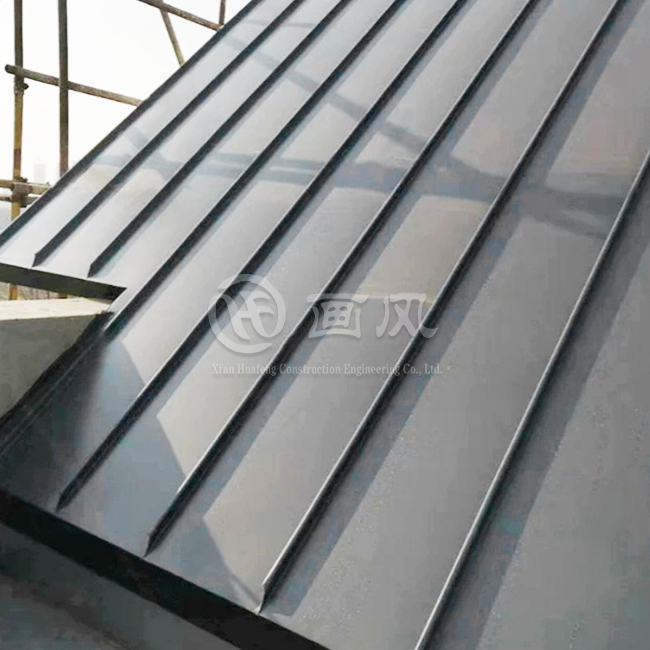
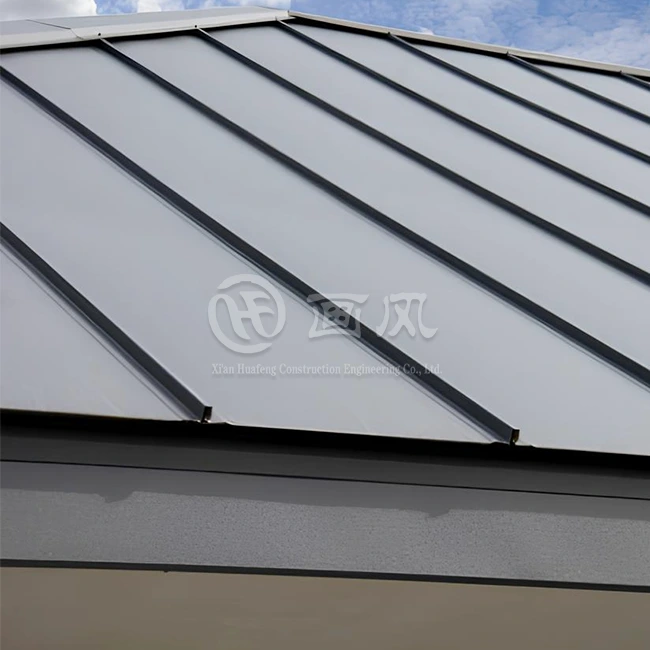
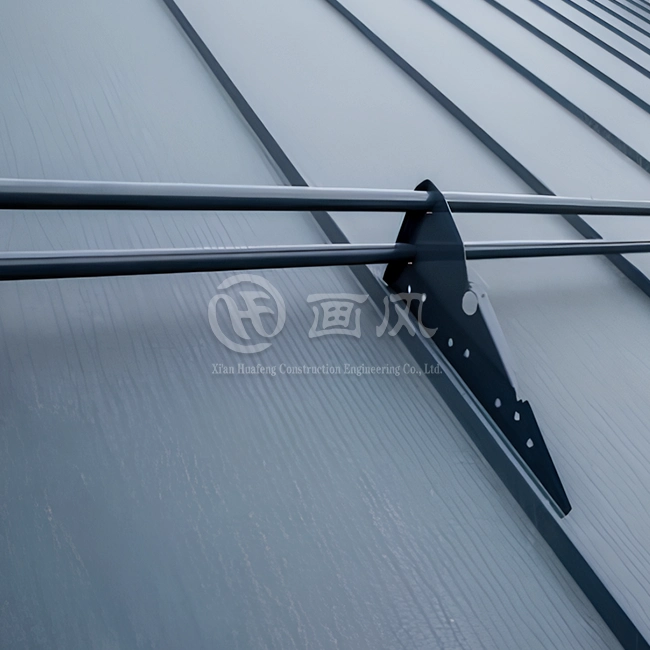
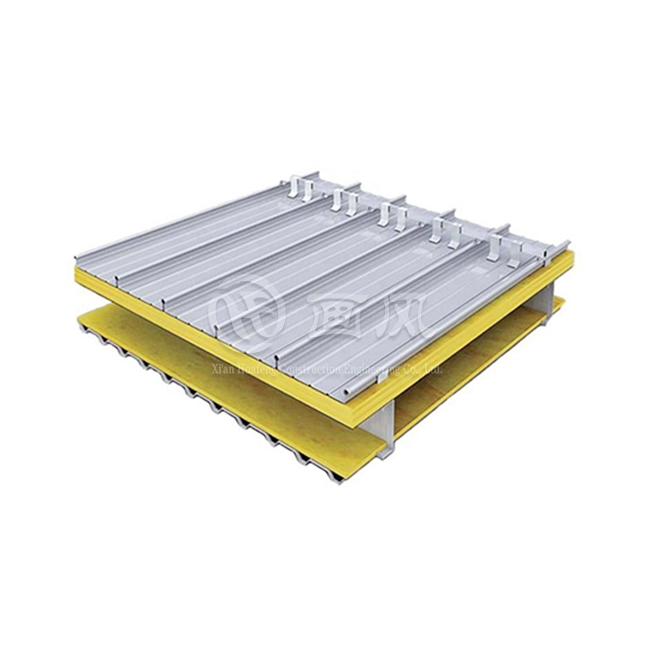
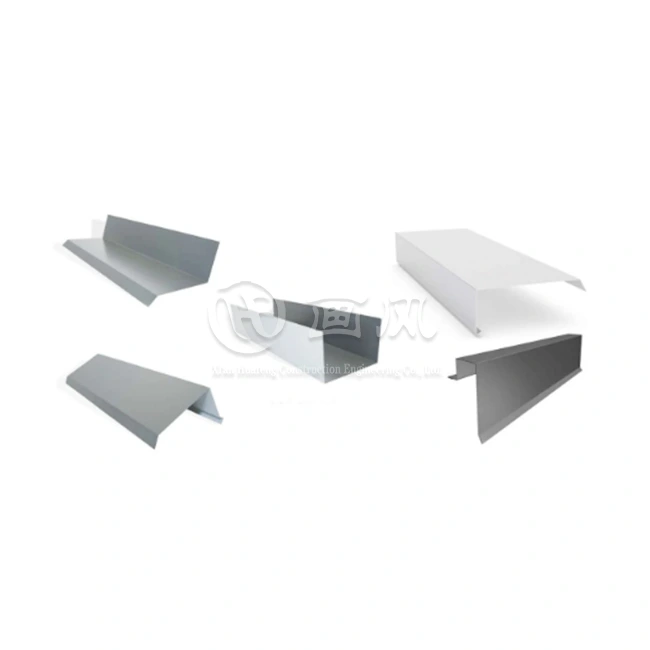
A vertical standing seam metal cladding system is more than just a panel. It has raised seams, hidden clips, support rails or sub-framing, insulation, layers that keep air and water out, flashings, closures, and trims around the edges. It is made of metal. Instead of screws that go through the face, clips hold each panel to the structure. These clips and tracks connect the panel to the building frame. They let wind and service loads move between the two. The seams let water flow down the wall and hold it together. Price and check out the whole system, not just the screen, if someone wants to buy it. Each part affects the whole.
Snap-Lock Versus Mechanically Seamed Profiles
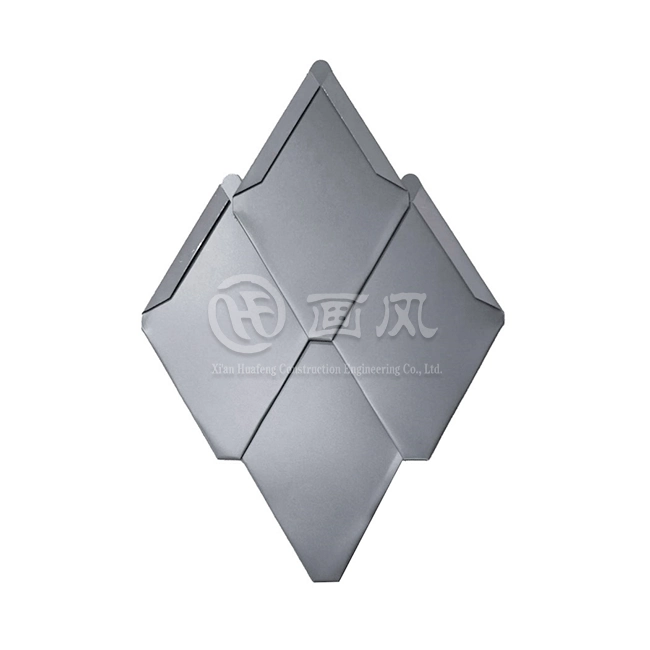
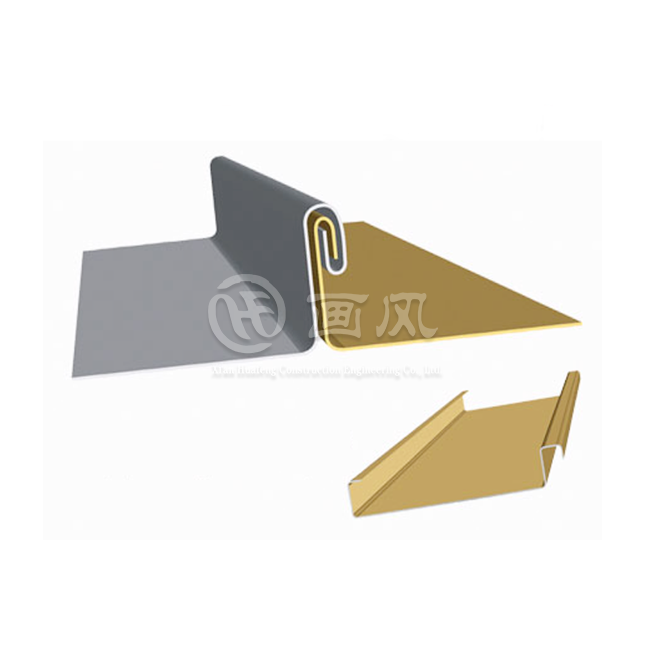
There are two main ways to lock something. Snap-lock panels are easier to work on because you can press them together by hand. Mechanically seamed panels are crimped with a seaming tool. This makes a tighter fold for places where there is a lot of wind or where the roof meets the wall. Our profile has a double-bite lock that can be set with a mechanical lock seam or a 360° lock edge. It also has drainage that is covered so that water can't move through the vessels. The design has to think about drains, openings, corners, parapets, and how the materials fit together since wall cladding is not the same as roofs. By default, you shouldn't move a roof shape to a wall. First, find out what the building code, wind load, fire standards, and foundation are in your area.
Why Industrial Buildings Suit This Look
Lines that go up and down make a factory or warehouse look taller and outline long walls in a steady way. They also help water drain quickly, which is important in warehouses and workshops. Building owners don't have to do as much maintenance on covered metal skins because they don't need to be treated and painted like wood does. The whole assembly, such as the coating, seams, fasteners, drainage, air flow, insulation, and the use of metals that fit together well, still determines how long something will last. The wall has to meet fire codes in the area, even though metal panels don't catch fire. In the US, find out if NFPA 285 testing is needed if the wall has foam insulation or other materials that can catch fire.
HF Standing Seam Cladding Specifications and Test Data
Materials and Coatings
Our vertical standing seam metal cladding is created from copper, stainless steel, aluminum alloy (AA3003, AA3004, AA5052), or aluminum-zinc-coated steel sheet (AZ150). HDP stands for "high weather-resistant polyester." PE stands for "polyester," and PVDF stands for "polyvinylidene fluoride." PVDF works well for projects that will get a lot of UV light, while PE and HDP work better for projects that will be cooler or have less money. Also, the color, pattern, and design can be changed. This way, artists can ask to see a sample of a certain color or grain style before we make a lot of them. That way, you can be sure that the colors match on long elevations. Order all the panels for one elevation at the same time.
Profile Sizes and Structural Data
We provide profile codes 25-330, 25-400, 25-430, 65-300, 65-400, 65-430, and 65-500. Any width between 300 and 800 mm can be used instead of the usual 400–600 mm wide. Aluminum is 0.7 mm thick and steel is 1.2 mm thick. The rib height is between 25 and 65 mm, or 1 to 2.6 inches, and changes with the wind speed. Single panels can be longer than 12 m (39 ft), and machine forming cuts down on the number of field joins that need to be made. Pressure from the wind can go up to 3.0 kPa or more, which is about 63 psf, depending on the profile and support design. Your engineer should check the loads for every project.
Third-Party Test Reports
SGS gave us test results for the parts we made out of aluminum alloy. According to AS/NZS 1530.3, a 3003H24 sheet that was 1.3 mm thick and had a PVDF finish did not ignite, spread flames, or release heat. Also, not a single one of the six samples caught fire. Some 3003H24 PVDF passed all 13 of the AAMA 2605-22 coating tests. Color uniformity at ΔEH 0.3, 5B adhesion, and 0T flexibility without cracking were some of these. It was safe to find all ten of the substances on the EU RoHS list in a 5052H26 polyester sheet sample. We follow ISO 9001, ISO 14001, and SGS rules when we make things. Get the whole report before making a choice.
Installing Vertical Standing Seam Metal Cladding Without Rework
Site Checks and Shop Drawings
It's usually worked on before the first vertical standing seam metal cladding panel shows up. In person, check the substrate to make sure it is level, flat, structurally sound, and spaced out correctly for the ordered clips or rails. Flatness also has an effect on oil canning, which is the swaying that you can see in flat screen areas. There is no problem with the structure; this is just a flaw in the way it looks. But stronger gages, smaller panels, and ribs that make the structure stiffer hide it. Shop drawings that have been approved should show how the panels, corners, openings, parapets, and base details are laid out. Before sending, the plans are looked over to make sure that the trim lengths are correct and that no accessories are missing. Crews won't have to wait for parts this way.
Installation Sequence and Corner Details
Most of the time, the envelope and frame layers go in first, then flashings, a carefully aligned first panel, secret clips, panels next to each other, and seams. The next parts are the base, sides, windows, and parapets. To check the first panel, use a level or laser. This panel sets the line for the rest of the panels. There are no through-fasteners on the face of concealed clips, so water can't get in. Each panel can also move when it gets hot or cold thanks to sliding clips. Around windows, doors, penetrations, and moving joints, you need to put up certain flashing. Teams can't work if they don't have the right corner and trim pieces.
Quality Control and Maintenance
Keeping good records keeps everyone safe at work. It is important to look over the material certificates, panel sizes, coating thickness, seam engagement, and lighting before you sign off. Make sure to look over the packaging when it gets there and keep it away from water, which can damage the coats. Watch out for fasteners that are too tight, finishes that are scratched, drains that are clogged, and metals that will not work together. Keep the batch numbers in mind and make sure you have extra trims and panels on hand. It's easy to fix things in the future when you have extra panels on hand. This is because a broken panel can be taken out and put back in without affecting the rest of the wall.
Comparing Systems and Matching Applications
Standing Seam Versus Horizontal, Corrugated, and Insulated Panels
Horizontal roofing looks good on wide, low-rise shapes, while vertical panels make buildings look bigger and help water drain better. For less money, corrugated siding can be used on utility or farm buildings. However, the screws are often visible and the details are not as well done. For facades, insulated metal panels can't be used in all shapes and sizes. They do, however, make building faster and warmer. This choice is in the middle, with vertical standing seam metal cladding. It has sharp shadow lines, parts that are hidden, and room for curved shapes. Before making a choice, think about how much it costs, how it can be shaped, how likely it is to rust, the finishing choices, and where you can get it.
Metal Cladding Versus Wood and Stone
Builders pick metal over stone and wood when they want to save time and money. A lot of work needs to be done to paint or protect wood, and natural stone makes the building heavier. It was 3.2 kg/m² on the top of the 1.3 mm SGS test sample, which means the aluminum panel kept its light weight. As we already said, PVDF finishes passed the AAMA 2605-22 chemical, binding, and bending tests. This means that the colors will last a long time. Get a piece of the pattern and put it out in the sun if you want it to look like wood. Before making a lot of them, get both the client and the builder to sign off on the model.
Where the System Fits
Vertical standing seam siding is used to make walls that drain quickly in factories and shops that store goods. It is cut at the plant, so there are fewer field joints. In office buildings, subway stops, and business centers, it is used as a curtain wall finish where other systems, like glazing and masonry, meet. People use it in their homes because it looks good and doesn't need much maintenance. Tell people early on what the weather will be. Places that are cold and near the coast need special protection or anti-corrosion products. Panels can also bend, but they have to be able to bend at least 15 m. In a lot of projects, different parts of the building are made of a mix of metal panels, corrugated siding, concrete, masonry, etc.
Specifying, Pricing, and Choosing a Supplier
What a Complete Specification Includes
A full specification for vertical standing seam metal cladding lists the base metal and alloy, the thickness, the width and length of the panel, the height of the ribs, the locking mechanism, the color, the coating, the clips, the fasteners, the support spacing, the flashings, the trims, the closes, and the tests that need to be done. Ask the seller for product information sheets, installation guides, CAD files, sample panels, color chips, certificates, and the terms of the warranty. You should think about UV light, sun heat gain, the weather, the things that will be around the color, and how easy it is to clean. Having clear documents keeps the architect's ideas alive and reduces the number of mistakes that happen during construction. As soon as you tell us how much wind and fire you need, we can match a profile code to the wall, such as 25-400 or 65-430.
Cost and Procurement Planning
Setting up a cheap panel doesn't always mean it will cost the least. There are a lot of things that changed the last number, like trims, clips, freight, trash, redo, and technical support. The price can change based on the thickness, shape, coatings, amounts, sub-framing, insulation, labor, chores, and tests. Send sketches or outlines, the location of the project, the materials and colors you want, your performance needs, the end goal of the project, and your schedule to get a good price. To make it fair for you to compare prices, we split panels, accessories, packing, freight, and wait time into their own things. It takes 15–20 days and needs at least 500 m², which is about 5,380 sq ft. Ask for sample panels and color chips before you give the go-ahead for mass production.
Evaluating a Manufacturer
Check to see how much they can make, how they handle quality control and finishes, whether they can make things to order, how much experience they have shipping, and how they handle guarantees. HF was founded in 2018 in Shaanxi, China. They are experts in steel barriers, curtain walls, and metal roofs. Our 200,000-square-meter plant for raw materials is in Anhui. We also have seven color coating lines and processing plants in Hangzhou and Xi'an. It is possible to give them 1,000 tons every month. We have been known as a high-tech company in Shaanxi since 2020 and have more than 20 patents for roofing systems. We also know how to build curtain walls at the first level. You should buy from direct manufacturers for large orders and custom profiles. For stock items, you should buy from distributors. Before you place your order, make sure that it can handle shop drawings, batch uniformity, ship protection, and extra panels.
Conclusion
Vertical standing seam metal cladding is a wall system made up of panels, seams, insulation, flashings, and trims that are hidden by clips. People who want to buy should not only look at the price of the panels, but also at the price of the whole setup. It can be used in factories, stores, business buildings, and many home projects because it has straight lines, can quickly dry water, and can move heat on moving clips. It can be used instead of stone or wood and needs less upkeep. Finishes from HF come in PE, HDP, and PVDF, and they also come in aluminum and steel with a coating. Also, they have SGS data on how well they do in fire, sealing, and RoHS. You need clear specifications, substrates that have been checked, full trims, quality records, and a supplier that has been shown to be able to do what they say they can do. The steps below cut down on wait times, extra work, and color differences.
FAQ
1. What is oil canning, and is it a defect?
Wavy lines in the flat part of a panel can be caused by stress. This is called oil canning. The changes are only to the way things look. It goes down with wider panels, stronger gages, stiffening ribs, and a flat base.
2. How does the system handle thermal movement?
There are hidden clips that hold each panel in place. When the temperature changes, the clips can either stay in place or move around. Panels don't sag and bolts don't wear out because of this movement.
3. Can I use it as a rainscreen?
Yes. The air gap behind the panel and the vertical seams make a rainscreen assembly that spreads the pressure out over a drainage plane and continuous insulation.
4. Is snap-lock enough for walls?
Snap-lock works better and faster for most vertical walls. Mechanical double-lock seaming works well for heavy winds and roof-to-wall moves.
4. Can HF customize color and pattern?
Yes. We can alter the color, pattern, and style, and we recommend that you check out a sample first. For custom work, you need to share ideas early because of the time it takes to make the tools and the limits.
Request a Vertical Standing Seam Metal Cladding Quote From HF
Looking for a vertical standing seam metal cladding manufacturer for your next building's exterior? HF offers finishes in PE, HDP, and PVDF, as well as custom colors, a 30-year warranty, and a 500 m² minimum order with 15–20 day delivery. Email huafeng@hfmetalroof.com with plans, the size of the front, and where you want the roof to go. After that, our team will make a profile and list the prices for each item. Go to hfmetalroof.com to find out more.
References
1. AAMA 2605, Voluntary Specification, Performance Requirements and Test Procedures for Superior Performing Organic Coatings on Aluminum Extrusions and Panels, American Architectural Manufacturers Association, 2022
2. ASTM E1592, Standard Test Method for Structural Performance of Sheet Metal Roof and Siding Systems by Uniform Static Air Pressure Difference, ASTM International, 2017
3. NFPA 285, Standard Fire Test Method for Evaluation of Fire Propagation Characteristics of Exterior Non-Load-Bearing Wall Assemblies Containing Combustible Components, National Fire Protection Association, 2023
4. International Building Code, International Code Council, 2021
5. ASHRAE Standard 90.1, Energy Standard for Sites and Buildings Except Low-Rise Residential Buildings, ASHRAE, 2022
6. ISO 9001, Quality Management Systems — Requirements, International Organization for Standardization, 2015





YOU MAY LIKE
_1769761215912.webp "Ventilation noise reduction net")