Why Use Vertical Standing Seam Metal Cladding for Facades?
2026-11-17 20:02:58
Why use vertical standing seam metal cladding for facades? Because it gives a clean, continuous look while shedding water, absorbing thermal movement, and cutting upkeep compared with wood or stone. The panels lock together along vertical seams, and concealed clips hold them to the wall, so no fasteners show on the face. For U.S. contractors, that means fewer exposed leak points, a long warranty term, and a facade that stays consistent from the first panel to the last. In this guide, I explain how the system works, how it compares with other options, which specifications matter, and how to plan a quote.

What Is Vertical Standing Seam Metal Cladding, and Why Use It?
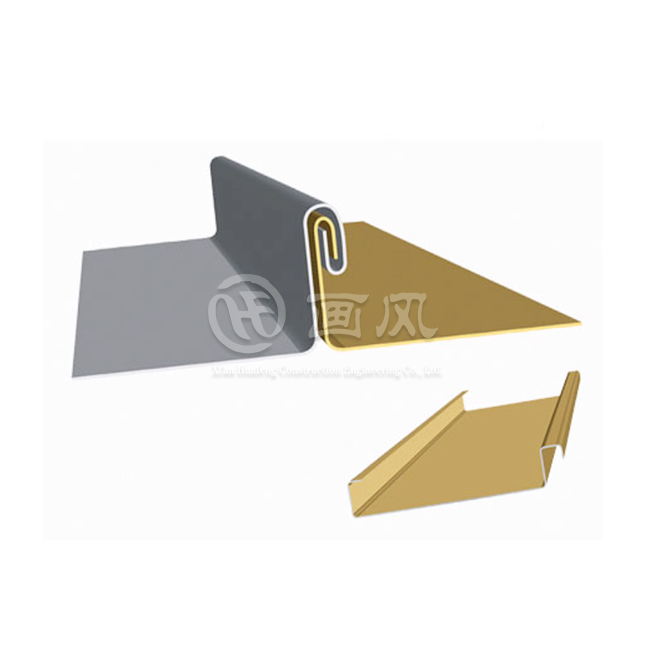
How the Panels Lock Together
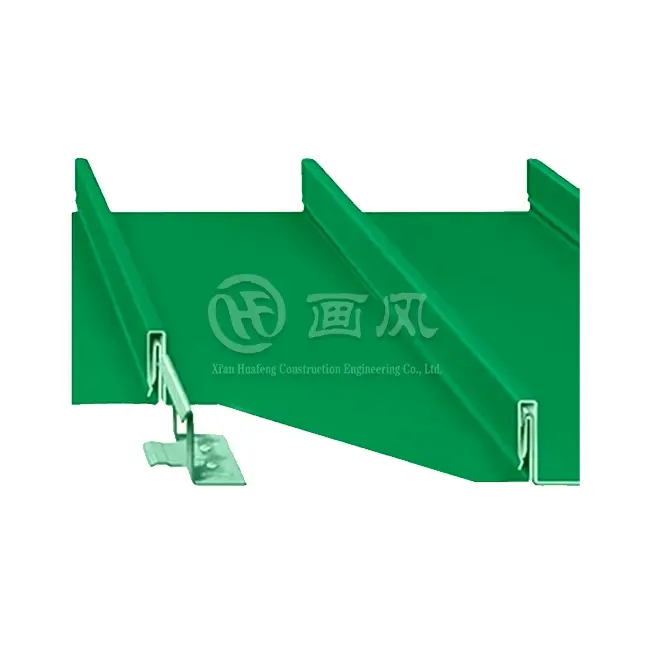
Vertical standing seam metal cladding uses long, sharp metal pieces to cover a wall. The panels are held to the wall with hidden clips, so you can't see the screws on the front of them. There is a lock on the sides of the panels that you can use. The metal can change shape as the temperature changes because the clips are moving. What you say is important because over 10 feet, aluminum grows about 0.15 inches when the temperature changes by 100°F. There are HF panels that are over 12 m (39 ft) long. The vertical beat stays the same while the horizontal joints are cut on-site.
Weather Protection and Drainage
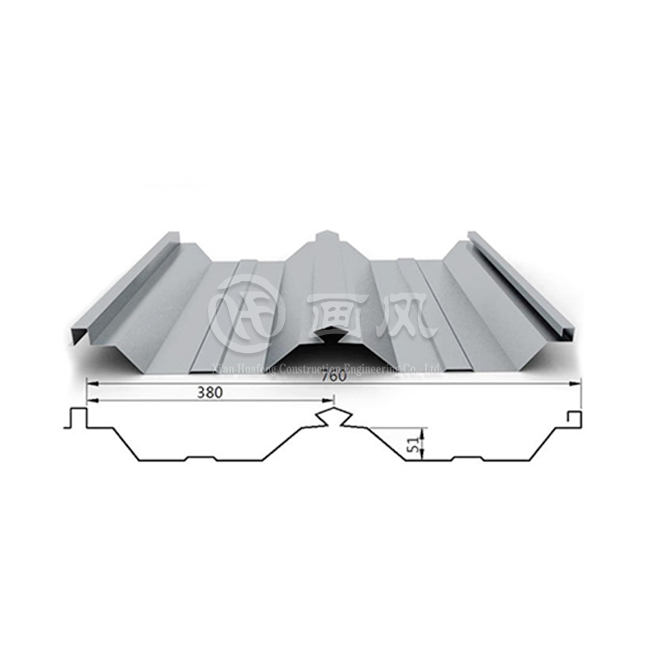
The rain falls straight down, not at the seams on the sides. The double-bite lock can be either a 360° lock edge or a mechanical lock seam. Without glue, this keeps the joint shut. Water also can't get inside because of a secret ways it drains. What determines the height of the ribs is the wind pressure. The HF list says that the wind pressure resistance must be at least 3.0 kPa. Builders can change the height of the ribs from 25 mm to 65 mm, which lets them match the shape to the light. But flashings around windows, corners, and parapets keep walls dry, which is what I'll talk about first.
Appearance and Lower Upkeep
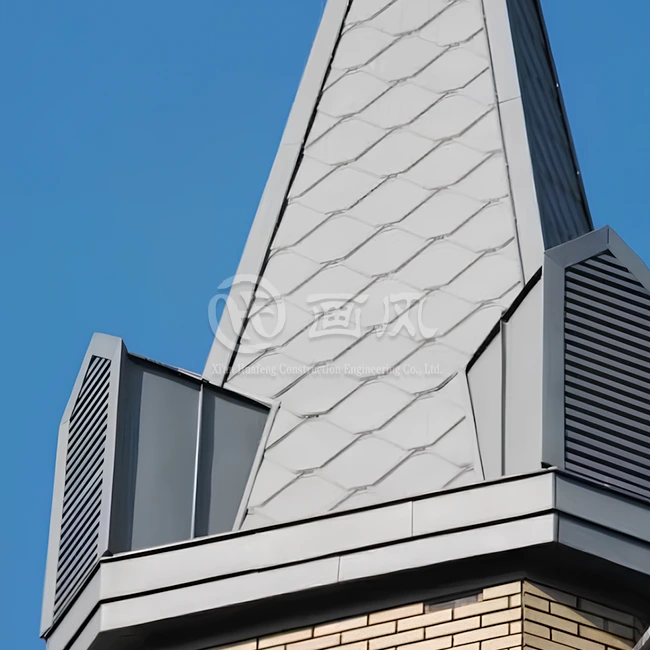
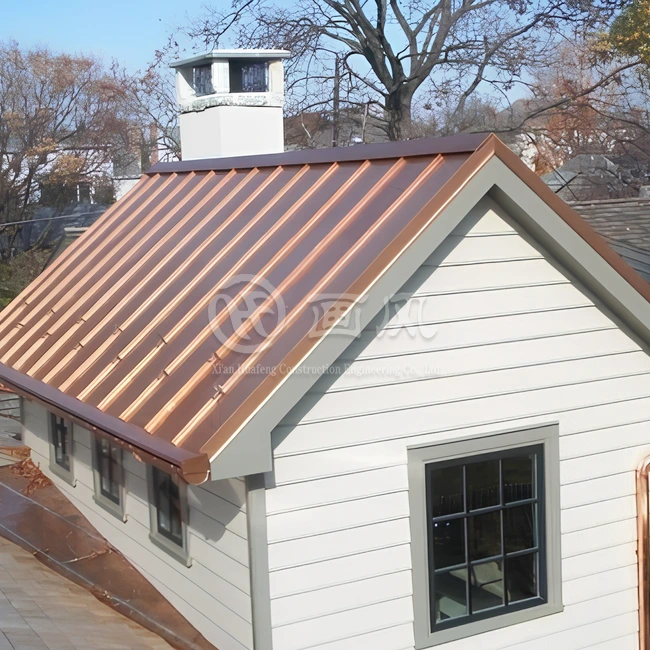
Adding lines to the side of a building makes it look bigger and neater. They are put up on bus stops, schools, factories, offices, shopping malls, and other places. When remodeling, treaty metal can be used instead of stone or wood because it doesn't need to be stained or rot. Because it's lighter, it can also be used instead of stone. You only need to clean and check a hidden screen every once in a while. HF has coatings made of HDP, PVDF, and PE. You can also ask for any color, shape, or style of coat. You should get a pattern sheet first if the customer wants a front that looks like wood. You don't have to mess up the whole wall to fix a broken panel.
Vertical Standing Seam Metal Cladding Compared With Other Facade Solutions
Versus Horizontal and Corrugated Cladding
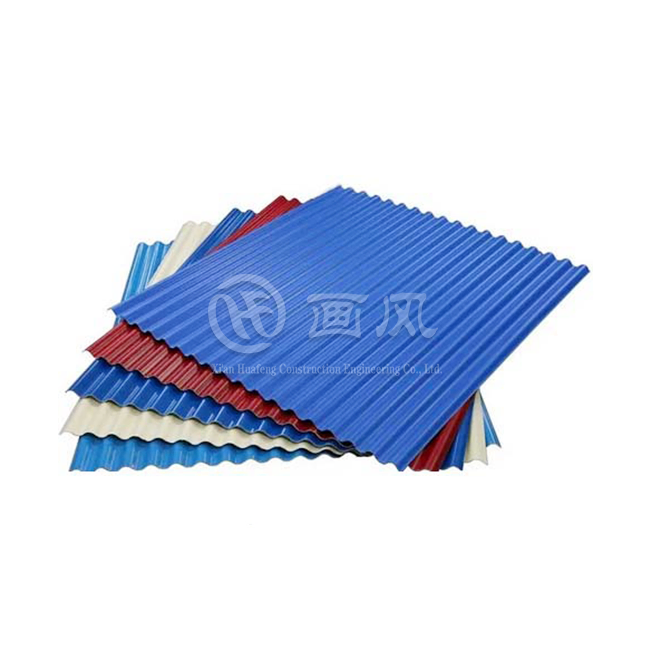
There are different kinds of gaps in walls that let water gather. On the other hand, vertical panels move water down and up the building. A lot of corrugated roofing is held together by nails and gaskets that you can see. Seals get worn out over time. The bolts will be hidden by the vertical standing seam metal cladding panels, the front will stay clean, and the leak points will be further away. Be more careful with how you lay out your clips and trim more precisely for a vertical standing seam metal cladding. Also, make sure the frames are straighter. Since it can be bent more and costs less per square foot, corrugated siding can make your building look cheap and industrial. How you look and how well you can handle the weather are the most important things. Most of the time, vertical standing seam metal cladding is better.
Snap-Lock, Mechanical Seam, and Flat Lock
This kind of joint comes in different sizes that change how much it costs and how quickly it works. It's easier to set up snap-lock pieces because you can press them together by hand. They also work well on high walls most of the time. There are some panels that need to be put together with a tool on the job site. The double fold works better when it's windy or where the roof meets the wall. There are little pieces that fit together to make flat lock panels. Geography can change things like how much you can move and how to fix a broken panel. Plus, you should look at more than just prices.
Versus Wood and Stone
Putting a new finish on wood is important because it can rot or bend over time. It takes longer for stone to set because it is heavy and needs more support. The thickness of these HF aluminum plates is between 0.7 mm and 1.5 mm. They come in long pieces that can be clipped to a lighter chassis. Look at how much the stone, labor, subframe, flashings, freight, and maintenance for 30 years add up to as a whole. Prices change based on the wood and stone that are used. Not the price on the sign, but that amount should you show the customer.
Technical Specifications and Wall Assembly Considerations
HF Product Data at a Glance
This is the vertical standing seam metal cladding from HF. The numbers that go with it are 25-330, 25-400, 25-430, 65-300, 65-400, 65-430, and 65-500. Aluminum alloys AA3003, AA3004, and AA5052 are used to make bases. AZ150 aluminum-zinc coated steel, copper, and stainless steel are also used. Steel is 0.7 mm to 1.5 mm thick and iron is 0.3 mm to 1.2 mm thick. You can buy widths from 300 mm to 800 mm. Most panels are 16 to 24 inches wide, which is 400 mm to 600 mm. You can choose PE, HDP, or PVDF as the finish. You can order as little as 500 m², which is about 5,380 sq ft, and it will be sent to you in 15.
Wall Assembly Layers
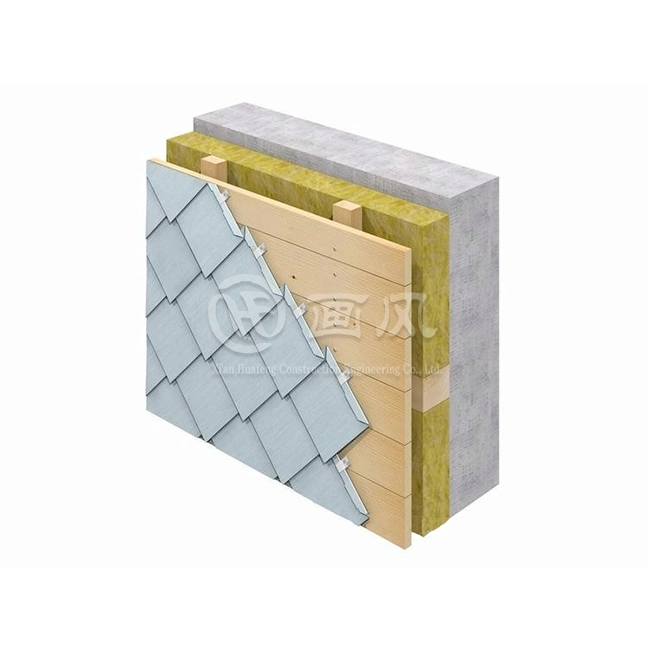
What's on top? That's what the siding is. There is a hole in a regular wall so air can flow through it, insulation, an air and water barrier, and clips or subgirts that hold it together. Based on data from HF, a typical build has a metal panel, insulation, and a membrane that can keep water out and let air through. You can also add a layer that blocks out noise. A lot of higher buildings in the U.S. have to pass NFPA 285 if the outside wall has flammable insulation or glass. A code called ASHRAE 90.1 uses weather zones to figure out how much insulation to use. Even though the metal isn't dangerous, make sure your builder knows what you need before you place your order.
Test Reports and Standards
HF gives SGS reports on metal sheets that have been treated. A fire test according to AS/NZS 1530.3:1999 was done on a 1.3 mm 3003H24 sheet that had a PVDF covering. Out of the six samples that were tested, none of them caught fire. The flame didn't spread, and the heat didn't go anywhere. The signs that the smoke was getting worse were also 0. All 13 of the tests for AAMA 2605-22 were passed on the 3.0 mm PVDF-coated 3003H24 sample. It got a 5B for dry adhesion and an E 0.3 for a uniform color. The EU RoHS rules can be met by wrapping a 0.72 mm piece in 5052H26 polyester. Following the rules set by ISO 9001, ISO 14001, and SGS is also what HF does. These news stories are proof to me because they talk about a sheet that is covered and not a wall that is finished. After that, I'll ask for construction data on its own.
Installation, Selection, and Quality Control
Installation Sequence
A good fit begins before the first panel shows up. Check the barrier, the board, the accepted plans, and the places where the clips are placed. Also, think about how you will store the things you need on-site. After that, put up the base flashing and make sure the first panel is straight. Add panels next to each other, openings, corners, and ends starting in the middle and working your way out. The most important panel is the first one; it sets the tone for the rest. Often mistakes are made with starts that aren't lined up right, clips that are too tight and can't move, seams that aren't sewn correctly, seals that don't stick together, and ends that are scratched. HF is made up of separate parts that can be put together in the factory or on-site. This means there will be less cutting to do on-site. People who have done this before and have the right paperwork should be hired for jobs that are hard or up high.
Flatness, Oil Canning, and Corner Trim
The flat part of a panel can have waves in it. This is known as "oil canning." That is still seen by clients, even though the building is fine. Having thick, straight frames helps the most. Even more help is given by thicker gages, smaller panels, or ribs that make the metal stiffer. Before you place your order, talk to the architect about how flat you'd like the area to be. Most of the time, you have to start over because you missed a fix. Compare the sizes of the inside and outside corners, the base and head flashing, the window trim, the doors and windows, and the accessories list. Before you choose a color, make sure that all of the panels for that level come from the same batch of paint.
Choosing a Supplier
Before you buy from a supplier, you should look at their profile, samples, quality control, coating options, export packing, wait times, and customer service after the sale. In 2018, HF was set up in Shaanxi. Of its seven color finishing lines, more than 40 tools can be used to cut, press, and bend vertical standing seam metal cladding. It has a 200,000-square-meter plant in Anhui for raw materials as well. It also has food-making plants in Xi'an and Hangzhou. There are more than 20 patents that protect it, and in China it's the first level of approval for making curtain walls. There should be proof from all of your sources that is the same. This could be shop drawings, test results, or certificates.
Cost, Delivery, and Lifecycle Value
What Drives Project Cost
It costs a certain amount of money based on the gage, coating, amount, insulation, subframe, flashings, labor, building height, how easy it is to get to the site, freight, and duties. PVDF usually costs more than PE or HDP. It costs more to ship bigger gages as well. For this reason, make sure you get clear pricing terms like Incoterms for any metal that is brought in. To get an exact quote, send a rough sketch of the area, the profile code you want, the base, the finish, the color, the location of the project, and the due date. When you buy the whole package, they don't have to change the rate because they can bundle the prices of the panels and other parts.
Samples, MOQ, and Lead Time
Before you start making the print, I think you should get a proof, a color chip, and a profile reference. Ask for a wall mock-up for bigger jobs to check the color, trim, and seam line. Hefty can send you 500 m² in 15 to 20 days if you buy it. They can deal with 1,000 tons every month. Get in touch with HF to find out what you can do if your order is less than the MOQ. Also, make sure you give yourself enough time for the ocean trip and customs. Make a plan for how you will ship things, keep them dry, unload them, and put them away when you get there.
Maintenance and Lifecycle Value
Even though wrapped metal doesn't need much care, you should still check it out. Cracks, dirt, rust, loose parts, old sealants, clogged drains, and broken flashings are some of the things you should look for. Use something that won't hurt the finish to clean it. The above AAMA 2605-22 report says that the window cleaner and detergent passed the strength test. Plants or places near the coast might need to be checked more often. Some of the things HF sells have warranties that last for 30 years and can last up to 50 years. Inspection reports help you plan your assets and make guarantee claims, so you should keep them. It costs less to fix things when you only need to replace one panel.
Conclusion
Vertical standing seam metal cladding has secret screws, a smooth, vertical appearance, and drains along the seam lines. You have to be more careful when putting it down than with metal panels, wood, stone, or straight flooring. But it looks better, is lighter, and needs less upkeep. A wall is made up of frames, barriers, insulation, flashings, and trim. These parts all work together to make the wall what it is. Not only do they depend on how flat you can be, but also on the color batch control and the clip pattern. Coated sheet comes with specs, coating options, and SGS reports that can help buyers be sure that the material is what it claims to be. It is still a separate step to check the code at the assembly level, though. The price is based on the size, material, finish, and any extras that are added. Samples, amounts, and wait times should all be planned ahead of time so that you don't have to do extra work.
FAQ
1. Is vertical standing seam cladding suitable for commercial buildings?
Yes, it can be used in schools, workplaces, bus stops, and shopping malls as long as the whole wall assembly follows the rules in your area.
2. What is oil canning, and is it a defect?
You can see waves in the flat part of a paper. It's not strong; it's just for looks. It can be lowered by using straight frames, stronger gages, smaller panels, and ribs that make it stiffer.
3. How does the system handle temperature changes?
Panes can move because of slide clips that are hidden. This keeps the screws from getting old and the panels from breaking.
4. What do you need for a quotation?
Send the project's location, the due date, the profile code you chose, the base, the coating, the color, the elevations, and a general idea of the area.
5. Can HF customize color and pattern?
You can change the style, color, and design at HF. Before you agree to the finish, ask to see a taste of it.
Request a Vertical Standing Seam Metal Cladding Quote From HF
Write to me at huafeng@hfmetalroof.com with the heights, area, shape, finish, and due date for your vertical standing seam metal cladding project. I'll take a look at it. What HF sells is vertical standing seam metal cladding. They offer a warranty that lasts for 30 years and stock 1,000 tons of goods every month. They have PE, HDP, and PVDF finishes, and they can make colors and designs that are just for you. Go to hfmetalroof.com to learn more and see some samples, get specs, or get a price quote for your job.
References
1. ASTM E331-00 (2016): Standard Test Method for Water Penetration of Exterior Windows, Skylights, Doors, and Curtain Walls by Uniform Static Air Pressure Difference, ASTM International, 2016
2. ASTM E283/E283M-19: Standard Test Method for Determining Rate of Air Leakage Through Exterior Windows, Curtain Walls, and Doors, ASTM International, 2019
3. AAMA 2605-22: Performance Requirements and Test Procedures for Superior Performing Organic Coatings on Aluminum Extrusions and Panels, American Architectural Manufacturers Association, 2022
4. NFPA 285: Standard Fire Test Method for Evaluation of Fire Propagation Characteristics of Exterior Non-Load-Bearing Wall Assemblies Containing Combustible Components, National Fire Protection Association, 2023
5. International Building Code, International Code Council, 2021
6. ANSI/ASHRAE/IES Standard 90.1-2022: Energy Standard for Buildings Except Low-Rise Residential Buildings, ASHRAE, 2022





YOU MAY LIKE