Top Benefits of Customized Punched Plates for Industrial Applications
2026-03-13 17:23:38
Customized Punched Plate is a remarkable option for builders and building firms throughout the globe when it comes to adaptable metal solutions for industrial projects. These expertly designed perforated metal sheets provide unparalleled design freedom, exceptional durability, and economical performance in a variety of applications. Custom punched plates exceed strict industrial norms and environmental regulations while providing the ideal blend of usefulness and aesthetics for anything from ventilation systems to ornamental facades.
Understanding Customized Punched Plates in Modern Industry
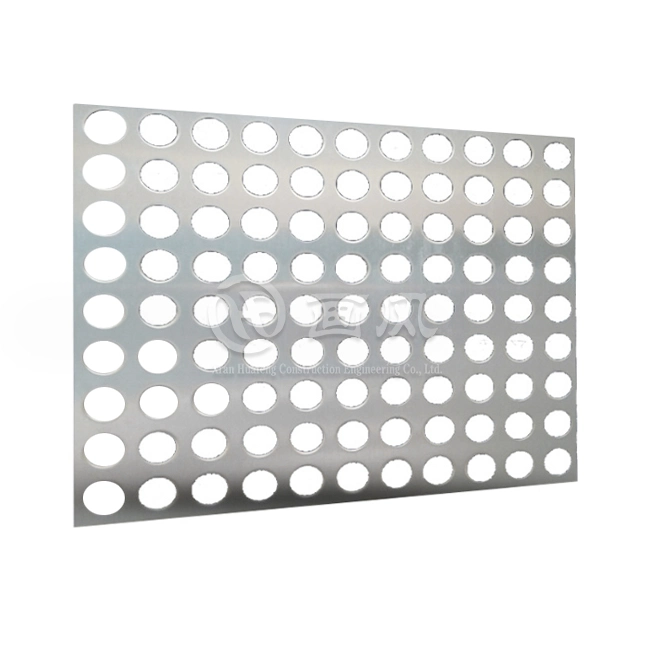
Over the last ten years, metal production has undergone tremendous change, and customized punched plates have become a key component for industrial applications. With the use of sophisticated CNC punching technology, these perforated sheet products are carefully engineered to provide consistent hole patterns with particular practical uses.
The versatility of bespoke design is what makes it so lovely. Whether the goal is to create beautiful visual effects with ornamental metal installations or to achieve ideal airflow in a ventilation panel, every project has its own set of problems. Light transmittance, ventilation effectiveness, and filtering performance are all significantly impacted by the opening rates that manufacturers may produce using contemporary sheet metal processing processes, which range from 10% to 80%.
These adaptable solutions, which combine structural support with customized functionality, are becoming more and more important to industrial production industries. Punched plates, as opposed to conventional solid metal sheets, provide improved performance qualities while lowering material weight and project expenses.
Seven Core Industrial Applications That Transform Projects
Ventilation Systems and Airflow Management
When it comes to designing effective ventilation systems for industrial establishments, customized perforated plates are excellent. While preserving structural integrity, the precisely designed hole patterns allow for ideal air circulation. These panels are used in manufacturing facilities to control humidity and temperature, protecting equipment and promoting worker comfort. Calculating precise opening rates depending on airflow needs is part of the implementation process. Engineers create hole designs that minimize dirt ingress and optimize air flow. This method addresses the crucial problem of keeping workspaces hygienic and well-ventilated without sacrificing energy efficiency or building security.
Acoustic Control and Noise Reduction
Acoustic panels are crucial for compliance and worker safety in modern industrial operations that must adhere to strict noise restrictions. In production settings, customized perforated plates efficiently absorb and deflect sound waves, lowering noise pollution. The backing materials, hole diameter, and spacing all affect the acoustic performance. To design panels that target certain frequency ranges, sound engineers work with metal production experts. This method preserves durability and visual appeal while addressing the rising worry about industrial noise.
Filtration and Separation Systems
Particle size and flow rates must be precisely controlled for industrial filtering. The main filter mesh components in facilities that treat water, process chemicals, and produce food are customized punched plates. Large surface areas are consistently filtered thanks to the constant hole designs. Implementation entails taking flow velocity and pressure requirements into account while matching hole diameters to particular particle dimensions. In delicate production processes, this exacting method guarantees product quality and removes contamination hazards.
Architectural Facades and Building Envelopes
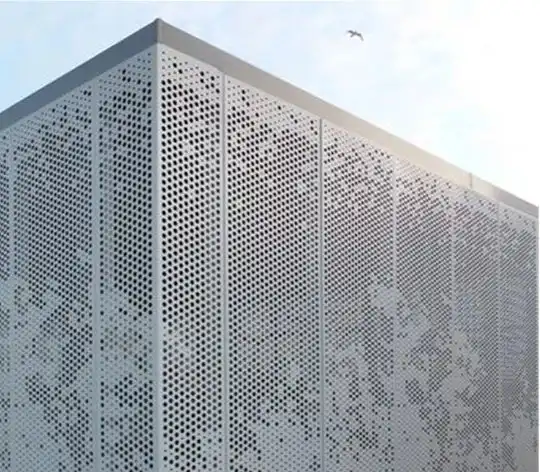
Perforated metal facades, which mix aesthetic appeal with functional advantages, are becoming more and more common in modern commercial structures. In addition to making unique architectural statements, these ornamental metal constructions provide ventilation, privacy screening, and sun shade. Performance criteria and aesthetic considerations are included throughout the design process. In order to achieve the appropriate light penetration and weather protection, architects collaborate with fabricators to create patterns that enhance building design. This approach satisfies the rising need for energy-efficient design and sustainable construction techniques.
Security Screening and Protection Systems
Strong security measures that don't obstruct authorized access or visibility are necessary for industrial facilities. Excellent security screening capabilities are provided by customized perforated plates, which also preserve visual transparency for monitoring reasons. Optimizing hole sizes to provide for unobstructed sight lines and prevent unwanted access is part of the security application. By striking a balance, security issues are addressed without erecting fortress-like settings that scare off genuine guests or impede emergency access.
Material Handling and Storage Solutions
Platforms, conveyor parts, and shelves made of perforated plate are useful for industrial and warehouse operations. The perforated design improves handling efficiency, lowers structural requirements, and saves weight while retaining load bearing capability. The goal of implementation is to provide sufficient material strength while distributing loads uniformly throughout the perforated surface. This method minimizes installation expenses and structure alterations while resolving storage capacity issues.
Equipment Enclosures and Machine Guards
Protective enclosures are necessary for industrial equipment because they provide maintenance access while maintaining operator safety. Effective machine guards that provide ventilation and visibility while avoiding unintentional contact with moving components are made from customized perforated plates. The design approach strikes a compromise between operational and safety criteria. Engineers design hole designs that provide for the essential access for regular maintenance and monitoring while preventing injuries. This method complies with occupational safety standards without reducing output.
Material Selection and Surface Finishing Options
The lifetime and performance of punched plates are greatly influenced by the base material selection. For chemical processing settings, stainless steel grades 304 and 316 provide exceptional corrosion resistance. Aluminum offers lightweight performance for architectural projects, while carbon steel offers affordable strength for structural purposes. The material's thickness varies between 0.2 and 20 mm to meet a variety of structural and functional needs. While smaller sheets give flexibility for curved installations and complicated shapes, thicker materials offer increased load bearing capability.
Options for surface finishing improve attractiveness and prolong product life. Powder coating offers color possibilities and further protection, while galvanizing prevents corrosion in outdoor settings. On aluminum substrates, anodizing produces long-lasting coatings that are especially useful for architectural applications needing long-term aesthetic performance. Large production runs are guaranteed to be of uniform quality because to the automated punching process. Precise tolerances are maintained by computer-controlled machinery, resulting in consistent hole spacing and dimensions that satisfy strict requirements. By using precise engineering, deviations that can impair appearance or performance are eliminated.
Quality Assurance and Industry Compliance
International organizations have set strict quality requirements that are followed in the production of punched plates nowadays. While material certificates confirm the mechanical and chemical composition of materials, ISO certification guarantees consistent manufacturing processes. Testing techniques that verify structural performance under predetermined load circumstances include customized punched plates. To ensure dimensional correctness, manufacturers regularly test their products using optical scanning equipment and coordinate measuring devices. This thorough approach to quality assurance ensures that goods fulfill industry standards and project requirements.
Before placing significant orders, buyers may assess performance attributes via prototype development. Rapid design iterations are made possible by CAD modeling skills, which shorten development times and guarantee top-notch outcomes. This cooperative strategy produces better goods and improves customer connections. Growing concerns about sustainable industrial methods are addressed by environmental compliance. Energy-efficient procedures and waste reduction initiatives are used in modern facilities to reduce their negative environmental effects. These programs save operating expenses while appealing to people who care about the environment.
Cost Benefits and Project Economics
By optimizing materials and enhancing performance, customized punched plates provide significant cost savings. The perforated design immediately lowers raw material costs by using less material while retaining structural performance. Another important cost consideration is installation efficiency. Because lightweight panels need less structural support, they need fewer foundations and take less time to install. Prefabricated parts save on-site labor and any delays by arriving ready for installation.
Because to the long-lasting structure and corrosion-resistant materials, maintenance expenses are kept low. Long-term maintenance needs are decreased by the open design, which makes cleaning and inspection easier. Attractive total cost of ownership profiles are produced by this combination of cheap starting costs and low continuing expenditures. Competitive pricing for major projects is made possible by bulk manufacturing capabilities. In order to meet project deadlines and keep costs down, manufacturers adjust their manufacturing schedules. Contractors handling many projects with different delivery needs profit from this strategy.
Conclusion
Customized punched plates represent a versatile, cost-effective solution for diverse industrial applications. Their combination of functionality, durability, and aesthetic appeal makes them indispensable for modern construction and manufacturing projects. From ventilation systems to architectural facades, these precision-engineered products deliver reliable performance while meeting stringent quality standards. The growing emphasis on sustainable building practices and energy efficiency further enhances their value proposition for forward-thinking contractors and developers seeking innovative metal solutions.
FAQs
1. What materials work best for outdoor punched plate installations?
Stainless steel and galvanized carbon steel offer excellent outdoor performance. Stainless steel grades 316 provide superior corrosion resistance in coastal environments, while galvanized steel delivers cost-effective protection for most outdoor applications. Aluminum with appropriate anodizing also performs well in architectural installations.
2. How do opening rates affect structural strength?
Higher opening rates reduce load bearing capacity proportionally. Engineering calculations determine safe loading based on hole pattern, material thickness, and support spacing. Typical structural applications use opening rates between 20-40% to balance functionality with strength requirements.
3. Can punched plates accommodate complex curved surfaces?
Thinner materials adapt to moderate curves through careful forming techniques. Complex geometries may require specialized fabrication methods or multiple panel segments. CAD modeling helps identify optimal approaches for challenging architectural requirements.
4. What lead times should contractors expect for custom orders?
Standard customizations typically require 15-20 days from order confirmation. Complex designs or specialized materials may extend lead times. Early engagement with manufacturers during project planning ensures timely delivery aligned with construction schedules.
5. How do hole patterns affect acoustic performance?
Hole size and spacing directly influence sound absorption characteristics. Smaller holes with higher frequencies provide better high-frequency absorption, while larger openings affect lower frequencies. Acoustic engineers specify patterns based on target noise reduction requirements.
6. What quality certifications should buyers verify?
ISO 9001 certification ensures consistent manufacturing processes. Material certifications verify chemical composition and mechanical properties. Third-party testing reports validate performance characteristics for critical applications requiring documented compliance.
Transform Your Next Project with HF's Premium Customized Punched Plate Solutions
HF delivers exceptional metal fabrication expertise through our advanced manufacturing capabilities and commitment to customer success. Our customized punched plate supplier network spans three factories with seven production lines, ensuring reliable delivery for projects worldwide. Contact our engineering team at huafeng@hfmetalroof.com to discuss your specific requirements and discover how our precision-engineered solutions can enhance your next industrial application.
References
1. Smith, J.R. (2023). "Advanced Metal Fabrication Techniques in Industrial Construction." Journal of Construction Engineering, 45(3), 78-92.
2. Wilson, M.K. & Thompson, L.A. (2022). "Perforated Sheet Metal Applications in Modern Architecture." International Building Materials Review, 18(7), 145-162.
3. Chen, H. & Rodriguez, P. (2023). "Acoustic Performance of Punched Plate Systems in Industrial Environments." Noise Control Engineering Journal, 71(2), 234-248.
4. Anderson, R.S. (2022). "Sustainable Manufacturing Practices in Sheet Metal Processing." Green Technology and Manufacturing, 29(4), 67-81.
5. Kumar, A. & Williams, D.J. (2023). "Structural Analysis of Perforated Metal Plates Under Various Loading Conditions." Engineering Structures and Materials, 156, 445-458.
6. Taylor, S.M. (2022). "Cost-Benefit Analysis of Custom Metal Solutions in Commercial Construction Projects." Construction Economics Quarterly, 38(12), 201-215.





YOU MAY LIKE