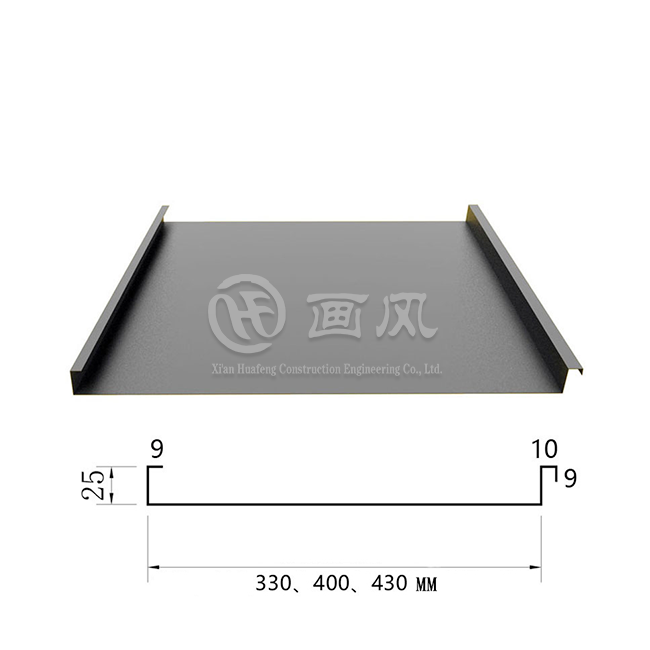
What Is a Standing Seam Pitched Metal Roof?
2026-10-13 11:00:01
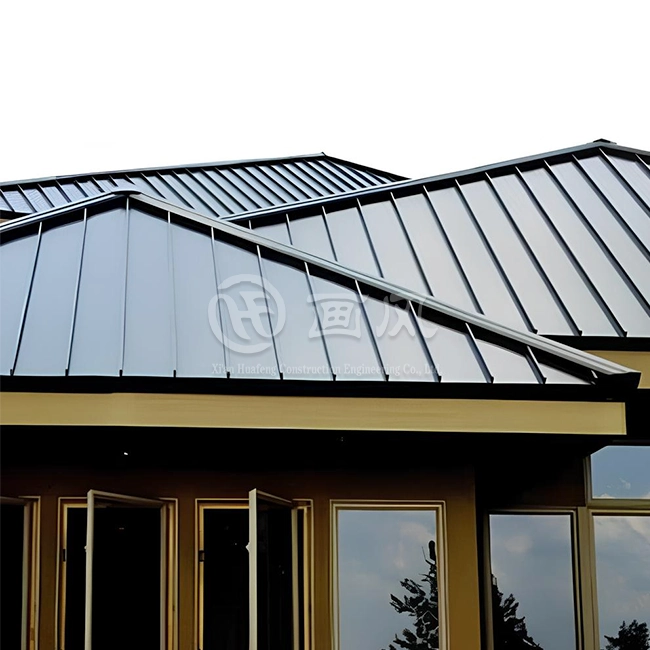
A standing seam pitched metal roof is a high-performance roofing system where adjacent metal panels are mechanically locked along raised vertical seams, creating a continuous, fastener-free waterproof surface. Designed specifically for pitched roofs with a slope of ≥3:12, this system conceals all clips beneath the panel ribs, eliminating screw-hole leak paths entirely. Widely used on residential homes, churches, commercial buildings, and industrial facilities, it delivers a service life well beyond 40 years while accommodating thermal expansion without panel distortion.

Understanding Standing Seam Pitched Metal Roofs
How the Panel System Works
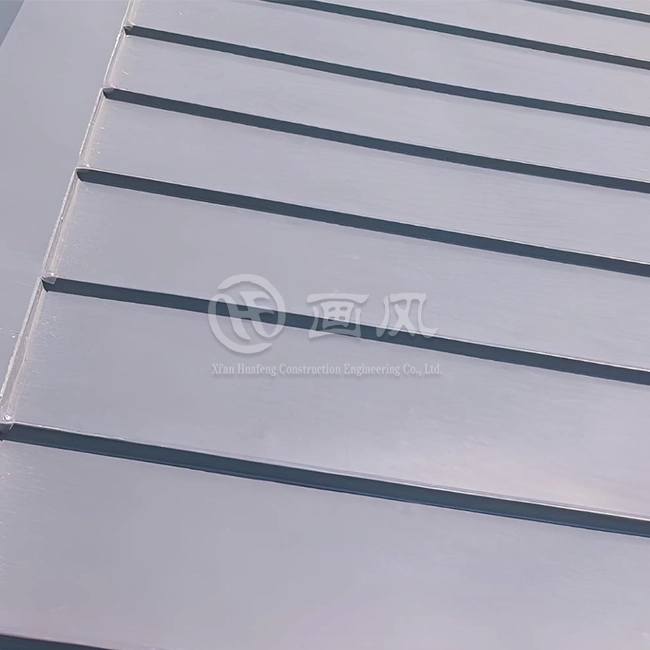
Along the long edges of each panel are two raised ribs. On-site, a mechanical seaming tool crimps together adjacent ribs to make a locked joint that sits 25 mm to 65 mm above the panel surface. No holes ever go through the weathering surface because all the fasteners are hidden inside this joint. As a result, the roof plane consistently sheds water, even when the pitch is low.
The Role of Concealed Clips
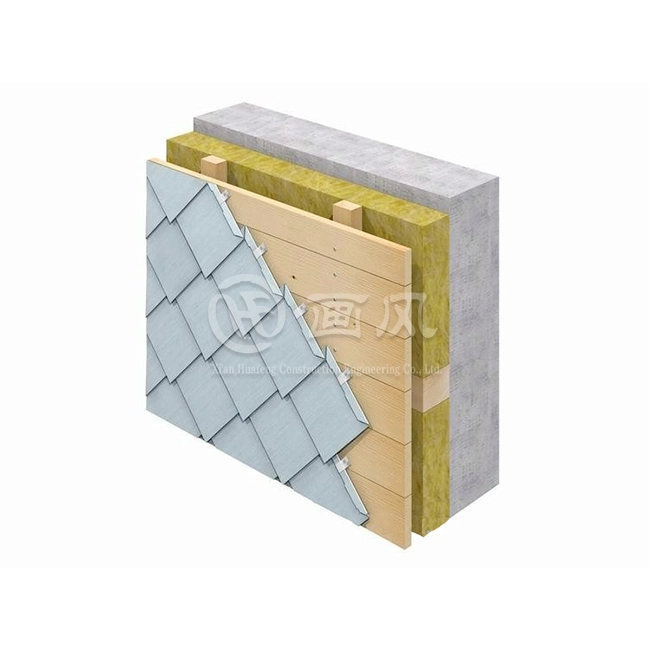
Under each seam, floating clips connect to the structural purlins. These clips don't hold the panel in place rigidly; instead, they let each panel move along its length as the temperature changes. ASHRAE data shows that steel can expand by about 0.65 inches per 100 feet for every 50 °F change. This is enough force to bend a roof that is firmly attached. Floating clips quietly take in that movement.
Profile Specifications at a Glance
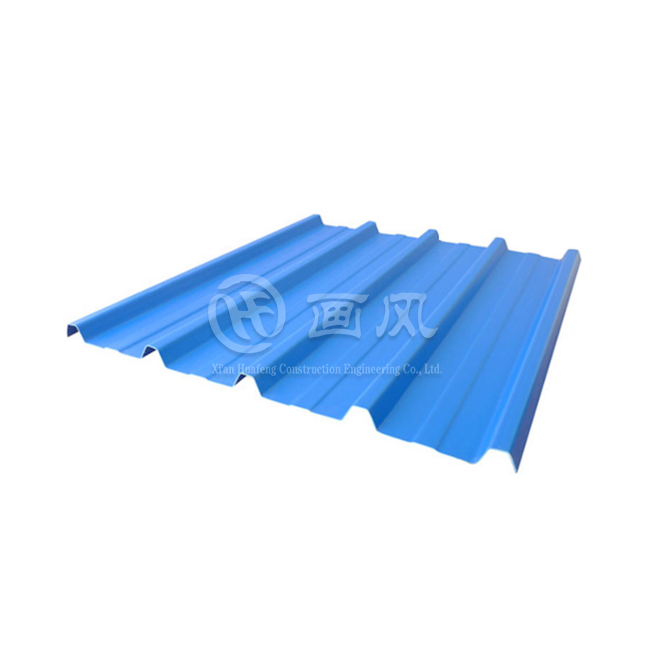
HF makes standing seam pitched metal roof panels with five different shape families: 25-330/400/430, 32-410, 45-400, and 65-400/430. The widths range from 0.4 mm to 1.2 mm. Panels can be made in any RAL or Pantone color and have PVDF or PE coatings on the outside. All shapes are compliant with ASTM, DIN, JIS, BS, and GB/T standards. This gives North American companies the proof of compliance they need when they bid.
Key Benefits and Performance of This Roofing System
A lot of projects in North America have shown that standing seam metal roofing works well. The Metal Construction Association (MCA) and the National Roof Covering Association (NRCA) both say that properly installed systems can last more than 40 to 50 years, which is about three times as long as regular asphalt shingles.
For procurement managers and construction crews, these are the core performance strengths that mean the most:
- Zero-penetration waterproofing: Mechanical locking and factory-applied hot-melt sealant inside the female leg satisfy ASTM E1646 water-penetration requirements without exposed fasteners.
- Wind-uplift resistance: Continuous mechanical crimping produces the pull-out resistance tested under ASTM E1592. Clip spacing is engineered to local wind-load calculations, making this system viable in coastal and high-wind regions.
- Thermal expansion management: Floating clips let panels slide freely, preventing metal fatigue and fastener failure across decades of seasonal cycling.
- Low maintenance burden: PVDF fluorocarbon coatings tested to AAMA 2605-22 (all 13 items passed in SGS testing) resist chalking, fading, and chemical attack, meaning inspection cycles of every one to two years are typically sufficient.
- BIPV compatibility: Non-penetrating clamps such as S-5! style mounts grip the standing seam directly, allowing solar PV integration without voiding any warranty.
These benefits directly lead to lower lifetime cost of ownership, which is a measure that buying managers keep an eye on across a portfolio of projects.
Comparative Analysis: Standing Seam vs. Alternatives
To pick the right metal roof profile, you have to weigh the cost up front against the liability in the long run. Standing seam panels cost more per square than exposed-fastener corrugated sheets, but the total cost of installation changes when you consider that screw-down roofs need to be re-fastened, gaskets need to be replaced, and leaks need to be fixed every 10–15 years.
When put up against asphalt shingles, the gap gets even bigger. Most asphalt lasts between 15 and 25 years. A automatically seamed metal system, on the other hand, can last twice as long with little upkeep. If you can't afford to re-roof a church or home project during its lifetime, standing seam is clearly the better choice.
Snap-lock profiles can be put up faster on steeper slopes (>3:12) with normal wind loads. For lower pitches or areas with a lot of wind, mechanically seamed standing seam pitched metal roof profiles like HF's 65-400 are better because the crimped double-lock joint gives them better hydrostatic resistance. When contractors bid on both types, it helps to have a source that has both types in stock.
Procurement and Installation Considerations
Material Selection and Gauge
For home and light business projects in North America, builders usually choose 24-gauge Galvalume steel (AZ50/AZ55) or.032-inch aluminum. HF's product range, which goes from 0.4 mm to 1.2 mm thick, fits both groups and is in line with US gage standards. When the gage is 0.7 mm or thicker, the visual waviness called "oil canning" is lessened, and the span capacity is better across wider purlin spacings.
Compliance Documentation
Make sure your seller can give you ASTM E1592 wind-uplift test results, coating approval (PVDF/PE color verification), and panel length tolerance records before you place an order. Batch color variation is a common problem on campuses with more than one building. To avoid costly reorder delays, it is recommended to request spectrophotometer data with each shipment. This PVDF coating from HF is confirmed by SGS and has a color-uniformity delta of ΔEH = 0.3 under AAMA 2605-22. This is well within the tolerances for building materials.
Logistics and MOQ Planning
The smallest amount that HF will take as an order is 500 m², which is equal to one metric ton. There is a 15–20 day lead time from three factories that have seven production lines with more than 40 machines and can supply 1,000 tons per month. With that scale, contractors can schedule the delivery of panels to match the stages of a project instead of keeping extra inventory. Every package is backed by a 30-year guarantee.
Conclusion
Contractors, distributors, and building owners can use a standing seam pitched metal roof because it doesn't need constant maintenance and lasts for decades. Its hidden fastener design gets rid of the most common source of leaks in metal roofs, and its moving clips handle temperature changes that would wear out a screw-down system otherwise. This system is suitable for home, industrial, and institutional projects across North America. It has profiles with rib heights ranging from 25 mm to 65 mm, a 30-year warranty, and choices for PVDF or PE surfaces. It also fully meets ASTM standards. Every performance claim here is backed up by data from independent SGS testing and well-known industry groups.
FAQ
1. How long does a mechanically seamed metal roof actually last?
The Metal Construction Association and maker guarantee records both say that steel frames with a Galvalume coating are designed to last 40 to 50 years, while aluminum lasts longer. HF stands behinds its standing seam panels with a guarantee that lasts for 30 years.
2. What is oil canning, and should I be worried about it?
Oil canning is a bumpy look in the flat panel area. It is not a problem with the structure. It becomes much less visible when you choose thicker gages (0.7 mm or larger), add lengthwise stiffening striations, and make sure the base is flat during installation.
3. Are standing seam panels compatible with my existing seaming tools?
Standardized rib geometry is used for most mechanically seamed profiles. The 25-330/400/430, 32-410, 45-400, and 65-400/430 profiles from HF are made to work with popular electric seaming tools in North America. Before the first run, check with the tool's maker to make sure the profile code is correct.
4. What is the minimum order, and how fast can panels ship?
The MOQ for HF is 500 m², which is equal to 1 metric ton. The standard lead time is 15–20 days, and three production facilities can make 1,000 tons of steel each month.
5. Can I mount solar panels without drilling into the roof?
Yes. Clamps that don't go through the material attach directly to the standing seam rib. This protects the waterproofing layer and keeps the product warranty valid.
Request a Quote from HF — Your Standing Seam Pitched Metal Roof Supplier
The standing seam pitched metal roof panels made by HF are made in three plants, meet ASTM standards, and come with a 30-year guarantee. We keep your project on track with a 15–20 day wait time and the ability to handle 1,000 tons per month. Email huafeng@hfmetalroof.com to get panel samples, color matching, and a quote that is tailored to your project.
References
1. Metal Construction Association (MCA). Metal Roofing: Installation Manual and Product Standards. 2022.
2. National Roofing Contractors Association (NRCA). The NRCA Roofing Manual: Metal Panel and SPF Roof Systems. 2023.
3. American Society for Testing and Materials (ASTM). ASTM E1592: Standard Test Method for Structural Performance of Sheet Metal Roof and Siding Systems. 2021.
4. American Architectural Manufacturers Association (AAMA). AAMA 2605-22: Voluntary Specification, Performance Requirements and Test Procedures for Superior Performing Organic Coatings on Aluminum Extrusions and Panels. 2022.
5. Florida Metal Roofing Alliance. Wind Resistance and Performance of Metal Roof Systems in High-Velocity Hurricane Zones. 2020.
6. Oak Ridge National Laboratory. Thermal Performance of Metal Roof Systems with Reflective Coatings. U.S. Department of Energy. 2019.





YOU MAY LIKE
_1781690542318.jpg "Self-adhesive waterproof membrane")
_1769761215912.webp "Ventilation noise reduction net")
_1768552571575.jpg "Aluminium Fascias")