Trapezoidal Standing Seam Roofing: A Complete Buyer’s Guide
2026-09-23 10:54:54
If you're sourcing roofing for an industrial warehouse, logistics hub, or large-span steel structure facility, this guide is built for you. Trapezoidal standing seam roofing has become the go-to structural metal roofing solution for EPC contractors and procurement teams operating across Southeast Asia, the Middle East, Africa, and Latin America. This guide walks you through everything — from technical specifications and system comparisons to procurement logistics and supplier selection — so your next bulk roofing order moves from decision to delivery without delays.

Understanding Trapezoidal Standing Seam Roofing
What Makes the Profile Different
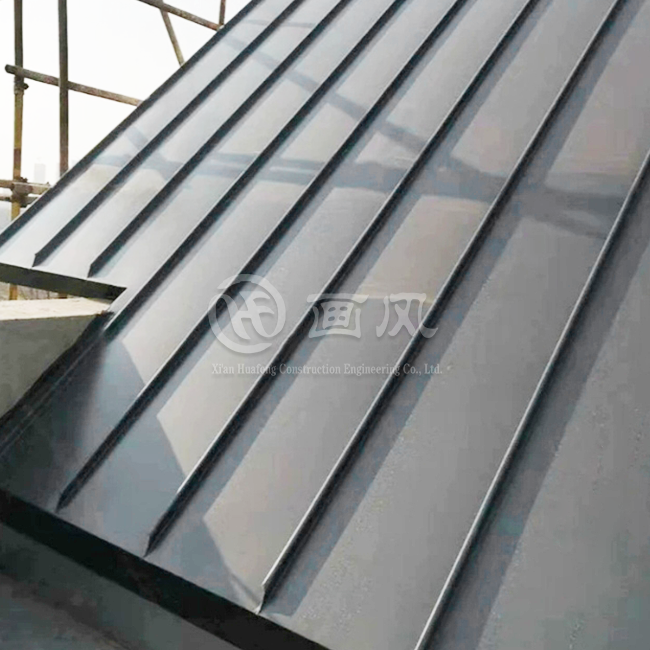
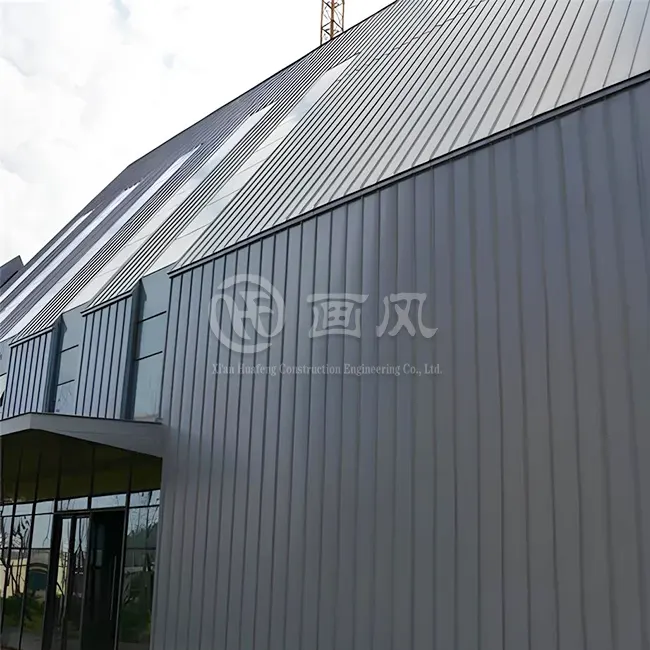
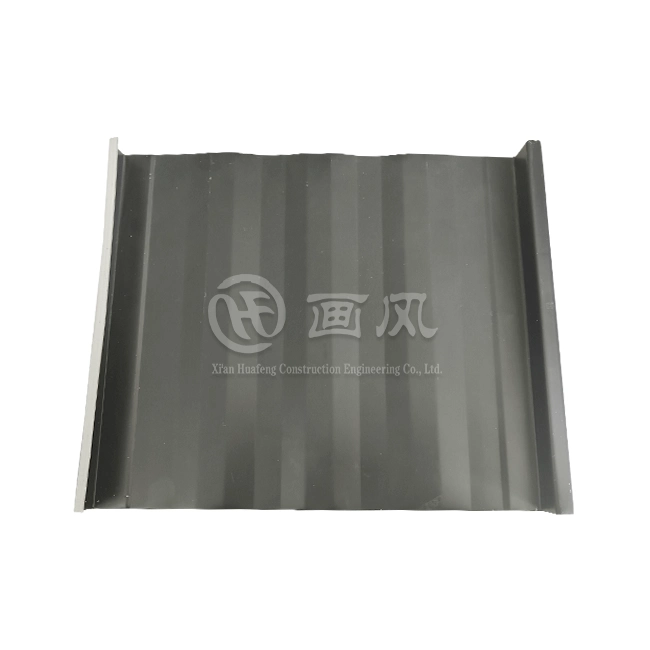
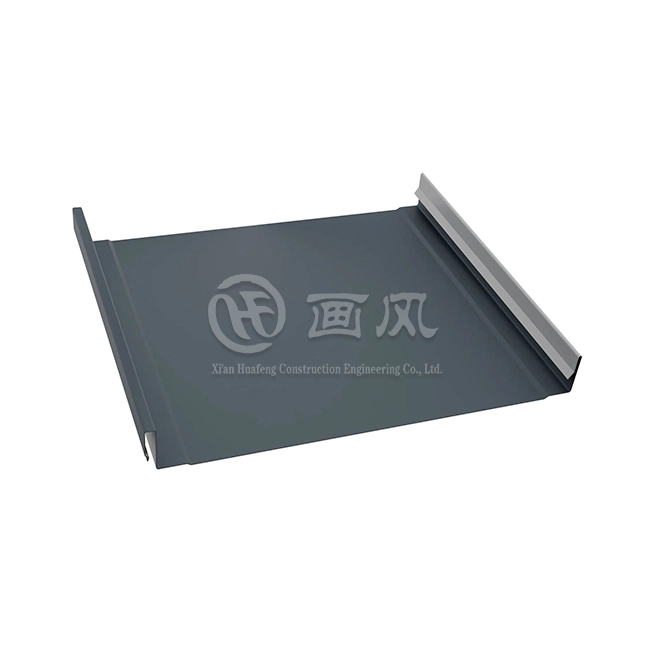
The shape of the trapezoidal ribs is not just for looks; they are structural. The raised trapezoidal ribs make the section modulus of each panel much higher than with flat or curved sheets. This lets the purlins be spaced far apart without having to use continuous decks. This directly lowers the cost of structural steel for big factories.
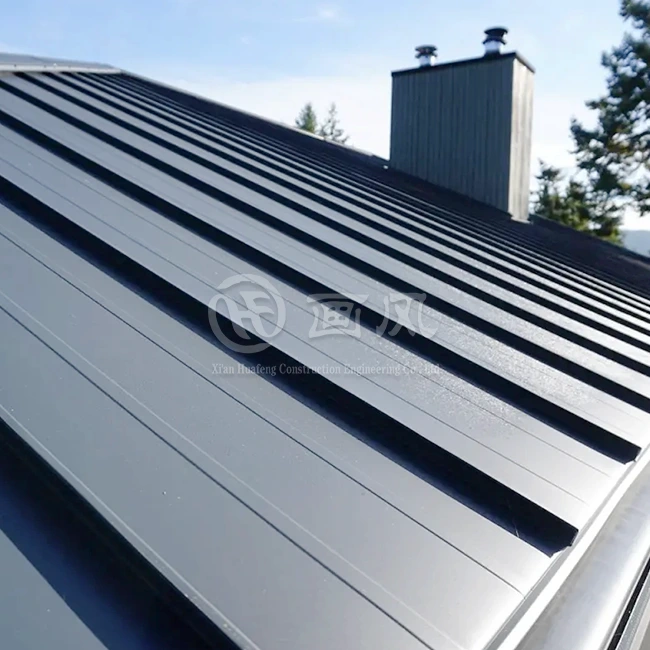
The hidden clip device is just as important. Panels are attached to the substructure with floating clips that are hidden, not with visible fasteners. This gets rid of the one most common cause of industrial roof leaks: washer wear at screw entry points. That can mean getting rid of hundreds of possible leak points on the roof of a 10,000 m² warehouse.
Materials and Protective Coatings
Long-term success is based on the choice of materials. At HF, you can get panels made of stainless steel, aluminum alloy types 3003, 3004, and 5052, and alu-zinc steel. Each substance is used in a different setting. Independently confirmed by SGS under AS/NZS 1530.3:1999, aluminum alloy panels have a Class A non-combustible fire grade. All six test samples showed an ignition index of zero and no flame spread. Our PVDF-coated panels passed all 13 performance tests under AAMA 2605-22 for projects in chemically active environments. These included 5B dry adhesion, zero-crack impact resistance, acid resistance with a ΔE color shift of only 0.3, and impact resistance with no cracks. For climates that aren't as harsh, PE coatings are a cheaper option. There was no trace of lead, mercury, cadmium, or hexavalent chromium found in either finish, which means they are fully compliant with the EU RoHS Directive 2011/65/EU.
Comparing Roofing Options: Making the Right Choice
Trapezoidal Standing Seam vs. Competing Systems
Picking a trapezoidal standing seam roofing system is both a structure and a financial choice. For industrial uses, here's how the main choices stack up:
- Trapezoidal standing seam panels are the best choice for pre-engineered steel buildings (PEB) around the world because they have no visible fasteners, the largest wind uplift strength (≥5.0 kPa tested), and they can be used with solar clamping systems.
- Corrugated metal sheeting is cheaper up front, but it needs to have its fasteners inspected more often, doesn't work well on nearly flat slopes below 5°, and costs more in the long run to maintain on big roofs.
- Screw-down R-panel roofing is easier to put up but holds the sheet tightly to the building. When temperatures change, screw holes get longer in buildings longer than 50 meters. This causes leaks to start happening within 8 to 12 years.
- Flat seam roofing works well for building facades but can't hold loads of more than 1.5 kN/m², which is needed for industrial warehouses with HVAC units on the roof or maintenance access loads.
These differences are important if your project needs structural load compliance documentation, wind uplift test reports, or material grades chosen by the owner. If a system passes on price but not wind resistance, it could lead to binding fines for projects backed by the World Bank or the Asian Development Bank.
Lifecycle Cost Perspective
A standing seam roof made of aluminum alloy and coated with PVDF has been tested and proven to last 30 to 50 years or more, based on the substrate. It comes with a 30-year promise. When you look at how much it cost to install over the whole life of the product and how little it costs to maintain, the cost-per-year number always beats screw-down options.
Procurement and Installation Guide for Buyers
Sourcing, Lead Times, and Batch Delivery
As important as panel specification is for EPC contractors who are in charge of managing phased construction schedules is making sure that suppliers deliver on time. HF makes things in three places: Anhui, where they produce raw materials on 200,000 m², and Hangzhou and Xi'an, where they do processing. These three places have seven color painting lines and more than forty making machines. After an order is confirmed, the standard wait time is 15 to 20 days.
Our minimum order size is 500 square meters, and we can help you schedule deliveries in groups based on the stages of your project. Panels are cut to the exact size of the plan, up to 13 meters per sheet. This gets rid of mistakes made in the field and waste from end-laps. You can change the color, pattern, and design of the surface, and you can choose from PVDF and PE finishes that match your specification documents.
The panel widths are between 300 mm and 600 mm, the thicknesses are between 0.7 mm and 1.2 mm, and the rib heights are between 50 mm and 115 mm. These sizes cover a wide range of structural spans, from normal purlin grids to long-span industrial setups.
Installation Considerations
Field success is based on how well the substrate is prepared, how well the purlins are aligned, and how much force is required on the clips. For large orders, our technical team can help with site guidance, shop drawings, and installation manuals. All of our goods come with all the paperwork needed for the owner to accept them and hand over the project. This includes test results, material licenses, dimensional inspection records, and CE/ISO/SGS compliance certificates.
Maintenance and Longevity: Ensuring Lasting Performance
Routine Protocols That Protect Your Investment
A properly placed trapezoidal standing seam roofing system doesn't need much maintenance, but regular checks are recommended to make sure the guarantee is honored for the full term. We suggest visual checks every six months to make sure the seams are still attached and that the sealant is still good where it penetrates the material. Surface oxidation is sped up by debris building up in panel dips. Regular clearing with non-abrasive tools and pH-neutral cleaners keeps the coating in place.
If a panel gets damaged from contact or mechanical stress, the concealed clip system lets you change just that panel without disturbing the sheets next to it. This is a big improvement over screw-down systems, where removing a panel could cause damage to the fasteners that hold it together. Our after-sales team keeps replacement panel stocks that are identical to the original production batches. This keeps the color uniformity required by AAMA 2605-22's ΔE ≤ 1.0 standard.
Why Choose HF as Your Structural Roofing Partner
Since 2018, Xi'an Huafeng Construction Engineering Co., Ltd. has been a vertically integrated metal roofing maker, which means that they make the materials, shape the panels, and put the projects all under one quality system. In 2020, Shaanxi Province named HF a High-Tech Enterprise. HF has more than 20 registered technology patents, ISO 9001, ISO 14001, CE, and SGS certifications, and is qualified to build curtain walls at the first level.
Our business-to-business (B2B) purchasing model is based on how big projects really work: we allow project managers and procurement departments to make decisions through two channels, we can handle payment plans that are spread out over time, and we offer the technical documentation packages needed for international project compliance. We have installed trapezoidal standing seam roofing systems for Fortune 500 companies in several countries, so we know what kind of contractual and logistical pressures govern industrial building timelines.
Conclusion
Trapezoidal standing seam roofing offers proven structural performance, a long service life, and procurement options that conventional roofing systems cannot match on a large scale. The technical and business case is strong, with features like SGS-verified fire ratings, AAMA 2605-22-compliant finishes, custom-sized production, and staged project delivery. When EPC builders, steel structure companies, and industrial building owners are planning to buy a new large-format roof, this system is the best option because it is resistant to wind uplift, has zero-penetration fixing, and has a recorded lifecycle value.
FAQ
1. What is the minimum order quantity?
500 square meters is the least we can do for you. For big EPC projects that need to be delivered in stages, we set up batch shipments that work with your building plan.
2. Can panels be customized to project drawings?
Yes. We can cut panels to any size you need, up to 13 meters long per sheet. You can choose the color, PVDF or PE finish, and the width (300–600 mm) or the height of the ribs (50–115 mm).
3. What warranty coverage is provided?
HF guaranties their products for 30 years. Service life varies by material and can be 30 to 50 years or more.
4. What compliance documentation is available for project handover?
We offer SGS test results on things like fire performance, RoHS compliance, and AAMA 2605-22 coating, as well as CE and ISO certificates, dimensional inspection records, and wind uplift test data. All of this paperwork meets the standards for project acceptance by the World Bank and the Asian Development Bank.
5. Can the roof support solar panel installation without penetrations?
Yes. Seam clamps that don't go through the material can be attached directly to the trapezoidal rib. This lets solar mounting systems work without affecting the guarantee that the panel is waterproof.
6. What is the typical delivery lead time?
Depending on the size and complexity of the order, the standard wait time is 15 to 20 days from the time the order is confirmed.
Get a Custom Quote from HF — Your Trusted Trapezoidal Standing Seam Roofing Supplier
HF offers certified, custom-made trapezoidal standing seam roofing panels with full project paperwork and wait times of 15 to 20 days. Our team can help you with technical compliance, competitive bulk price, and planning batch deliveries, whether you're in charge of a phased warehouse build or a large shipping facility. To get a quote for your job, email us at huafeng@hfmetalroof.com or visit hfmetalroof.com right now.
References
1. Metal Construction Association. Metal Roofing Systems Design Manual. 2019.
2. American Iron and Steel Institute. Steel Roof Deck Design Manual. 2017.
3. AAMA (American Architectural Manufacturers Association). AAMA 2605-22: Voluntary Specification, Performance Requirements and Test Procedures for Superior Performing Organic Coatings on Aluminum Extrusions and Panels. 2022.
4. ASTM International. ASTM D7344: Standard Practice for Evaluation of Waterproof Membrane Roofing Systems. 2021.
5. National Roofing Contractors Association. The NRCA Roofing Manual: Metal Panel and SPF Roof Systems. 2020.
6. International Code Council. International Building Code (IBC): Chapter 15 – Roof Assemblies and Rooftop Structures. 2021.





YOU MAY LIKE