5 Key Advantages of Trapezoidal Standing Seam Roofing
2026-09-23 10:55:13
When evaluating roofing systems for large-scale industrial or logistics facilities, the decision carries real financial and operational weight. Trapezoidal standing seam roofing has earned a dominant position in industrial construction precisely because it resolves the most persistent vulnerabilities of conventional metal roofing — fastener-point leaks, thermal fatigue, and accelerated surface degradation. Backed by concealed-clip engineering, high-performance PVDF coatings, and structural rib geometry, this system delivers measurable lifecycle value that project managers and procurement teams can quantify from day one.

Advantage 1: Exceptional Durability and Structural Integrity
What Makes the Structure So Resilient?
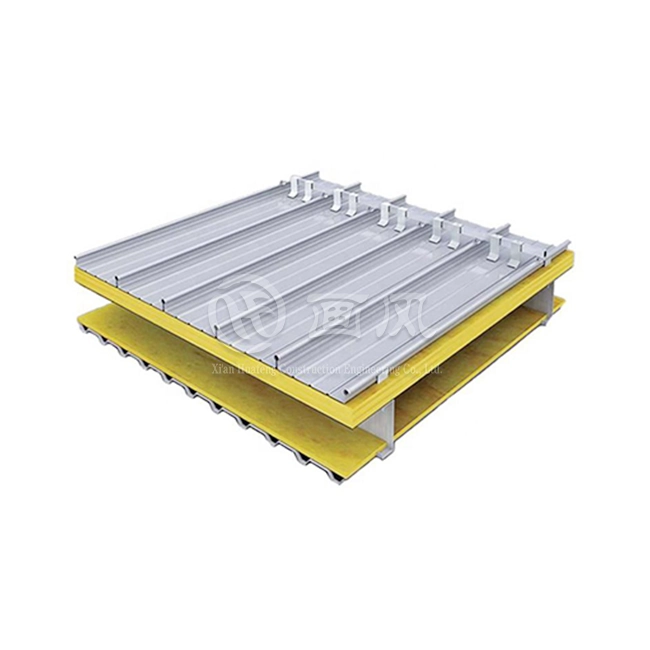
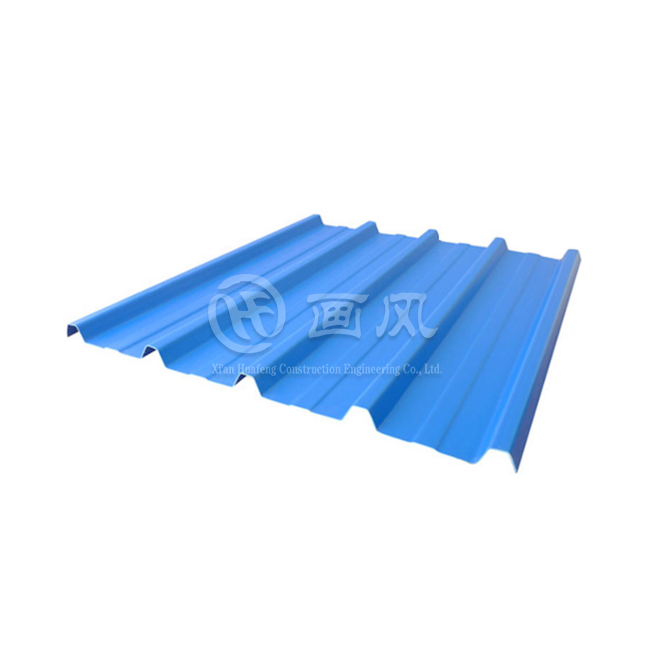
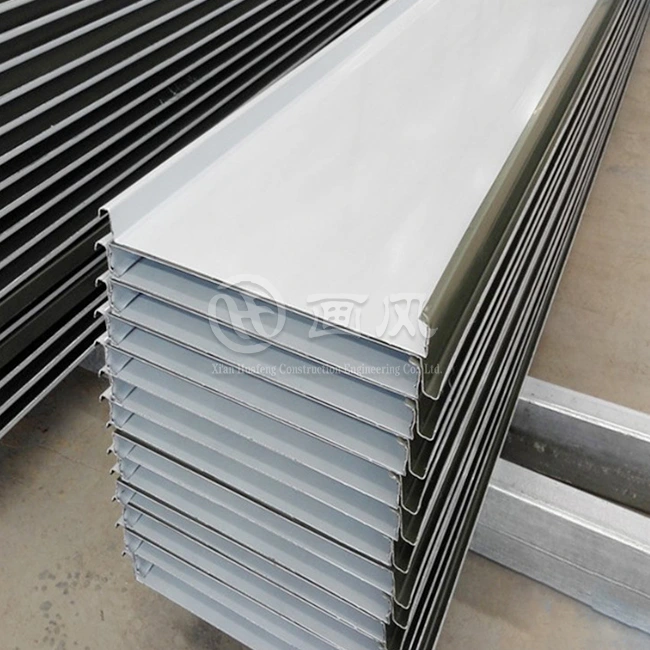
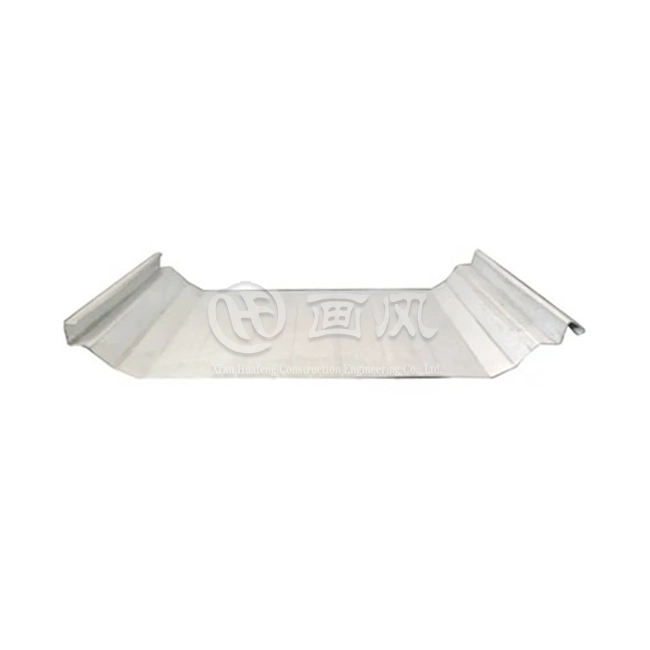
The higher trapezoidal rib shape isn't just for looks; it's also a structural beam that's built right in. The panel cross-section, which has rib heights from 50 mm to 115 mm, greatly improves the system's section modulus. This lets it span bigger purlin spacing without deflection in the middle of the span. Panels can be made from aluminum alloy grades 3003, 3004, and 5052, as well as alu-zinc steel and stainless steel, at Xi'an Huafeng Construction Engineering Co., Ltd. (HF). Panels can be as thin as 0.7 mm or as thick as 1.2 mm, and they can be as long as 13 meters.
The system has a wind resistance rating of at least 5.0 kPa and a load capacity of at least 1.5 kN/m². It meets the standards for industrial construction projects in Southeast Asia, the Middle East, Africa, and Latin America. Flame testing that is approved by SGS according to AS/NZS 1530.3:1999 proved that all six test samples of HF's 3003H24 aluminum panels with a PVDF fluorocarbon covering had a burning index of 0, a flame spread index of 0, and a heat release index of 0. The product has a Class A fire rating, which means it can't catch fire.
When compared to corrugated metal or exposed-fastener screw-down roofing, the concealed-clip system doesn't have a screw hole, which is where most roofs fail. When the temperature changes, washers break down, holes get longer, and water gets in at those exact spots. With the trapezoidal standing seam roofing, that weakness is gone for good.
Advantage 2: Enhanced Energy Efficiency and Thermal Performance
How Does Roofing Design Reduce Operating Costs?
The annual cost of HVAC systems in large industrial buildings is directly related to how well they keep cool. The trapezoidal standing seam roofing can hold hard insulation boards, mineral wool batts, and reflective foil surfaces. This lets engineers adjust the thermal resistance (R-value) to meet the needs of the local environment.
You can get HF panels in a wide range of custom colors with PE and PVDF reflective coatings. Light-colored PVDF-finished panels keep the sun's heat from absorbing them, which lowers the temperature of the roof covering and lowers the need for cooling in hot and dry areas. The PVDF coatings that were put through the difficult North American architectural coating standard AAMA 2605-22 passed all 13 performance factors at HF's SGS-certified tests. These included being resistant to nitric acid (ΔEH = 0.3), sticking to boiling water (5B), and being flexible (0T, no cracking). These coatings are very durable, so the mirrored qualities that save energy will stay the same for decades.
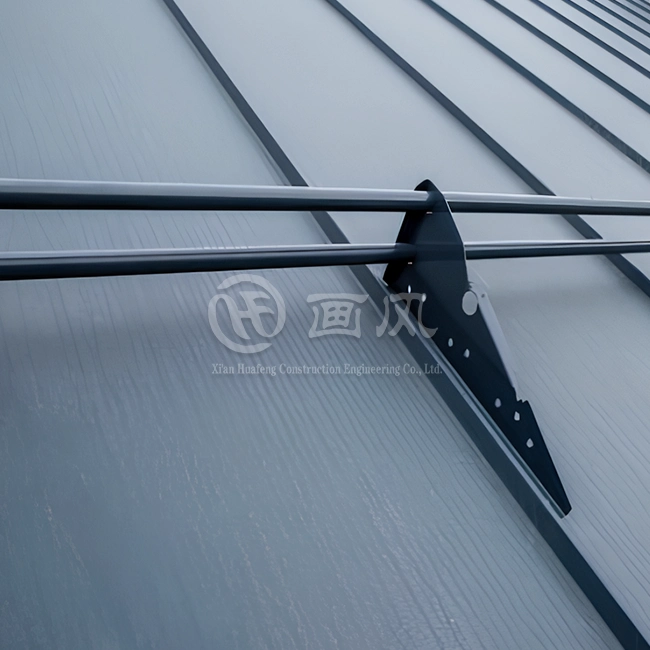
The rib geometry of the system also lets solar modules be mounted with non-penetrating seam clamps, so no holes need to be drilled through the roof membrane. This protects the warranty against water damage and helps green building standards like LEED and BREEAM.
Advantage 3: Streamlined Installation Process That Saves Time and Costs
Why Does the Fastening System Matter on a Construction Schedule?
Whether a project has liquidated losses or not is directly related to how fast the warehouse or transportation center is built. This benefit is based on the hidden floating-clip process. Each clip is attached to the purlin structure, and the panel seam can move freely over the clip base. This lets the panels expand and contract with temperature changes over lengths of more than 100 meters. This gets rid of the hole stretching and fastener wear that lead to screw-down system callbacks on the trapezoidal standing seam roofing.
Here are the core installation advantages that directly impact project timelines:
- Prefabricated panel dimensions cut to drawing specifications: HF makes panels to order in lengths up to 13 meters and widths from 300 mm to 600 mm, which saves time and money on cutting on-site. Panels that are made to exact drawing sizes come pre-assembled.
- Concealed fixation eliminates post-installation leak remediation: This is because no fastener goes through the outer surface, so the installation pass rate is better. The waterproofing meets the ASTM D7344 standard, which is a standard that procurement teams can write straight into bid papers.
- Phased delivery aligned to construction sequencing: HF can accommodate split-shipment plans with a normal lead time of 15–20 days and a minimum order size of 500 square meters. This model for transportation is similar to the way EPC contracts usually set up payment milestones.
These advantages translate directly into lower total installation cost and reduced schedule risk — two factors that weigh heavily in project manager evaluations.
Advantage 4: Low Maintenance Requirements and Long Service Life
What Does a 30-Year Warranty Actually Cover?
Total cost of ownership models need to take into account things like how often maintenance needs to be done and the cost of repairs that weren't planned. The HF trapezoidal standing seam roofing comes with a 30-year warranty that is based on actual material performance data, not just marketing speak.
All ten types of dangerous substances that were tested and found to be zero in HF's 5052H26 aluminum panels were confirmed by the EU RoHS compliance report (SGS Job No. QDPC2410001127). These substances include lead, mercury, cadmium, hexavalent chromium, PBBs, PBDEs, and four restricted phthalates. This environmental compliance is directly relevant to facilities that work in places with strict chemical exposure rules. This includes infrastructure projects funded by the EU that were bought through World Bank or ADB frameworks.
In humid tropical or seaside areas, metal roofs that don't rust are the ones that need the most upkeep. Aluminum metal surfaces naturally don't oxidize, and they don't lose any structural mass in the process. A primer layer of 8 μm and a topcoat of 18 μm in PVDF coatings make a chemically inert barrier on the surface that protects against acid rain, industrial fallout, and air that is full of salt. Routine maintenance is reduced to visual inspections and low-pressure washing every so often. This isn't even a big problem for facility management teams.
Advantage 5: Versatile Design Options for Industrial and Commercial Applications
How Much Customization Is Realistic at Scale?
People who work in industrial procurement often think that design flexibility and structural performance are opposites. That idea is called into question by the trapezoidal standing seam roofing. You can choose any color, any surface design, any panel width (300 mm to 600 mm), any rib height (50 mm to 115 mm), and any panel length (up to 13 meters). There are two finish options: PE and PVDF. PVDF is better at keeping its color and resisting chemicals, which is important for long-term building uses.
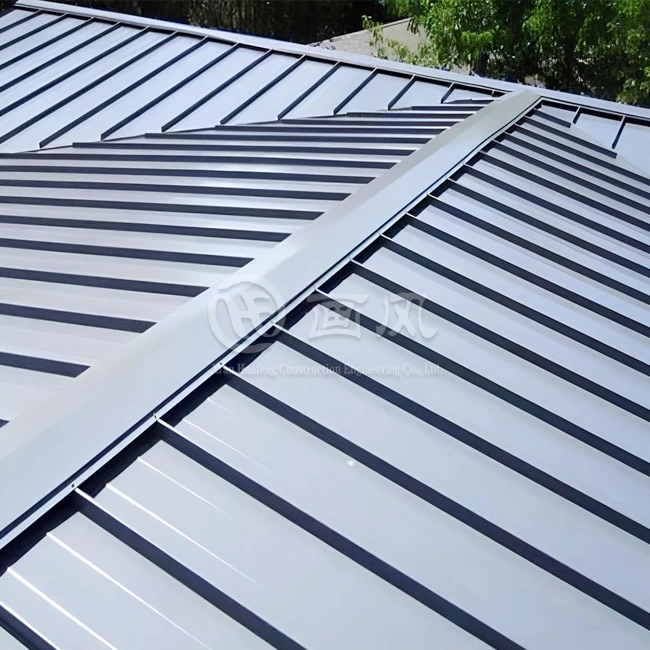
When manually seamed, the rib geometry can handle a wide range of roof shapes, even low-slope layouts with slopes as low as 1.5 to 2 degrees. This means that the system can be used in places like transit hubs, manufacturing plants, distribution centers, and aircraft maintenance hangars where roof spans often exceed 50 meters and owners want proof of wind uplift performance.
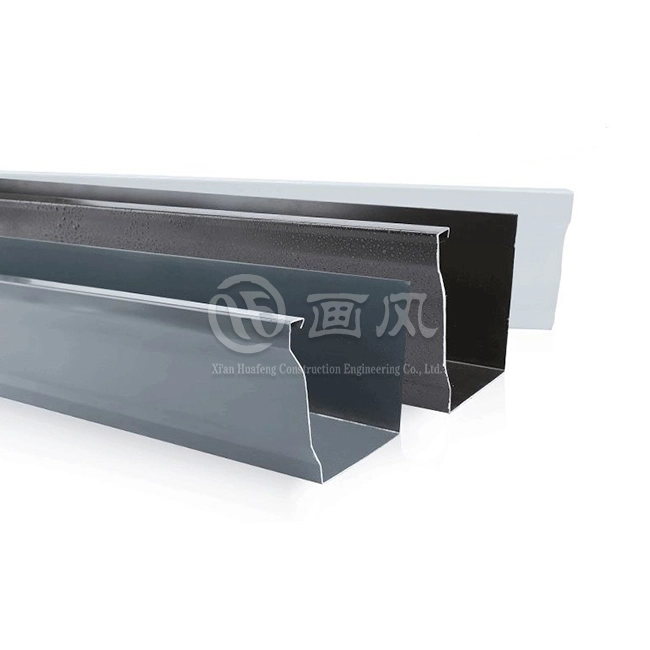
Guttering, ridge caps, skylights, and insulation layers are all connected to the trapezoidal standing seam roofing ribs with non-penetrating clamps, so the system fits in perfectly with other parts of the building environment. This modular flexibility makes it easier for project managers to send a simpler set of acceptance documents to building owners and makes it easier for everyone to work together during the EPC process.
HF is certified by CE, ISO, and SGS and has more than 20 registered patents on roofing system technology. With 7 color coating production lines and factories that cover 200,000 square meters in Anhui, the company can handle big industrial orders without slowing down wait times.
Conclusion
Thermal efficiency, speed of installation, low maintenance, and the ability to change the design are not separate selling points; they work together to make one engineered system stronger. The trapezoidal standing seam roofing fixes the main problems that have caused industrial buildings' lifetime costs to go over budget in the past: failing fasteners, thermal stress, and coating degradation. With recorded SGS test results, a 30-year warranty, and a production infrastructure built for large-scale custom orders, HF offers a solution that is good enough for procurement and can stand up to technical review from both project managers and compliance inspectors.
FAQ
1. Is trapezoidal standing seam roofing more expensive upfront than corrugated metal roofing?
Yes, the cost of the materials and installation at the start is usually higher. The 30-year warranty, on the other hand, the lack of through-fastener leak repair, and the lower upkeep requirements all add up to a much lower total cost of ownership over the span of the building. Lifecycle cost modeling always shows that the trapezoidal standing seam roofing is better for EPC companies who are in charge of multimillion-dollar building projects.
2. What substrate materials are available?
HF has stainless steel, aluminum alloy (grades 3003, 3004, and 5052), and alu-zinc steel. You can choose to have a PE or PVDF coating on any of these metals. Which material to use depends on how the project will be exposed to the environment. For example, aluminum alloys work well in coastal and chemically active industrial settings, while alu-zinc steel is good for general industrial uses.
3. Can the system be installed over an existing roof?
A structural study is needed, but the system can be put on top of metal roofing that is already there by using a sub-framing system to raise the new panel surface above the old one. This repair method saves money on full tear-off costs and keeps building downtime to a minimum during re-roofing.
4. What is the minimum order quantity and lead time?
The smallest amount that can be ordered is 500 square meters. The usual time for arrival is 15–20 days. HF allows for phased shipment plans that are in line with building goals, which works well for EPC contracts that use progressive billing.
Get Your Project Quote from HF — Trusted Trapezoidal Standing Seam Roofing Manufacturer
The engineering team at HF is ready to look over your drawings, confirm the panel specifications, and give you a structured quote with options for a phased delivery. Every order comes with a 30-year warranty, CE, ISO, and SGS certification, and you can change the color and design of anything you buy. To talk to a technical representative right away, email us at huafeng@hfmetalroof.com or go to hfmetalroof.com. Trusted trapezoidal standing seam roofing Manufacturer HF: Get a Quote for Your Project.
References
1. Metal Construction Association. Metal Roofing Systems Design Manual. 2022.
2. American Architectural Manufacturers Association. AAMA 2605-22: Voluntary Specification, Performance Requirements and Test Procedures for Superior Performing Organic Coatings on Aluminum Extrusions and Panels. 2022.
3. ASTM International. ASTM D7344: Standard Practice for Dissolution Testing of Roof-Related Materials. 2021.
4. U.S. Department of Energy, Office of Energy Efficiency & Renewable Energy. Cool Roofs: Energy Savings and Environmental Benefits. 2021.
5. Standards Australia / Standards New Zealand. AS/NZS 1530.3:1999: Methods for Fire Tests on Building Materials, Components and Structures — Simultaneous Determination of Ignitability, Flame Propagation, Heat Release and Smoke Release. 1999.
6. European Parliament. Directive 2011/65/EU on the Restriction of the Use of Certain Hazardous Substances in Electrical and Electronic Equipment (RoHS), as Amended by Directive (EU) 2015/863. 2015.





YOU MAY LIKE