Mechanical Lock Metal Roofing Benefits, and Lifespan
2026-09-18 20:57:08
When roofing contractors and procurement managers evaluate long-term envelope solutions for commercial and industrial projects, mechanical lock metal roofing consistently rises to the top of the specification list. This standing seam system uses a physically crimped seam — folded 90° or 180° by an electric seaming tool — to create a monolithic, hydrostatically watertight barrier between panels. Unlike snap-lock profiles that rely on friction, the mechanically engaged joint delivers verified structural uplift resistance, capillary-break waterproofing, and fatigue tolerance across decades of thermal cycling. With service lives routinely exceeding 30 years under North American field conditions, it represents one of the most defensible lifecycle investments in the commercial roofing sector.

What Is Mechanical Lock Metal Roofing and How Does It Work?
The Core Mechanics Behind the System
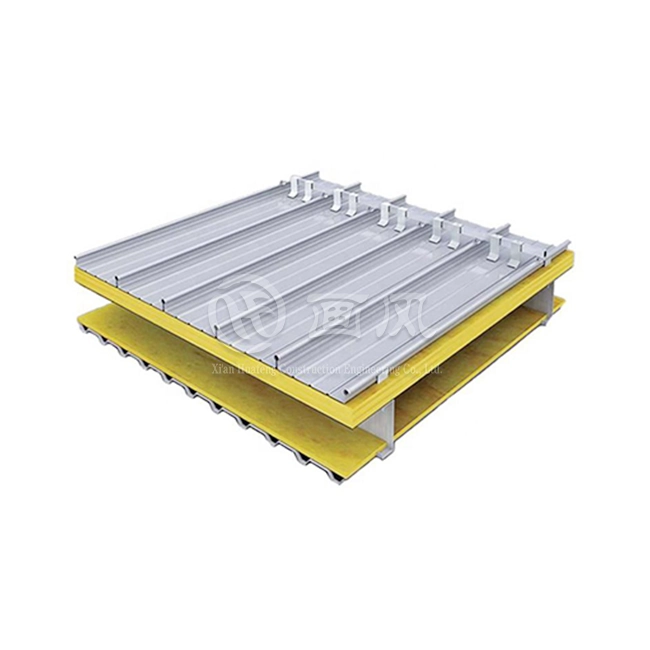
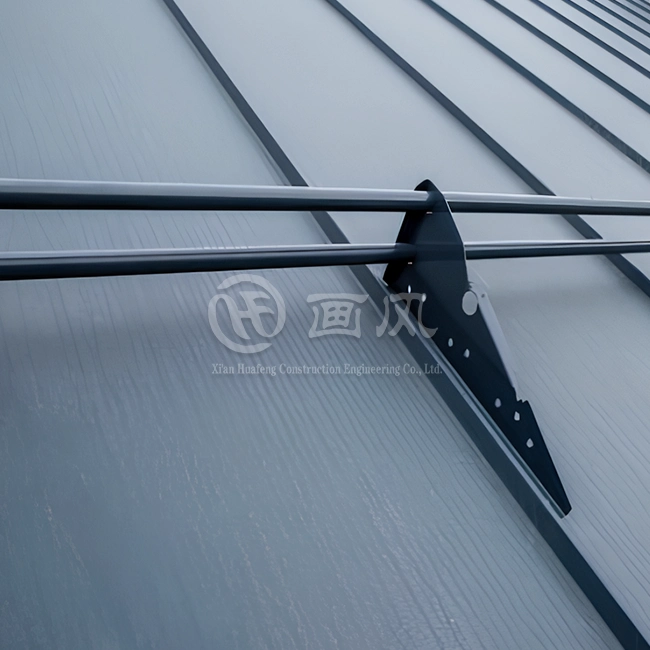
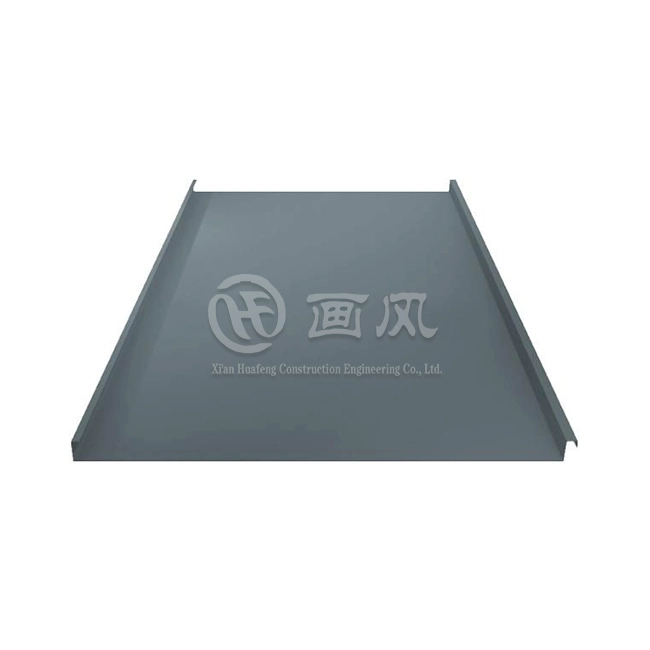
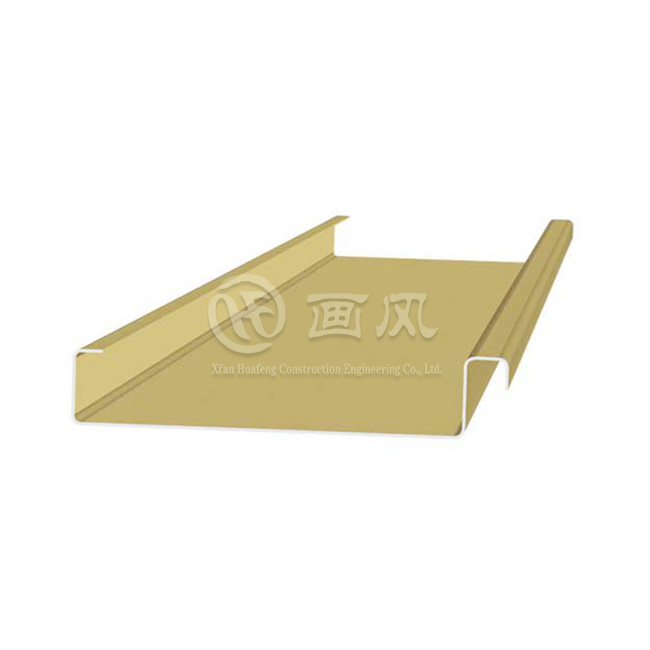
Mechanical lock metal roofing systems work through a standing seam panel featuring a flat pan, two vertical legs, and a hidden clip that attaches to the base without going through the face of the panel. As the panel is being put together, a driven seaming machine goes along the whole length of it, folding the male leg over the female leg to make a closed seam. Because there are no exposed fasteners, the main point of failure in through-fastened profiles is eliminated: rubber-gasketed screws that wear out, back out, or let water in as buildings bend.
There are two main types of ribs that HF sells: the 25 mm (1") rib comes in profile widths of 330 mm, 400 mm, and 430 mm, and the 32 mm (1.25") rib comes in widths of 300 mm, 410 mm, and 430 mm. Metal panels can be made of Galvalume steel, galvanized steel, aluminum, or titanium zinc and are between 0.5 mm and 1.0 mm thick. These measurements are exactly the same as North American framing grids and standard rafter spacing, which means less cutting and work on-site.
Just as important is the moving clip method. Each clip attaches to the deck separately, allowing the panel to move over it. This lets the panel move more than 25 mm in temperature over long runs without putting stress on the joint. This stops oil-canning and stress breaking, two problems that make weaker systems fail faster than they should.
Key Benefits of Mechanical Lock Metal Roofing for Business Applications
Four things determine the specs for commercial roofs: the structure's function, its ability to keep out the weather, the finish's durability, and the cost over its entire life. Here are the main performance benefits that make mechanical lock metal roofing the best choice for roofing contractors who work in places with a lot of wind and weight.
- Wind uplift resistance of at least 90 mph (144 km/h): The crimped seam spreads uplift forces across the whole panel's width instead of putting all the weight on a few fastener points. This meets the standards for the IBC wind zone and helps projects in the High-Velocity Hurricane Zone follow the rules set by the NOA.
- IPX4 or higher waterproofing: Butyl sealant is sprayed at the factory inside the female leg, and the double-lock fold forms a capillary break that works even at 5° slopes. This level of efficiency has been confirmed by ASTM E1646 water penetration tests.
- Class A fire grade according to ASTM E108: This means that the non-combustible metal panels don't help the flame spread, which is an important specification factor for public and business buildings.
- Load capacity of at least 1.5 kN/m²: This is enough for snow and maintenance loads in alpine and northern climate zones that are common in the upper Midwest and Canada.
These features of the structure directly lead to lower insurance rates, fewer upkeep calls, and more reasonable bids for roofing contractors who work with institutions. In addition to their excellent performance, PVDF-coated panels come in any RAL color and have been tested to make sure that the ΔE color stays the same across production batches. This gives architects the control over how the projects look that they need for healthcare, hospitality, and public buildings.
Mechanical Lock Metal Roofing vs. Alternative Roofing Systems
Why the Seam Type Changes Everything?
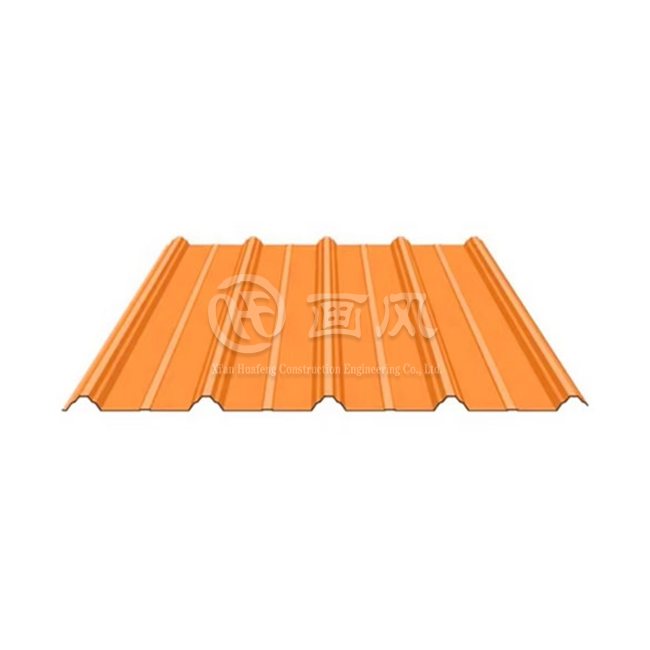
Exposed-fastener metal roofing uses screws with neoprene gaskets that are driven through the panel face. Every fastener can be a leaky spot, and field data from NRCA-recorded re-roofing jobs regularly shows that water getting in through fasteners is the main reason for mid-life failure in this group. The snap-lock standing seam is better because it hides the fasteners, but the friction-fit seam can come apart when there is steady lifting pressure or high thermal expansion events on panel runs longer than 30 feet.
Mechanical lock metal roofing panels solve both issues. The crimped joint can't come apart without damaging the screen, and the floating clip system quietly allows for heat movement. For low-slope uses like warehouses, distribution centers, and transit hubs, a manually seamed system is the only way to keep water out. Liquid-applied membranes should not be used as a backup.
In terms of lifetime costs, putting a mechanically seamed roof over a sub-framing system on top of an existing built-up roof gets rid of the need for tear-off costs, landfill fees, and worries about structural loads. The metal panel weighs about 1.5 pounds per square foot, which means that most existing buildings can be retrofitted without needing any engineering changes.
Procurement Considerations for Mechanical Lock Metal Roofing Panels
Evaluating Suppliers on Criteria That Matter at Project Scale
When buying mechanical lock metal roofing standing seam panels in large quantities ($500,000 to $3,000,000 a year), purchasing managers need to know a lot more about the suppliers than just looking at a price list in a catalog. The must-haves are ASTM E1592 structural performance reports for the panel shape and clip spacing that are being asked for; PVDF coating approval to Kynar 500 or Hylar 5000 standards; mill certificates showing substrate yield strength and AZ50/AZ55 coating weight; and documented T-Bend flexibility data confirming the coating can withstand the 180° seaming fold without micro-fracturing.
Xi'an Huafeng Construction Engineering Co., Ltd. has three factories that make things. These factories have more than 40 cutting, pressing, and bending tools and seven color-coating production lines. The monthly capacity is 1,000 tons, and the lead time is usually 15–20 days from the time an order is confirmed. The minimum order size is 500 m², which is equal to 1 metric ton. This size is meant to accommodate purchases for a single job without causing contractors to keep extra inventory. These standards include ASTM, DIN, JIS, BS, and GB/T. The company also has ISO 9001, ISO 14001, CE, and SGS certifications.
The packaging is designed to keep the panels from deforming during transport, which is especially problematic for long-panel orders where damage to the coated face from contact leads to obvious field rejection. Each panel pack comes with corner guards and protective interleaving that are suitable for both ocean freight and local trucking.
Maximizing the Lifespan and Performance of Mechanical Lock Metal Roofing
Maintenance Protocols That Protect the 30-Year Warranty
HF stands behinds its mechanical lock metal roofing standing seam panels with a 30-year service warranty, but for the panels to last that long, they need to be maintained in a certain way. Checking the seam engagement, clip exposure at panel terminations, sealant condition at flashings and penetrations, and debris buildup in valley gutters that could cause water to pool above the panel's rated drainage gradient should all be done twice a year, in the spring and the fall.
PVDF coats with a thickness of 25–40 µm on the top and 10–15 µm on the bottom prevent chalking and fading in all types of U.S. weather. In places near the coast where the air is salty, rinsing the surfaces of panels with fresh water once a year makes the coating last longer and stops chloride from undercutting the edges of cuts.
When floating clips are placed at the distances shown on the engineering plans, thermal expansion control is taken care of automatically. The main reason panels buckle on long runs is that they are not spaced correctly, which is a quality control issue that ASTM E1592 field testing finds. Contractors should check that the clip spacing is correct while the roof is being put on, not after it is completely closed.
Conclusion
Because it has a hidden fastener system that stops the main cause of water getting into metal roofs, mechanical lock metal roofing is a standard item for commercial builds. The PVDF finish is also very durable and keeps its color for decades. ASTM-compliant engineering data, flexible panel geometry, and a 30-year manufacturer warranty make a strong case for procurement teams that have to balance project budgets, installation schedules, and client expectations. Most of the time, the choice is not whether to define this method or not, but which supply partner will carry it out.
FAQ
1. How steep does a manually seamed standing seam roof have to be?
Most single-lock mechanical lock metal roofing systems can handle slopes as low as 2:12. This can be raised to 0.5:12 with double-lock profiles that have sealant applied at the factory to the female leg. This means that they can be used for large commercial buildings that need to have low drainage gradients.
2. How well does the moving clip method work with long sheet runs?
The clip holds the panel to the structural deck but lets it move along its length. The difference in temperature between winter lows and summer highs can cause more than 20 mm of movement on a 12-meter panel run. The floating clip passively absorbs that movement, which keeps the seam from being stressed in one place.
3. Will the PVDF layer last through the sewing process?
PVDF coats that are approved by Kynar 500 are made to pass the T-Bend test, which mimics the 180° fold of a double-lock seam. Coating crack doesn't happen as long as the seaming tools are set up according to the manufacturer's instructions.
4. What ASTM standards should people in charge of buying things ask for?
For wind lifting, use ASTM E1592, for water entry, ASTM E1646, and for air infiltration, ASTM E1680. Ask for test results that are special to the panel and list the exact profile width, rib height, clip type, and fastener spacing that were used during testing.
5. When can I order something in a color that I don't see?
Most of the time, HF delivers within 15 to 20 days. You can choose from RAL colors and other custom specs. Make sure you get written confirmation of color batch consistency and ΔE tolerance before placing your order so that there are no obvious field differences between export lots.
Request a Quote from HF — Your Trusted Mechanical Lock Metal Roofing Supplier
The three companies that HF uses to make ASTM-compliant mechanical lock metal roofing standing seam panels can make 1,000 tons of them each month and send them in 15 to 20 days. Our team offers panel-specific test results, RAL color matching, and packaging designed for long-haul freight, whether you are in charge of a single project or a large regional delivery volume. To get a technical datasheet and project quote, email us at huafeng@hfmetalroof.com or go to hfmetalroof.com.
References
1. Metal Construction Association (MCA). Technical Bulletin: Standing Seam Metal Roof Systems. 2022.
2. National Roofing Contractors Association (NRCA). The NRCA Roofing Manual: Metal Panel and SPF Roof Systems. 2023.
3. ASTM International. ASTM E1592: Standard Test Method for Structural Performance of Sheet Metal Roof and Siding Systems. 2021.
4. ASTM International. ASTM E1646: Standard Test Method for Water Penetration of Exterior Metal Roof Panel Systems. 2020.
5. Sherwin-Williams Coil Coatings. PVDF Coating Performance Guide for Architectural Metal Panels. 2021.
6. Oak Ridge National Laboratory (ORNL). Field Performance of Metal Roofing Systems in Commercial Buildings. Building Envelope Research Program. 2019.





YOU MAY LIKE