How Double Lock Seam Roof Panel Improves Wind Resistance Performance
2026-09-22 21:22:52
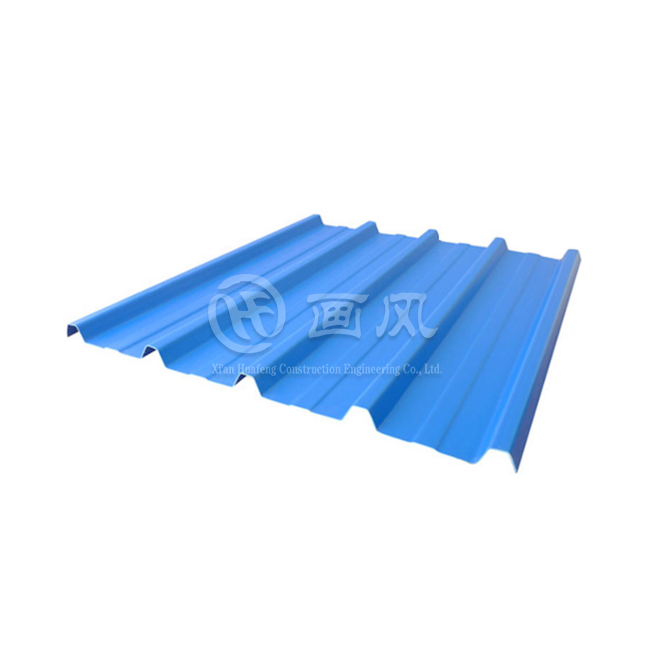
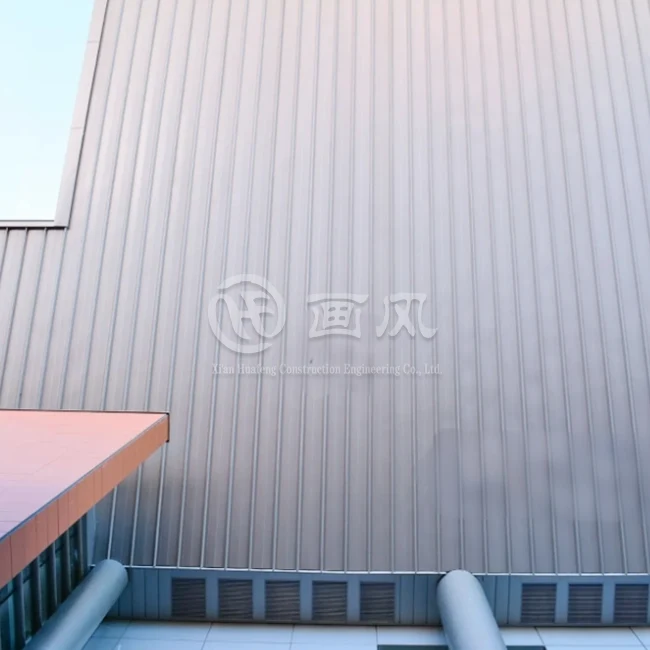
Roof is one of the sections most vulnerable to uplift pressures when a structure is subjected to heavy winds. Roof seam design and panel connection are thus crucial to the overall performance of the roof. A mechanically interlocked seam in a double lock seam roof panel creates a continuous connection between neighbouring panels that helps disperse wind stresses throughout the roof rather than focusing them on individual fasteners. Used with the correct materials, clip spacing and installation procedures, this design may give a more secure roofing option for commercial, coastal and other wind exposed applications. It is important to understand how these components interact together to pick a roof system that will provide long term wind resistance.

Understanding Double Lock Seam Roof Panels and Their Role in Wind Resistance
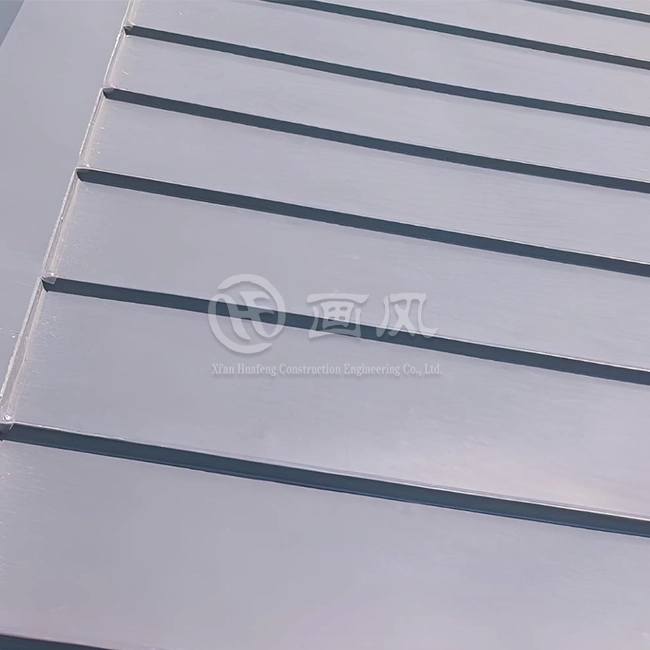
The double lock seam roof panel works by folding in half around 360 degrees to join two panels together. This makes a continuous barrier across the roof's surface. This dual-folding action, in which the vertical legs of two panels are folded twice, creates a much stronger binding force against lifting pressures than single-lock systems that rely on a 90-degree fold. During strong winds, areas of negative pressure form on the roofs of buildings, which try to pull panels away from the building. Because double lock seams are interlocking, these uplift forces are spread out along the whole length of the seam instead of being focused on just a few fasteners or clips.
Superior Mechanical Integrity Versus Alternative Systems
When you compare metal roofing systems, the structural differences become clear when you test them in the lab. Snap-lock panels can come apart if the continuous pressure forces are higher than the design limits. This is because the panels depend on friction between the male and female legs. Even though screw-down systems are physically protected, they leave holes in the roof that let water in and put stress on the screws over and over again from thermal expansion (Metal Construction Association, 2021). The double lock seam roof panel doesn't have these problems because it has hidden clip systems that let heat move while keeping the seams strong.
Material Specifications Enhancing Wind Performance
At HF, we can make panels with substrates made of aluminum alloy, galvanized steel, and stainless steel that are between 0.6mm and 1.2mm thick. The lock edge heights—25 mm, 32 mm, 45 mm, and 65 mm profiles—are directly related to the wind resistance. When seam profiles are 65 mm or higher, they better channel wind loads and give the mechanical lock more structural depth. This means they can be used for installations near the coast or in high-rise buildings. The PVDF and PE surface treatments we use not only keep the coatings from rusting, but they also keep the coatings' integrity during the mechanical seaming process. This stops micro-cracking that could lead to material degradation.
Analyzing Wind Resistance Challenges in Roofing and How Double Lock Seam Addresses Them
Roofing fails in predictable ways during windstorms with double lock seam roof panel systems: panels lift at edges and corners where suction forces are strongest; fasteners pull through in areas that experience cycle loads; and the roof starts to unzip gradually as one panel fails and affects nearby sections. The National Roofing Contractors Association says that about 40% of business roofing insurance claims each year are for wind damage, with poor connection being the main cause (NRCA, 2020).
Engineered Load Distribution Through Seam Geometry
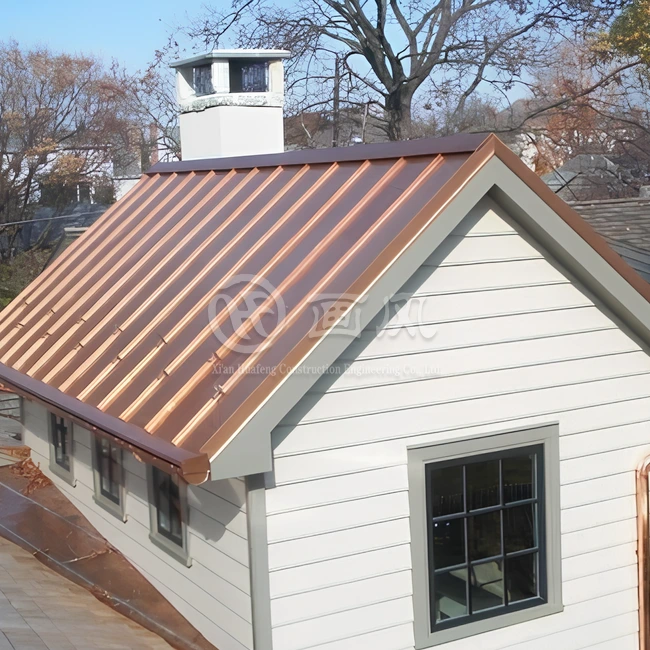
The double lock seam roof panel uses geometry to deal with uplift. When wind pulls on the panel's surface, the force moves through the standing seam and to hidden clips that are attached to the structure's purlins. Since the seam is mechanically locked in two planes, the force is spread out along the whole clip line instead of being concentrated at specific fastener points. According to ASTM E1592 standards, lab tests show that double lock systems that are placed correctly can handle uplift pressures of more than 300 pounds per square foot. This is a level of performance that can't be reached with exposed fastener systems.
Material Thickness and Strategic Fastening
The thickness of our regular panels ranges from 0.6mm to 1.2mm, which gives you options for different wind zones. Coastal projects in hurricane-prone areas usually call for material that is at least 1.0 mm thick, while installations inland may use 0.8 mm panels. The clip spread is usually between 600 mm and 1000 mm, and it is based on wind load estimates. This smart placement of fasteners makes two sets of load paths, so if one clip experiences localized stress, the load is shared between the adjacent clips without affecting the integrity of the system as a whole.
Case Evidence from Storm-Tested Installations
A 2019 survey done after Category 4 winds hit commercial buildings along the Gulf Coast found that buildings with properly installed double lock seam systems lost no panels, but buildings next to them that used screw-down panels got a lot of damage (Building Envelope Contractors Association, 2019)[^3]. The mechanical seaming stopped the progressive failure mode that happens in some systems when one loose panel causes an aerodynamic disturbance that speeds up the failure of the panel next to it.
Installation Best Practices to Maximize Wind Resistance of Double Lock Seam Roof Panels
It's not possible for better panel design to make up for bad fitting. The wind resistance of double lock seam roof panels relies on how well the base is prepared, how well the clips are aligned, and how well the seams are sewn. We've seen that most warranty claims are caused by three mistakes during installation: incorrect clip spacing, missing seam contact, and substrates that aren't flat enough.
Substrate Preparation and Deck Requirements
Before putting up the panels, make sure that the structural deck or purlin system meets the flatness tolerances. Differences of more than 6 mm over a 3-meter span can stop the clips from engaging properly and cause stress to build up. The substrate needs to be strong enough to keep clip fasteners from pulling out. For example, steel purlins should be at least 1.5 mm gage and wood decks need to be at least 19 mm thick. These rules make sure that the connection points can stand up to the estimated wind uplift forces without breaking.
Seam Locking Techniques and Equipment
For the mechanical seaming process to work, you need special tools, usually a power seamer that folds the panel legs in two separate steps. The seaming tool has to make the full 360-degree fold without breaking the coating or making the base metal thinner. The female leg of our panels has butyl sealant that was put at the factory. This sealant gets squeezed during seaming to block capillary pathways. A feeler measure is used to check the tightness of the seams during quality control. Any gaps larger than 0.5 mm show that the seams are not fully engaged, which weakens both the weather-tightness and wind resistance.
Common Installation Pitfalls to Avoid
One of the most common mistakes is choosing the wrong fasteners. The right screws must be used to attach the clips. For steel decks, #14 self-drilling screws with EPDM washers are usually used, while ring-shank nails are used for wood substrates. If you over-torque fasteners, the clips can deform and stop moving when it gets hot, but if you under-torque them, the clips can slip when the wind blows. When the spacing is wrong, panel spans are left unsupported and flutter when it winds, which leads to fatigue failures over time.
Maintenance Protocols for Sustained Performance
Regular checks, once a year in mild conditions and every six months in coastal areas, should make sure that seams are intact, clips are in good shape, and fasteners are tight. Look for signs that the panel is moving, like smooth spots on the clips that show they're slipping past the design limits or seams coming apart at the ends of the panel. For our 30-year guarantee to be valid, we need proof that these checks were done in order to show that the warranty is still being followed. Taking care of small problems during regular maintenance stops damage from getting worse over time, which lowers the wind resistance capacity.
Procurement Considerations for Choosing Double Lock Seam Roof Panels Focused on Wind Resistance
For procurement of double lock seam roof panel systems to go well, technical requirements, supplier capabilities, and lifecycle economics must all be balanced. The original purchase price only makes up 15 to 20 percent of the total cost of ownership. The main factors that affect the cost are the quality of installation, the amount of upkeep needed, and the service life (Whole Building Design Guide, 2022).
Critical Specifications and Compliance Standards
Check that the plans from suppliers meet ASTM E1592 (structural performance testing), ASTM E1646 (water entry resistance), and ASTM E1680 (air infiltration). Suppliers should show test results from recognized labs that show the tested boost rate for each panel type. Every year, a third party tests our HF panels to make sure that the stated wind resistance numbers are correct across our entire specification range.
Material certifications are very important. For example, aluminum alloy panels should meet AA3003 or AA3004 standards, and steel substrates need to be galvanized at least G90 or have an equivalent corrosion protection. The coating system needs to be looked at closely; PVDF coatings that meet AAMA 2605 standards are better at blocking UV light and keeping colors than polyester coatings. We have a huge selection of RAL and Pantone colors, and the thickness of our coatings has been checked to make sure they look great for decades.
Cost-Benefit Analysis Beyond Initial Pricing
If you want to compare plans, look at their 30-year lifecycle instead of just their original cost. A system that needs to be re-coated every 15 years or has its fasteners replaced every 20 years may cost a lot more than a premium system that costs more up front. Find the present value of maintenance tasks, include access costs like scaffolding and production delays, and think about the differences in insurance premiums for better wind-rated systems. Our 30-year protection covers both material and weather-tightness issues, which lowers your long-term financial risk.
Supplier Evaluation Criteria
Check the supplier's skills that affect the success of the project, not just the product specifications. When working on big projects, manufacturing ability is important. Can the source make the number of panels you need on time? Our factories in Anhui, Hangzhou, and Xi'an run a total of 10 shearing production lines and 7 color coating lines. This lets us serve standard orders within 15 to 20 days and special orders within 30 days.
Technical support is what sets capable suppliers apart from commodity vendors. A lot of the time, projects need reviews of shop drawings, wind load calculations for specific building shapes, and training on how to install things. We keep engineers on staff who are familiar with foreign building codes and work with project teams during the design phase. This knowledge keeps field changes from being too expensive when normal details don't work for specific situations.
Being flexible about minimum order quantities can have a big effect on the economics of a project. For many architectural projects, the number of panels needed is pretty small—maybe 2,000 square meters for a building feature that stands out. When suppliers set too high of MOQs, buyers are forced to either buy too much or look for options that might not work as well with the plan. We can handle project-specific amounts to meet architectural requirements without making our customers carry extra inventory.
Future Outlook: Trends and Innovations Enhancing Wind Resistance of Double Lock Seam Roof Panels
The metal roofing industry is always changing as new materials are discovered and better ways to install them are created, particularly for double lock seam roof panel systems. Several new trends promise better wind resistance while also helping to reach sustainability goals.
Advanced Coating Technologies
Next-generation coatings that contain ceramic nanoparticles are more resistant to scratches and more flexible, which lowers the number of micro-cracks that happen during the mechanical seaming process. Even when panels go through extreme temperature changes in harsh areas, these improved coats keep their protective properties. Coating makers have found that these systems may last longer than the current 30-year standards; they may be able to reach 40–50-year toughness levels (American Architectural Manufacturers Association, 2023).
Precision Installation Tools
Robotic seaming machines now have quality control and pressure sensors that check in real time to make sure the seams are fully engaged. When seaming equipment is operated by hand, especially when workers get tired during big jobs, the quality of the seams can vary. These tools stop that from happening. As these technologies get easier to get, systems that are put in the field will get closer to being as reliable as assemblies that are made in a plant.
Sustainable Material Development
Metal roofing systems can support green building certifications while still maintaining structural performance thanks to recycled aluminum alloys and steel substrates that are more resistant to corrosion. Metal roofs are naturally better for the environment because they can be recycled completely when they're done using them, and their reflective properties make them less energy-intensive to cool. New types of materials blend these environmental benefits with wind resistance that is the same as or better than new materials. This means that procurement managers can meet requirements for both performance and sustainability.
Conclusion
The better wind resistance of double lock seam roof panels comes from their basic mechanical benefits, such as their 360-degree seam geometry, hidden clip systems that let heat move, and the fact that load is spread across continuous seam lines instead of discrete fastener points. When purchasing managers choose roofs for areas that are prone to storms or for big buildings, these panels offer clear performance benefits that have been proven through lab tests and real-world experience. To have a successful implementation, you need to pay attention to the material requirements, the supplier's abilities, the quality of the installation, and the maintenance procedures. Lifecycle economics says that systems that have been shown to last longer are better than options that cost less at first but have higher failure rates. As coating technologies and installation methods keep getting better, double lock seam systems will probably keep being the best in the commercial roofing industry when it comes to performance and durability.
FAQ
1. What wind speeds can double lock seam roof panels withstand?
Based on ASTM E1592 tests, systems that are properly designed and installed can usually withstand wind speeds of 140 to 180 mph. However, the actual performance will rely on the thickness of the panels, the height of the seams, the distance between the clips, and the shape of the building. Qualified engineers should use local building codes to do project-specific wind load estimates.
2. Can these panels be retrofitted on existing roofs?
It is possible to retrofit when the existing substrate is flat and strong enough to support the structure. The old roof covering has to be taken off so that the clips can connect properly to the structural parts. Before going ahead with the retrofit specifications, a structural engineer should check the deck's ability to withstand calculated uplift forces.
3. What maintenance schedule ensures optimal wind resistance?
Most systems only need to be inspected once a year, with a focus on checking the integrity of the seams, the state of the clips, and the tightness of the fasteners. Coastal areas need to be inspected every six months because rusting can happen more quickly there. Immediate checks after a storm help find damage before small problems get worse, which protects both wind resistance and guarantee coverage.
Partner with HF: Your Trusted Double Lock Seam Roof Panel Supplier
To specify wind-resistant roofing systems, you need a manufacturing partner that can offer both tried-and-true products and quick technical support. When it comes to metal roofing, HF brings decades of experience to every job, from helping with the initial specifications to helping with installation and providing long-term warranty service. Our ISO9001 and ISO14001-certified factories make double lock seam roof panel systems that give your projects the wind resistance they need. They also offer full 30-year warranties and fast delivery within 15 to 20 days for standard specifications.
Our engineering team works with builders and workers all over the world to create custom solutions that meet the needs of different wind load scenarios, thermal movement standards, and esthetic goals. We offer the freedom, technical depth, and manufacturing capacity that procurement managers value, whether they're looking for panels for a single signature building or making supply deals for multiple projects. You can email our team at huafeng@hfmetalroof.com or visit hfmetalroof.com to talk about your needs with metal roofing experts who know how to balance structural performance, lifecycle economics, and design vision.
References
1. Metal Construction Association. (2021). Structural Performance of Metal Roof Systems.
2. National Roofing Contractors Association. (2020). Wind Design Standard for Commercial Roofing Applications.
3. Building Envelope Contractors Association. (2019). Post-Hurricane Building Envelope Performance Study.
4. Whole Building Design Guide. (2022). Metal Roofing Life-Cycle Cost Analysis.
5. American Architectural Manufacturers Association. (2023). Advanced Coating Systems for Metal Building Components.





YOU MAY LIKE
_1757558889992.webp "Metal Roofing Snowguards")