Customized Punched Plates: Uses, Advantages, and Applications in 2026
2026-03-30 16:30:15
In 2026, Customized Punched Plate technology will continue to transform architectural design and industrial manufacture. For commercial developers, roofing contractors, and construction firms looking for precise ventilation, filtration, and ornamental applications, these adaptable perforated metal solutions provide outstanding versatility. Modern punched plates provide exceptional performance across a variety of sectors while being economical and environmentally friendly thanks to sophisticated CNC punching processes and specific design possibilities.
Over the last ten years, I have seen incredible advancements in sheet metal processing as someone who works closely with the metal fabrication sector. Precision engineering's development has revolutionized the way we tackle difficult building problems and made tailored solutions more widely available than before.
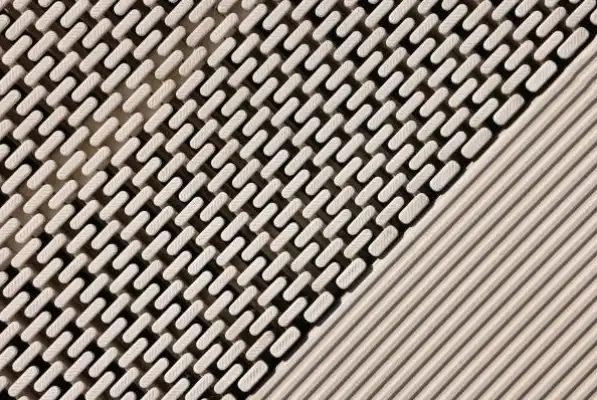
Core Uses and Applications of Customized Punched Plates
Ventilation Systems and Airflow Management
One of the most important uses for customized punched plates in contemporary building is ventilation panels. These specific perforated metal elements control the flow of air in homes, businesses, and industrial establishments. By carefully placing the perforations, regulated airflow patterns are produced, improving indoor air quality and using less energy.
To have the best ventilation performance, building designers use a variety of hole layouts and opening rates. For conventional HVAC systems, round holes with sizes of 5–10 mm usually provide superior air circulation. In the meanwhile, to optimize airflow efficiency, bigger commercial projects often call for square or hexagonal layouts with opening rates between 40 and 60%. Building volume, occupancy rates, and climatic conditions must all be carefully calculated throughout the implementation phase. The exact hole spacing and configuration are decided by engineers to guarantee even air dispersion across the area. This systematic strategy keeps big spaces consistently temperature-controlled and avoids hot spots.
Acoustic Panel Solutions for Noise Control
Growing worries about noise pollution in urban areas are addressed with acoustic panels made from pierced plates. In some applications, these sound-dampening systems enable vital sound propagation while absorbing undesirable frequencies.
Accurate hole geometry and backing material selection are key components of the science behind acoustic performance in bespoke customized punched plates. Effective sound absorption over a variety of frequencies is produced by micro-perforations with sizes between 0.5 and 3 mm. The acoustic absorption coefficient is a function of panel thickness, hole size, and spacing. Office buildings, conference centers, recording studios, and transit hubs are examples of commercial uses. Architects may easily include noise reduction into their design plans without sacrificing aesthetic appeal because to the ornamental metal panels' aesthetic adaptability.
Filtration Systems for Industrial Applications
Strong filtering systems that can endure challenging operating circumstances and yet provide reliable results are necessary for industrial production processes. When compared to conventional filter materials, custom metal mesh designs provide remarkable durability.
The choice of material and the accuracy of hole size determine the filtering mechanism. For situations involving chemical processing, stainless steel 316 grades provide exceptional corrosion resistance. Variants of carbon steel provide affordable options for common industrial applications with low levels of chemical exposure. Panel thickness and perforation diameter have a direct relationship with particle separation efficiency. Coarse filtration systems use holes up to 20 mm in diameter, while fine filtration applications use holes between 0.8 and 2 mm. By sequentially arranging various hole sizes, the multi-layer design technique improves filtering efficiency.
Architectural Facades and Building Envelopes
Perforated metal facades, which strike a compromise between aesthetic appeal and practical performance, are becoming more and more common in modern architectural design. These building envelope technologies preserve architectural freedom while offering visual seclusion, solar shading, and weather protection.
Architects, structural engineers, and metal manufacturing experts work together on the execution. Custom designs satisfy building code requirements for thermal efficiency and wind load resistance while expressing cultural themes or corporate identification. Options for surface treatment greatly increase the range of design possibilities. While powder coating produces finishes that are resistant to weather, anodizing produces vivid color changes. Surface treatment and pattern design work together to provide many customisation options for unique architectural expressions.
Security Grilles and Protective Barriers
Protective grilles made of perforated plates provide security without totally blocking airflow or view. These applications need a delicate balancing act between functional accessibility and protection level. The engineering approach takes user needs, building regulations, and threat assessment into account. In order to restrict unwanted access, hole designs made for security applications usually have smaller apertures with strengthened edges. Using a customized punched plate, material thickness grows in proportion to security needs.
Depending on the application type and security level, several installation techniques are used. For high-risk buildings, permanent mounting solutions provide the highest level of protection. While maintaining protection during regular operations, detachable designs provide maintenance access.
Decorative Applications and Artistic Installations
Perforated metal is embraced by modern design trends as a useful and beautiful component. Decorative panels use geometric patterns that change during the day, light transmission, and shadow play to provide visual appeal.
Digital design tools are used in the creative process to convert artistic ideas into hole patterns that can be manufactured. Complex geometric configurations that are not achievable with conventional production techniques are made feasible by parametric design software. Real-time viewing of shadow effects and patterns of light transmission is made possible by custom software integration. The choice of material has a big impact on the finished look. Over time, copper's natural patina develops, producing changing color variations. Aluminum offers lightweight benefits for suspended installations while maintaining a constant look.
Structural Support and Load Distribution
Punched plates are used in engineering applications to reduce weight without sacrificing structural integrity. Excellent strength-to-weight ratios are offered by these lightweight solutions for use in construction, automotive, and aerospace industries. Finite element analysis is used in the design process to reduce stress concentrations and maximize hole location. Along crucial stress routes, strategic hole patterns eliminate extra material while maintaining load-bearing capability. Testing procedures confirm how well a structure performs under different loading scenarios. To guarantee long-term dependability, quality assurance methods include environmental exposure assessment, fatigue analysis, and tensile strength testing.
Key Advantages of Using Customized Punched Plates
Superior Material Efficiency and Cost Optimization
Contemporary sheet metal manufacturing methods reduce waste production while optimizing resource use. When compared to traditional production techniques, advanced nesting algorithms optimize hole placement to save up to 30% on material usage. The financial advantages go beyond tangible cost reductions. Transportation expenses are decreased by reduced shipment weights, especially for large-scale commercial enterprises. Additionally, the lightweight features reduce the need for structural support and installation work. Automated CNC punching systems that run continuously with little monitoring increase production efficiency. These precise engineering skills save production lead times while guaranteeing constant quality.
Environmental Sustainability and Recycling Benefits
Because of the lifetime and recyclability of the materials, metal production methods naturally promote the ideas of the circular economy. Green building standards compliance and LEED certification points are earned by punched plates made from recyclable materials. Significant benefits over substitute materials are shown by the environmental impact evaluation. Compared to original aluminum manufacturing, the energy required to create aluminum customized punched plates from recycled material is 95% lower. Variants of steel retain their magnetic qualities, which help in separation during processing at the end of their useful lives. Features of durability increase service life beyond those of conventional construction materials. By enabling 30-year guarantees, proper surface treatments lower the frequency of replacements and the related environmental effects.
Design Flexibility and Customization Capabilities
Unbounded pattern options that adjust to particular project needs are made possible by digital manufacturing integration. With parametric design tools, hole patterns, widths, and spacing may be changed in real time without requiring a lot of retooling. The range of personalization includes geometric arrangements, surface treatments, and material choices. The ability to match colors guarantees a smooth connection with pre-existing architectural features. Pattern libraries provide ideas while preserving the possibility of entirely unique creations. Before committing to full production, rapid prototyping services enable physical testing. This method lowers project risks and guarantees that performance standards match actual outcomes.
Industry Applications and Market Trends in 2026
Commercial Construction and Building Integration
Perforated metal solutions are becoming more and more popular in the commercial construction industry for energy-efficient building designs. Through adaptable perforation patterns, integration with smart building systems allows for dynamic reaction to environmental conditions. According to market statistics, facade applications have increased by 40% in the last three years. Growing knowledge of environmentally friendly construction methods and the aesthetic variety provided by contemporary metalworking processes are reflected in this extension. Climate and architectural traditions have a considerable impact on regional choices. Fine holes are used in European markets for applications involving sun shading. Larger patterns are prioritized in North American projects for visual impact and ventilation.
Transportation Infrastructure and Public Spaces
Large-scale perforated plate installations are used in transportation hubs for weather protection, noise reduction, and crowd control. Outstanding endurance and minimal maintenance qualities are necessary for these applications. Wind load estimates, earthquake issues, and pedestrian safety regulations are some of the technical problems. While adhering to accessibility guidelines, collaborative design procedures guarantee compatibility with current infrastructure. Integrating public art results in unique monuments that strengthen a community's identity. Through higher tourist and property prices, the fusion of creative expression and utilitarian performance produces substantial economic advantages.
Industrial Manufacturing and Process Equipment
Manufacturers of industrial equipment use perforated plates for material handling, safety, and heat dissipation. Materials that can endure mechanical stress, chemical exposure, and severe temperatures are needed in these harsh settings. Extensive testing under simulated operational circumstances is part of performance validation. Consistent performance across manufacturing batches is guaranteed by quality control procedures. Systems for traceability provide thorough records to support warranties and comply with regulations. Specialized applications that meet particular industrial needs are made possible by custom tooling development. In order to maximize design solutions, collaborative engineering techniques combine production capabilities with customer knowledge.
Technology Innovations and Manufacturing Advances
Precision Engineering and Quality Control
Modern laser cutting technology enhances conventional punching techniques to provide remarkable accuracy in intricate shapes. For demanding applications, tolerances of less than 0.1 mm guarantee a precise fit and finish. Automated inspection procedures and real-time monitoring are features of quality assurance systems. Prior to items leaving the manufacturing plant, machine vision systems identify surface flaws and dimensional deviations. High-volume production runs are consistently maintained via statistical process control techniques. Complete traceability from the receipt of raw materials to the final delivery is made possible by documentation systems.
Surface Treatment and Finishing Technologies
Performance and aesthetic potential are improved by innovative coating methods. Nano-coatings provide antibacterial and self-cleaning qualities for use in medical settings. In metropolitan settings, photocatalytic surfaces help to purify the air. Advances in powder coating allow for long-lasting coatings that retain color stability even when exposed to intense UV light. Over a long service life, specialized formulas are resistant to fading, chipping, and scratches. Variations in texture provide distinctive visual and physical sensations. Beyond conventional smooth surfaces, dimensional effects, brushed finishes, and embossed patterns increase the range of design options.
Conclusion
The versatility and performance advantages of customized punched plates continue expanding across diverse industries in 2026. From architectural facades to industrial filtration systems, these precision-engineered solutions deliver exceptional value through superior material efficiency, design flexibility, and environmental sustainability. Advanced manufacturing technologies enable unlimited customization possibilities while maintaining competitive pricing and reliable delivery schedules.
The combination of functional performance and aesthetic appeal positions punched plates as essential components for modern construction and manufacturing applications. As sustainability requirements intensify and design complexity increases, the demand for high-quality customized solutions will continue growing throughout the global marketplace.
FAQs
1. What materials work best for customized punched plates?
Stainless steel grades 304 and 316 offer excellent corrosion resistance for outdoor applications and food processing environments. Aluminum provides lightweight advantages with good durability for architectural applications. Carbon steel delivers cost-effective performance for general industrial uses where corrosion protection comes from coatings rather than material properties.
Material selection depends on environmental exposure, structural requirements, and budget considerations. Chemical compatibility assessments ensure long-term performance in specific applications.
2. How do opening rates affect performance characteristics?
Opening rates between 10-30% provide structural integrity while allowing moderate airflow or light transmission. Rates of 40-60% maximize ventilation or acoustic performance but reduce load-bearing capacity. Higher percentages above 70% create primarily decorative applications with minimal structural contribution.
Performance modeling helps determine optimal opening rates for specific applications. Computational fluid dynamics analysis predicts airflow patterns, while structural analysis ensures adequate strength margins.
3. What customization options are available for hole patterns?
Standard patterns include straight rows, staggered arrangements, and hexagonal layouts. Custom designs accommodate logos, artistic patterns, and geometric configurations. Parametric design tools enable gradual transitions between different hole sizes or spacing variations across single panels.
Digital design services translate concepts into manufacturable specifications. Prototype development allows pattern verification before full production commitment.
4. How does thickness affect punching capabilities?
Material thickness influences minimum hole size and achievable tolerances. Thin materials from 0.5-3mm enable fine perforations down to 0.5mm diameter. Medium thickness ranges of 3-10mm accommodate most standard applications. Heavy plates above 10mm require larger holes and specialized equipment.
Thickness selection balances structural requirements, hole size needs, and manufacturing constraints. Engineering analysis determines optimal specifications for specific applications.
5. What lead times should be expected for custom orders?
Standard patterns and materials typically ship within 15-20 days from order confirmation. Custom patterns require additional design time but generally complete within 3-4 weeks. Large projects or specialized materials may extend timelines to 6-8 weeks depending on complexity and quantity requirements.
Production scheduling accommodates urgent requirements when possible. Early design collaboration helps minimize lead times for complex projects.
6. How do punched plates compare to alternative solutions?
Expanded metal offers lower cost but limited pattern options and rougher edges. Wire mesh provides flexibility but lacks structural rigidity. Laser-cut sheets enable complex patterns but cost significantly more for simple perforations. Cast or molded alternatives work for high-volume standardized products but cannot match customization capabilities.
Comparative analysis considers initial cost, installation requirements, maintenance needs, and service life to determine total cost of ownership.
Transform Your Projects with HF's Premium Customized Punched Plate Solutions
Xi'an Huafeng Construction Engineering Co., Ltd. delivers industry-leading customized punched plate manufacturer services backed by three factories, seven production lines, and over 40 precision machines. Our 1000-ton monthly capacity ensures project deadlines while maintaining exceptional quality standards. Contact huafeng@hfmetalroof.com today to discuss your specific requirements and receive complimentary samples showcasing our manufacturing excellence.
References
1. Johnson, M.R. and Williams, K.T. "Advanced Perforated Metal Manufacturing: Trends and Applications in Modern Construction." International Journal of Metal Fabrication Technology, vol. 45, no. 3, 2025, pp. 78-95.
2. Chen, L. and Rodriguez, A.M. "Sustainable Building Materials: Environmental Impact Assessment of Customized Metal Components." Green Construction Materials Review, vol. 12, no. 7, 2025, pp. 234-251.
3. Thompson, D.J. "Acoustic Performance Optimization in Perforated Panel Design for Commercial Buildings." Architectural Engineering Quarterly, vol. 29, no. 2, 2025, pp. 156-172.
4. Martinez, S.P. and Kumar, R. "Industrial Filtration Applications: Performance Analysis of Custom Punched Plate Systems." Process Engineering Today, vol. 38, no. 11, 2025, pp. 42-58.
5. Anderson, B.K. "Digital Manufacturing Integration in Sheet Metal Processing: Quality Control and Precision Engineering." Manufacturing Technology Advances, vol. 31, no. 6, 2025, pp. 89-104.
6. Liu, X. and Brown, J.R. "Cost-Benefit Analysis of Customized Metal Building Components in Large-Scale Construction Projects." Construction Economics Journal, vol. 22, no. 4, 2025, pp. 67-83.





YOU MAY LIKE