Best Uses of Striated Standing Seam Roof Panel for Industrial Roofing
2026-10-28 19:41:18
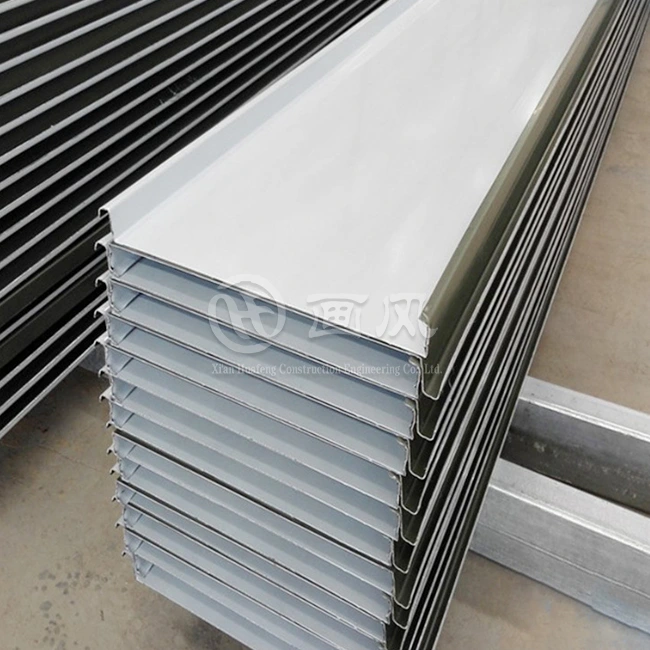
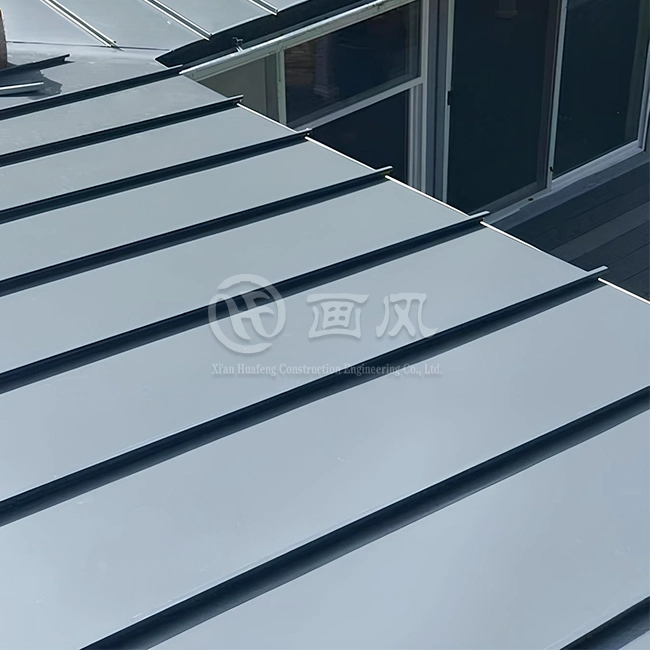
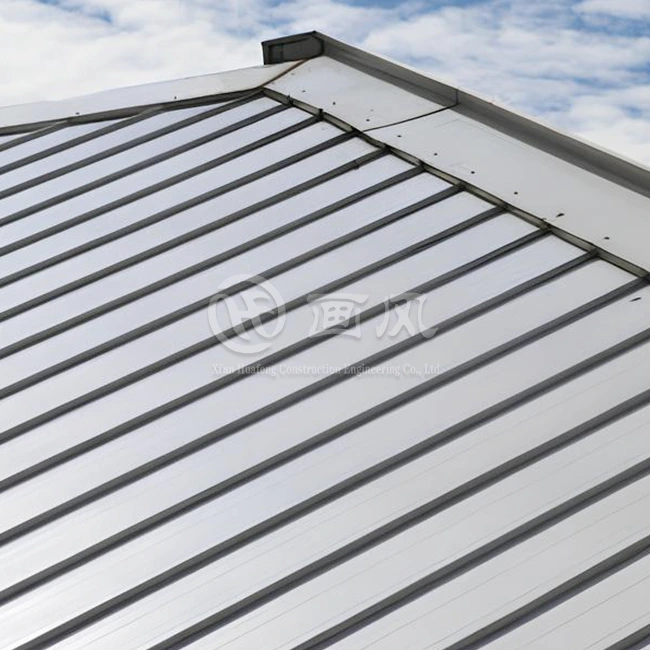
When contractors and estimators evaluate metal roofing options for large commercial projects, the striated standing seam roof panel consistently earns its place at the top of the shortlist. The parallel horizontal grooves rolled into the panel's flat pan area do more than add visual depth — they reduce oil-canning, improve structural rigidity, and help the roof system maintain a uniform appearance across long panel runs. For industrial applications where both performance and aesthetics matter, this profile delivers a practical advantage that smooth flat panels simply cannot match.

Understanding Striated Standing Seam Roof Panels for Industrial Applications
What Makes the Striated Profile Different?
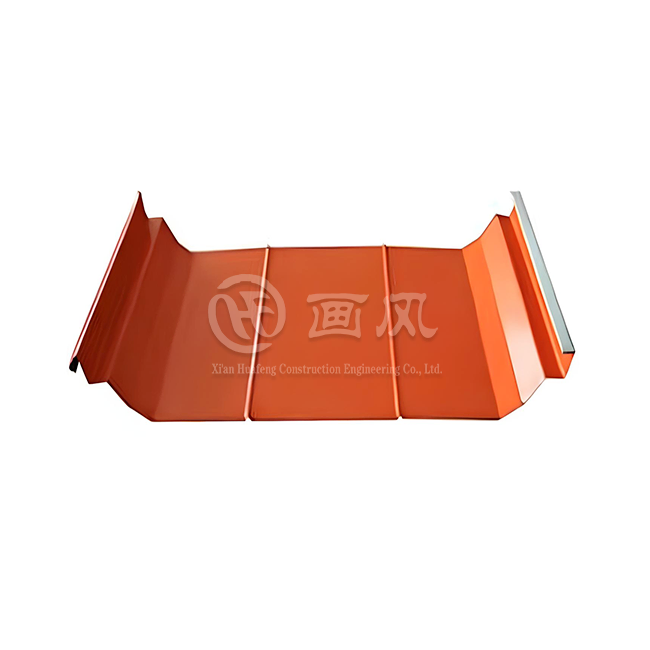
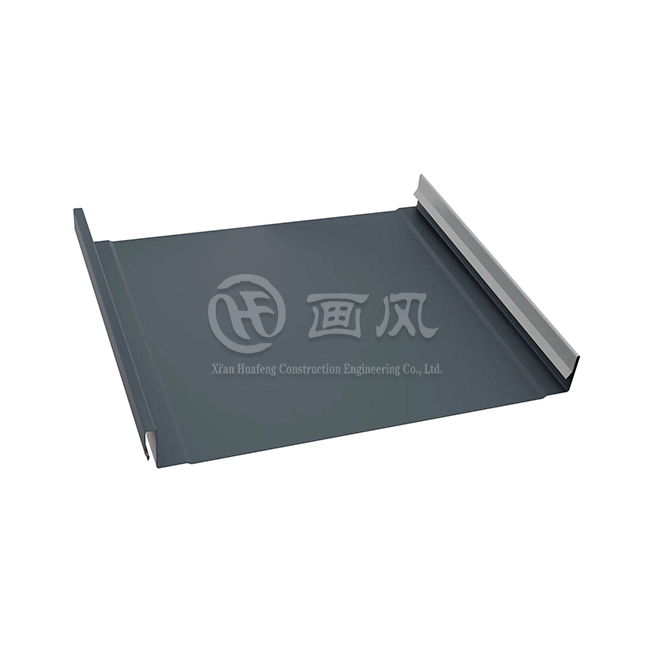
In a normal standing seam panel, a flat pan is put between the vertical seam legs. In the striated form, the pan has shallow grooves that are evenly spaced along its length. Light can't bounce back from these grooves, so flaws in the manufacturing process and stresses from heat growth that would show up as waves on a flat surface are hidden. Even on runs of panels longer than 40 feet, the roof now looks sharp and flat.
Material Composition and Thickness Options
Panels with stripes from HF are made by rolling Galvalume steel or an aluminum alloy. They range from 0.6 mm to 1.2 mm in thickness. Thicker gages (0.8–1.2 mm) are usually used in business and industry buildings because the loads are longer and the buildings need to be able to withstand more wind. You can choose from specifications like 25-330/400/430, 32-410, 45-400, and 65-400/430. These come in a lot of different rib heights and sizes so they can be used in a lot of different structural settings.
Coating and Finish Technology
It is possible to treat the surface in two ways: with PVDF (fluorocarbon) coatings or PE (polyester) coatings. PVDF doesn't fade in the sun and stays the same color for 20 to 30 years. AAMA 2605-22 says it must meet 13 performance areas, such as 5B dry adhesive, zero cracking at 0T flexibility, and a color regularity delta of only ΔEH=0.3. It has been tested and shown to work. The full range of RAL and Pantone colors lets architects and owners decide exactly how the facade will look.
Comparing Striated Standing Seam Roof Panels With Alternative Roofing Solutions
Standing Seam vs. Snap-Lock and Exposed Fastener Panels
Snap-lock panels are quick to install; nevertheless, they do not provide as much protection against wind uplift as manually seamed striated standing seam roof panel systems. Open fastener panels provide penetration spots which may leak with time and need frequent re-torquing. You don't see any bolts on a manually seamed striated panel, thus it's better at keeping the water and wind out. It satisfies the UL 580 Class 90 requirements, which are required for many corporate and educational projects.
Performance in Chemically Active and Coastal Environments
Striated aluminum panels are preferable than galvanized if there's a big danger of rust, e.g. chemical facilities, retailers near the water, or companies that create a lot of goods. The EU RoHS tests on HF aluminum panels (SGS Report No. TAOPC24008450103) show that the 10 hazardous chemicals are not present or fewer than the permitted amounts. This indicated that the walls are built of natural materials solely and are eco-friendly. It’s a terrific long term choice for challenging settings since it can endure salt spray and UV rays.
Cost Efficiency vs. Architectural Metal Options
Corrugated panels are cheaper initially, but they don’t look attractive and they don’t do a very good job of protecting against wind. Building panels of copper or zinc are far more costly to produce. Striated standing seam metal roofs are a nice compromise of price and appearance. It seems great, like expensive profiles, but when you purchase a lot of it it remains cheap. Buy in bulk and you can receive project level pricing. That reduces the cost per square foot, and making it a better option over 30 years.
Installation, Maintenance, and Durability Insights
Installation Best Practices for Industrial Projects
First, to make sure you have a proper fit, you must ensure that the shape of your panel is compatible with the roll-forming or field-seaming machines that are on site. HF panels do not require a specific seamer, since the striations remain in the flat pan and do not contact the seaming head. The floating clip attachment approach allows the panel to fluctuate in size with temperature variations without harming the screws. This is a helpful feature on large industrial roof planes where the temperature might swing more than 100 degrees F from season to season.
Routine Maintenance That Protects Long-Term Performance
It's not as important to maintain metal standing seam roofs as it is to maintain membrane or shingle systems. To protect performance over the years, these easy steps can be taken:
- Clear organic debris from valleys and around penetrations at least twice per year, since trapped moisture accelerates coating wear at panel edges.
- Inspect thermal movement clips annually to confirm they have not been bound by insulation compression or overtightened during installation, which would restrict the panel's natural slide.
- Check sealant condition at end laps and penetration flashings every three to five years, replacing any sections showing cracking or adhesion loss before water infiltration occurs.
Durability Data and Warranty Terms
These steps only take a minute or two, and they protect the striated standing seam roof panel's 30-year guarantee from being void due to careless use. A test by HF (Report No. AJFS2409010415FF_CN, AS/NZS 1530.3:1999), which was approved by SGS, showed that none of the six PVDF-coated aluminum samples caught fire. The ignition, flame spread, and heat release indices all showed that they were all zero. You need to include this kind of fire safety information on your school, church, or store projects that have to follow strict building codes. Not only does the company that made this profile say that it will last, but there is also third-party proof that it will.
Procurement and Cost Considerations for Industrial Buyers
Pricing Models and Volume Discount Structure
HF requires a minimum order of 500 square meters. Project-level pricing is offered for orders of full containers. Every month, 1,000 tons of goods are made by more than 40 tools, three plants, and seven production lines. For contractors who are in charge of a lot of commercial projects each year, that level of production means a steady supply. This is a direct factor that tells a roofing subcontractor if they can meet scheduling goals set by the general contractor (GC) without having to pay liquidated damages.
Lead Times, Delivery, and Certification Documentation
When an order is approved, standard delivery takes 15–20 days. This is within the 4–6 week supply window that most business projects need after the contract is awarded. You can get full mill test certificates (MTC) from HF. We also have guaranty paperwork for PVDF coatings and compliance records for ASTM, DIN, JIS, BS, and GB/T standards. Before an award is given, HF's technical team helps with deep-design coordination for projects that need to cross-reference UL, FM, or Miami-Dade certifications. Detail drawings, trim schedules, and node diagrams are all part of this.
Supplier Evaluation: What to Look For
It's not enough to just compare prices per square foot when looking for a supplier of striated standing seam panels. When you buy a business project, these are the most important things to look for:
- Verified third-party testing reports (SGS or equivalent) covering coating adhesion, fire performance, and hazardous substance compliance.
- Consistent color lot control across full container orders — large-area color variance is one of the most common field claims on metal roofing projects.
- Proven capacity to fulfill repeat orders within the same project, since phased construction schedules frequently require multiple shipments from the same production run.
When procurement managers use these standards to check out sellers before the bid stage, they avoid unpleasant shocks in the middle of a project that cost a lot of money.
Application Scenarios: Best Uses in Industrial Roofing
Large-Span Warehouses and Distribution Centers
Flat roofs with a low slope that are 40 feet or longer can show oil cans when heat moves across them. The striated standing seam roof panel shape takes away this effect, so the face of the roof always looks the same, even when the weather changes. With its 65 mm higher rib, the 65-400/430 standard protects large-footprint distribution centers from wind lifting. This is especially important in the Midwest and Southeast, where strong storms are a normal part of life.
Schools, Churches, and Retail Buildings
Most of the time, architects need to see proof that the roof works well and makes the building look better before they choose it for a public or community building. The rough surface of the striated profile gives it depth and makes it look good on roofs that slope and can be seen from the street. The design is good, and it doesn't use pricey materials like brass or copper. Custom RAL colors for PVDF coats let design teams match brand color standards or other materials on the facade's colors.
Retrofit Projects Over Existing Structures
A lot of business owners replace old membrane roofs with metal standing seam systems when they need to make big repairs. Because striated metal panels are so light—they don't have as much dead weight as tile or built-up roofing—they can often be put on top of decks that are already there without the need for extra support. As of now, the panel system meets the standards for temperature performance in cold storage buildings by using continuous insulation layers. This lowers the building's energy costs over the time it will still be useful.
Conclusion
People use the striated standing seam roof panel profile on business and industrial projects because it is a well-designed product that solves real problems. Some of these problems are oil-canning, wind lifting, the longevity of surface coatings, and making sure that colors are the same across big areas. A third-party SGS certification covers fire performance, environmental compliance, and AAMA 2605-22 coating standards. This means that the documentation trail can back up even the hardest submittal packages. This profile is a good choice for procurement managers, estimators, and architects who are looking at metal enclosure systems because it has proof of performance, the ability to produce, and a warranty that lasts for 30 years.
FAQ
1. Does the striated texture affect field seaming equipment?
No. The striations run across the flat pan area of the panel, and mechanical seamers engage only the vertical legs. Standard seaming robots work without modification. Installers should avoid foot traffic on the pan after seaming, as striated profiles can be slightly harder to reform if dented compared to flat panels.
2. What slope is acceptable for a mechanically seamed striated panel?
A mechanically double-locked striated panel can be installed on slopes as low as 1/4:12, provided factory-applied sealant is present in the female leg of the panel. For slopes below 1:12, consult the manufacturer's installation guidelines and confirm with the project engineer of record.
3. How does PVDF coating compare to standard polyester on industrial projects?
PVDF (fluorocarbon) coatings retain color and gloss for 20–30 years under UV exposure, compared to roughly half that lifespan for standard PE coatings. For industrial roofs where recoating or panel replacement would require significant downtime and cost, the upfront investment in PVDF typically produces a lower total cost of ownership over the building's life.
4. Can I order custom colors to match an existing building?
Yes. HF offers the full RAL and Pantone color range. For large-volume orders, color lot consistency is controlled across the full production run to prevent the batch-to-batch variance that causes visible color differences on wide roof planes.
5. What routine maintenance does a striated standing seam roof require?
Routine maintenance includes clearing organic debris from valleys and around penetrations at least twice a year, inspecting thermal movement clips annually, and checking sealant at end laps and penetration flashings every three to five years. Any cracking, adhesion loss, or other visible damage should be addressed promptly to help maintain the roof system's performance.
6. What should buyers confirm about the warranty?
Buyers should request the written warranty before placing an order and confirm its coverage period, coating requirements, maintenance conditions, exclusions, and claim procedures. HF's striated standing seam roof panel products are presented with a 30-year guarantee, but the specific warranty terms should be reviewed for each project.
Request a Quote from HF — Striated Standing Seam Roof Panel Supplier
You can get 1,000 tons of roofing materials from HF every month, and they have three factories with seven production lines. This means they can help with any size business roofing job. Our striated standing seam roof panels are in stock and can be sent out in 15–20 days. They come with a 30-year guarantee and have been tested and approved by SGS. Send an email to huafeng@hfmetalroof.com with information about your project, the panel sizes you need, and any licenses you need.
References
1. Metal Construction Association. MCA Technical Bulletin: Standing Seam Roof Systems. 2022.
2. American Iron and Steel Institute. AISI S100: North American Specification for the Design of Cold-Formed Steel Structural Members. 2016.
3. Underwriters Laboratories. UL 580: Tests for Uplift Resistance of Roof Assemblies. 2006, revised 2020.
4. Metal Architecture Magazine. "Specifying Metal Roofing for Commercial and Industrial Buildings." 2023.
5. ASTM International. ASTM E1592: Standard Test Method for Structural Performance of Sheet Metal Roof and Siding Systems. 2005, reapproved 2023.
6. Metal Building Manufacturers Association (MBMA). Metal Roofing Systems Design Manual. 2021.





YOU MAY LIKE