Are Striated Metal Roof Panels RoHS Compliant? A Closer Look
2026-11-24 19:18:58
Standard striated metal roof panels are not directly covered by the EU RoHS Directive. The directive restricts hazardous substances in electrical and electronic equipment, not plain building envelope products. The question still matters, though. Importers, online roofing retailers, and project buyers often ask for proof that coatings and components stay within RoHS-style limits. At HF, we hold an SGS RoHS report for our 5052H26 aluminum material. This article explains how to read it, what it covers, and which other documents matter before you place an order.

What Are Striated Metal Roof Panels, and Where Does RoHS Apply?
How Striated Metal Roof Panels Are Built
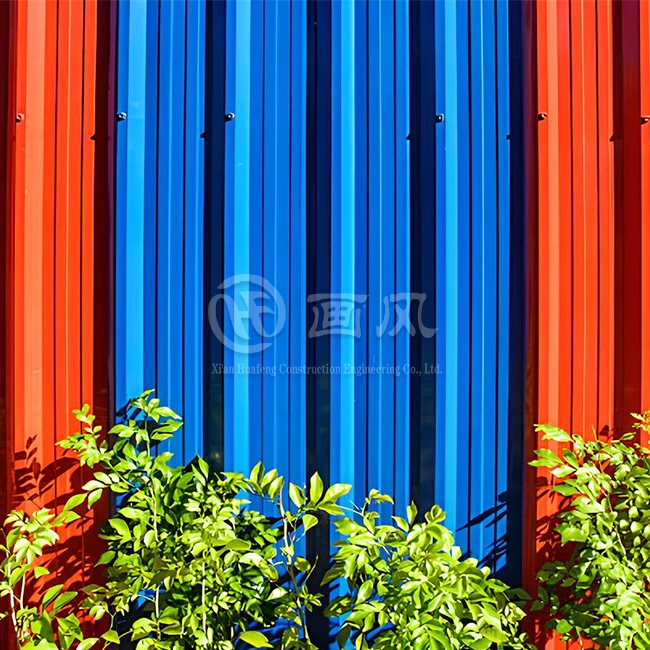
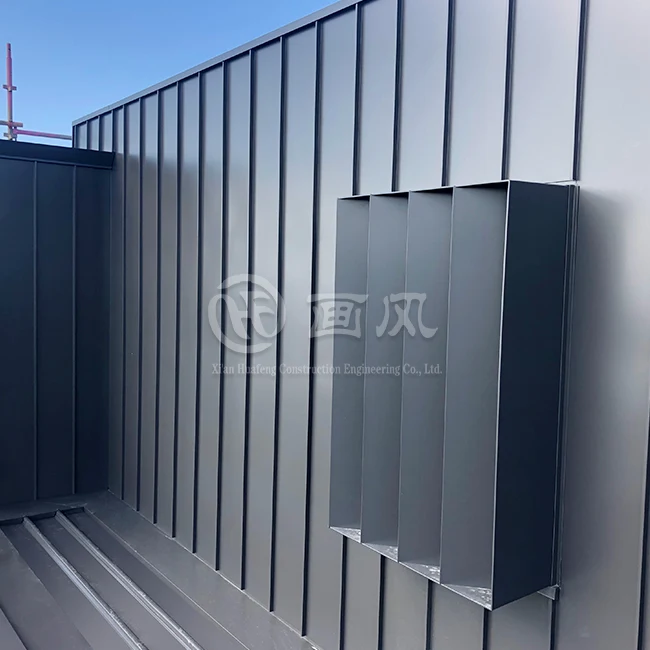
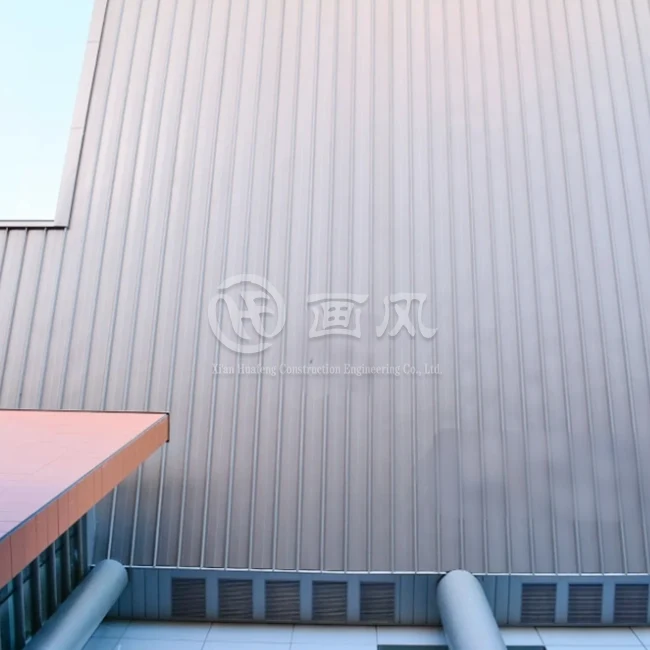
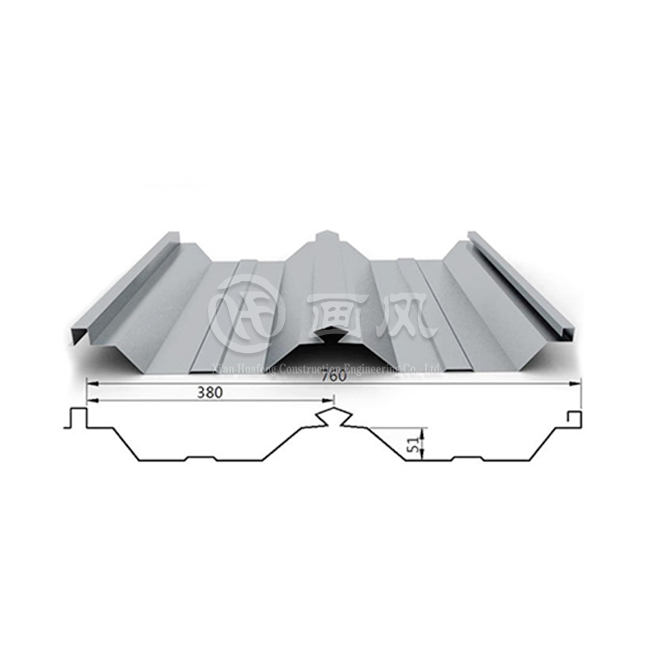
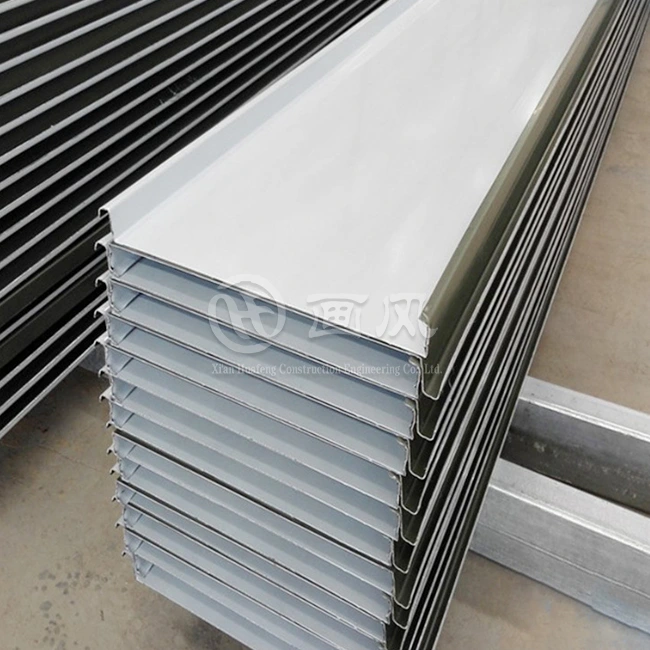
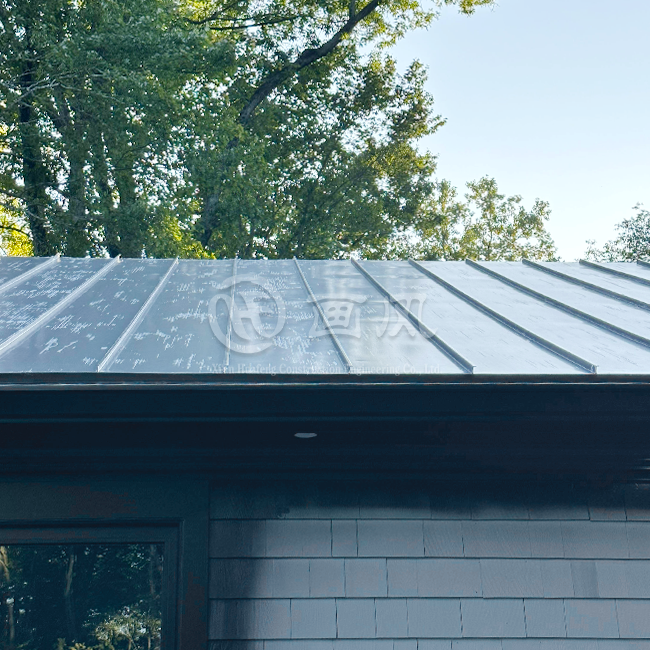
Striated metal roof panels have thin, parallel ribs pressed into the flat part of the panel. These lines give the surface more depth, make it stiffer, and help water drain away. ASTM A792 says that Galvalume steel is made up of 55% aluminum, 43.4% zinc, and 1.6% silicon. Galvanized steel in G60 or G90 weights is another common substrate. It is also possible to use aluminum alloys like 3003, 3004, and 5052. Along with profiles 25-330, 25-400, 25-430, 32-410, 45-400, 65-400, and 65-430, HF also makes profiles with PVDF or PE finishes that are 0.6 mm to 1.2 mm thick. Height of the ribs is also important, since ribs above 25 mm are better at blocking wind pressure. Forms you need change depending on the material and coating you choose.
What the RoHS Directive Actually Covers
Restriction of Hazardous Substances (RoHS) Directive 2011/65/EU applies to electrical and electronic gear that needs electric currents or electromagnetic fields to work. A simple roof panel doesn't fit that description, so it's not directly covered. Lead, mercury, hexavalent chromium, PBB, and PBDE can't be more than 0.1% by weight (1,000 mg/kg), and cadmium can't be more than 0.01% (100 mg/kg). Along with DEHP, BBP, DBP, and DIBP, all of which are 0.1%, Directive (EU) 2015/863 added four more phthalates. But being out of scope does not mean that something has been tested and proven.
Why RoHS Questions Still Reach Roofing Buyers
If you sell roofing online or bring in materials for contractors, you'll probably see RoHS questions in buyer messages, bid documents, and market listings. A lot of the time, they come from green building programs, OEM or modular builders, and projects where the roof system has electrical parts like sensors or lights. For buyers in the US, RoHS is more of an EU rule, so they tend to use ASTM, AAMA, and their own country's building codes. A clean test report still tells your customers what they need to know and saves time before they place an order.
How to Verify RoHS Compliance Before You Buy
Define the Scope First
Write down where the panels will go and who needs proof first. Is it EU RoHS, a local version of it, REACH, a green building scheme, or a strategy from the customer? So make a list of everything that comes with the roof: the base coat, the paint, the top coat, the back coat, the fixings, the sealants, the trim, the flashing, and any electrical parts. There is no way for a supplier to answer "is it compliant?" without that list. Because coatings and accessories can be different between manufacturers and product lines, we suggest that you send the bill of materials with your first inquiry. Having a clear plan also lets you know how much tests will cost.
Documents to Request
Here are the three document groups I ask any supplier to provide:
- Test reports: Get a report from a reliable lab that lists the exact item, grade of material, thickness, finish, test standard, sample, and date. If you have a good RoHS report, it will show each restricted chemical along with its limit and result, so you can compare them line by line instead of just looking at the pass statement.
- Material and coating data: For primers and topcoats, ask for technical data sheets, coating specifications, and safety data sheets. These papers show the resin system, film thickness, and finish type, like PVDF or polyester, and they help your technical team figure out if a test done on one finish can be used on another.
- Traceability and accessory records: Check that the batch numbers on the packing list match the material that was tested, and get statements from the companies that made the screws, sealants, and any electrical parts. Because these parts aren't shown in the panel results, each one needs its own paper trail if the customer wants it.
Together, these papers answer most buyer questions before a quote turns into an order.
Reading HF's SGS RoHS Report
SGS Qingdao gave us our report on November 7, 2024. Its number is TAOPC24008450103. It used IEC 62321 methods to test 5052H26 aluminum at 0.72 mm with a polyester coating (11 μm primer, 18 μm topcoat) for striated metal roof panels. A maximum of 1,000 mg/kg for lead was met with 10 mg/kg. There were no signs of mercury, cadmium, hexavalent chromium, PBB, PBDE, DEHP, BBP, DBP, or DIBP, so all ten substances passed. The report only talks about that group. For a different metal, thickness, or coating, like PVDF, you should ask HF to confirm testing before putting the result in a product listing.
How RoHS Differs From REACH, and Why Coatings and Accessories Matter
RoHS and REACH Answer Different Questions
RoHS limits the use of certain chemicals in electrical equipment that it covers. Regulation (EC) No 1907/2006, or REACH, controls how chemicals are registered, evaluated, authorized, and limited in a lot of different products and supply chains. It also says that substances of very high concern in articles can't be more than 0.1% by weight. Even if a roof panel doesn't follow RoHS, it can still ask for a REACH declaration. They might also ask for EPDs, VOC data, statements about recycled content, or fire classifications. You can't use these papers together, so make sure you know which one your customer wants before you start making them.
Coatings: PVDF Versus Polyester
The covering is often more of a problem when it comes to compliance than the metal itself. Fluorocarbon, or PVDF, doesn't fade in UV light and keeps its color for 20 to 30 years. Polyester is cheaper than PVDF, but it doesn't last as long in bad weather. Most PVDF front films are 20 to 25 μm thick. Our SGS Guangzhou AAMA 2605-22 report talks about 3003H24 metal that is 3.0 mm thick and has PVDF on it. It passed all 13 tests, including finding the same color everyplace (ΔEH 0.3), sticking to things in 5B dry, wet, and boiling water, and being flexible at 0T. A brochure claim of low-VOC does not work instead of a RoHS test.
Fasteners, Sealants, Trim, and Insulation
The panel is only one layer of the roof. Some things like sealants, gaskets, washers, plated fasteners, trim, flashing, foam cores, and vapor barriers can let other things in, so each one needs its own review. Layer by layer, check insulated assemblies for items that aren't allowed, how to stop condensation, and the fire class. If you don't match the bolts and sealants to the panel finish and environment, they will rust and break easily in seaside, humid, cold, and high-corrosion areas. We suggest the aluminum-magnesium-manganese alloy AA3004 with a PVDF coating for projects near the coast. If you're selling a kit, make sure you list each part separately.
Comparing Striated Panels and Judging Performance Beyond RoHS
Striated, Standing Seam, and Corrugated Compared
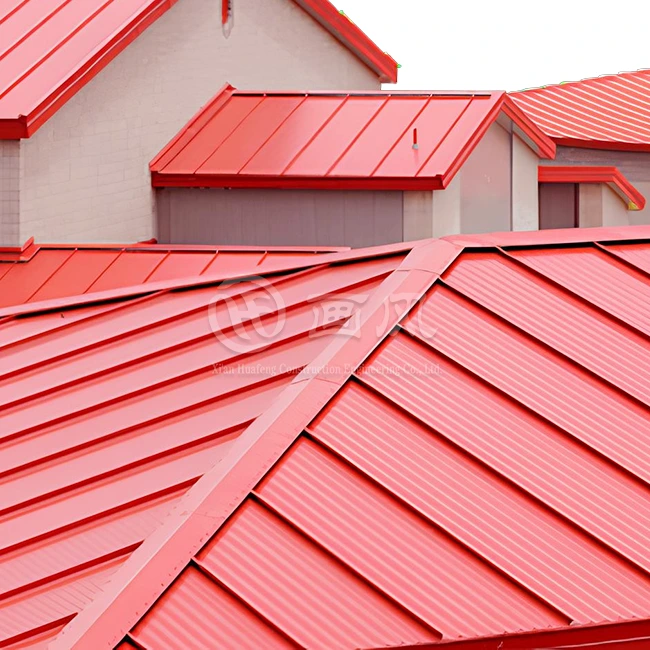
The profile shape, fastening method, movement limit, minimum slope, span, and assembly cost of striated metal roof panels, standing seam, corrugated, and ribbed systems are all different. Striations are thin lines that run across a flat area. Even though they can't stop heat movement, they make things stiffer and help hide the waviness called "oil canning." Standing seam adds raised seams with hidden fasteners, which works well for home roofs that slope. Corrugated sheets are a simple way to use exposed fasteners. Just because a profile has a name doesn't mean it works or meets standards; you should also look at the technical drawings, gages, coatings, and accessory packages side by side.
Weather, Fire, and Service Life
Nothing about weather performance is said by RoHS status. Check to see how well the base and finish stand up to UV light, rain, humidity, cold air, snow, and freeze-thaw cycles. Service life is affected by gage, slope, drainage, and the quality of the installation. Debris, standing water, fasteners, seams, sealants, scratches, and cut-edge corrosion should all be checked regularly. There is a 30-year promise from HF. In our SGS report under AS/NZS 1530.3:1999, we tested 3003H24 aluminum, 1.3 mm, with PVDF to see how it burns. The ignition, flame spread, and heat release indices were all 0. The smoke development ranged from 0 to 1. None of the six samples caught fire.
Total Landed Cost, Not Unit Price
Some hidden costs may be hidden by the lowest price per square meter. There are many things that can change the landing cost, such as the substrate, gage, coating, panel length, packing, shipping, testing, and paperwork. It costs a store more than a small price difference to deal with returns due to color or size mistakes. They offer widths between 0.6 mm and 1.2 mm, a wide range of RAL and Pantone colors, and production that meets ASTM, DIN, JIS, BS, and GB/T standards. So you can match a character to a catalog color and keep track of it. Along with price, compare service life, guarantee terms, and papers.
Choosing a Supplier and Approving Your Order
What a Dependable Supplier Provides
Look for a stable source of raw materials, quality control that can be proven, traceability, technical support, and experience exporting. Before you place the order, ask for drawings, specifications, and records of inspections. In 2018, HF was set up in Shaanxi Province. We now have three factories, seven production lines, and more than 40 machines. Each factory can make 1,000 tons of goods every month. We follow the rules set by ISO 9001 and ISO 14001, were named a high-tech enterprise in Shaanxi in 2020, and have more than 20 registered patents for roofing systems.
A Practical Approval Checklist
There should be four steps for approval to work best. Set the project's location, rules, panel specifications, accessories, volume, shipping needs, and packing before getting a price. Before you approve a sample, you should compare the profile dimensions, coating, color, surface quality, and drawings to the production configuration. Before placing the order, you must agree to the test requirements, inspection criteria, rules for tracking, and warranty terms. Look over the batch numbers, packing lists, and obvious state before sending. Samples, declarations, and inspection records should all be kept in the same project file. This way, you can quickly respond to a customer or a market review.
Order Terms That Fit Growing Sellers
The smallest amount you can order is 500 square meters, which is 1 ton, and we promise to deliver it in 15 to 20 days. A clear lead time lets you plan when to restock so that your catalog doesn't have empty shelves. The RAL and Pantone color charts have a lot of shades, so share your color card early. Contractors and do-it-yourselfers return pieces that are a different color or length than what was advertised. Before production starts, make sure the spec sheet, profile code, and finish are correct. Also, make sure that each listing matches the report that goes with it.
Conclusion
Striated metal roof panels are typically exempt from the EU RoHS Directive, but buyers still need proof because "scope" is not the same as "tested result." Compliance depends on the market where the goods are going, the full bill of materials, and papers that list the exact material, coating, standard, lab, and date. RoHS and REACH are not the same, and different things like coatings, fasteners, sealants, and trim can bring up different concerns. The SGS report we're talking about here only talks about 5052H26 aluminum with a polyester coating. Other substrates need their own confirmation. RoHS also doesn't say anything about how well it stands up to weather, fire, or how long it will last, because that depends on the gage, finish, slope, and fitting. A good choice takes into account documents, performance, and landed cost all at the same time.
FAQ
1. Do striated metal roof panels need RoHS certification in the United States?
EU law says that RoHS must be used, but it doesn't directly apply to plain roof panels. Most buyers in the U.S. rely on ASTM, AAMA, and building codes, but some buyers and green building programs still ask for striated metal roof panels RoHS proof.
2. Does HF's RoHS report cover every panel?
No, the SGS report only talks about 0.72 mm 5052H26 aluminum with a polyester coating. Ask HF to confirm tests for PVDF and other metals, thicknesses, or coatings.
3. Which documents should I request before ordering?
Ask for test results, technical data sheets, coating specs, safety data sheets, REACH information, and records of how each batch was made. Take a look at them next to your list of materials, which should include fasteners and sealants.
Request a Striated Metal Roof Panels Specification Review From HF
Please send HF your profile code, thickness, coating, color, quantity, and compliance needs. Our team will then compare them to what we can make. As a company that makes striated metal roof panels and can supply 1,000 tons per month, we can give you specifications, test reports, and a quote. To find out more, email huafeng@hfmetalroof.com or go to hfmetalroof.com.
References
1. Official Journal of the European Union, Directive 2011/65/EU on the Restriction of the Use of Certain Hazardous Substances in Electrical and Electronic Equipment (RoHS Recast), 2011
2. Official Journal of the European Union, Commission Delegated Directive (EU) 2015/863, 2015
3. Official Journal of the European Union, Regulation (EC) No 1907/2006 (REACH), 2006
4. AAMA/FGIA, AAMA 2605-22 Voluntary Specification, Performance Requirements and Test Procedures for Superior Performing Organic Coatings on Aluminum Extrusions and Panels, 2022
5. Standards Australia, AS/NZS 1530.3 Methods for Fire Tests on Building Materials, Components and Structures, 1999
6. ASTM International, ASTM A653/A653M Standard Specification for Steel Sheet, Zinc-Coated (Galvanized) or Zinc-Iron Alloy-Coated (Galvannealed) by the Hot-Dip Process, 2020





YOU MAY LIKE