Why Choose PVDF Ribbed Standing Seam Metal Roofing?
2026-10-09 19:19:08
If you're sourcing metal roofing panels for residential or light commercial projects in the U.S., the finish and profile you select directly affect your installation callbacks, project timelines, and long-term client satisfaction. PVDF-coated ribbed standing seam metal roofing has become the preferred specification among roofing contractors and regional distributors — and there are clear, measurable reasons why. This article walks through what makes this system worth specifying, how it compares to alternatives, and what to verify before placing a bulk order.

Understanding PVDF Ribbed Standing Seam Metal Roofing
What Is the Ribbed Profile, and Why Does It Matter?
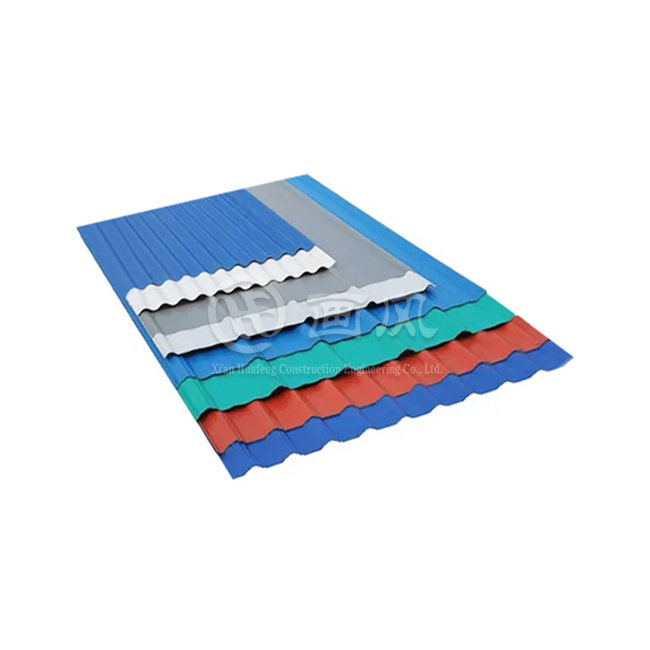
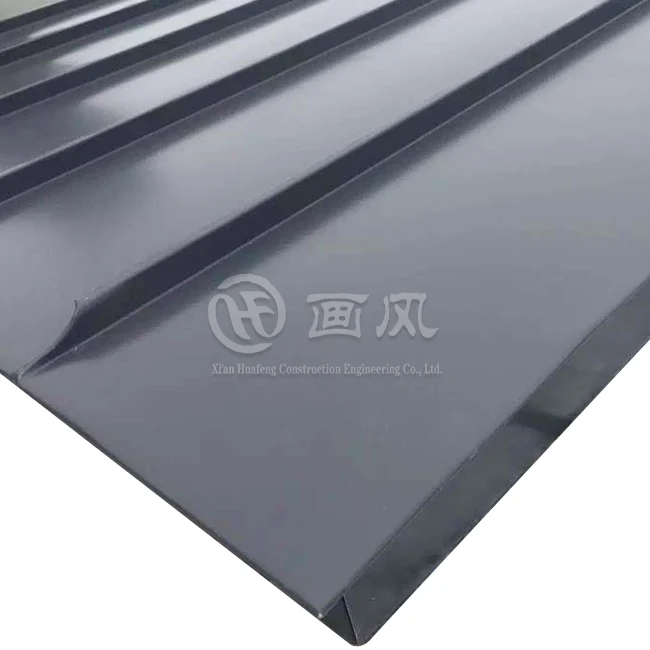
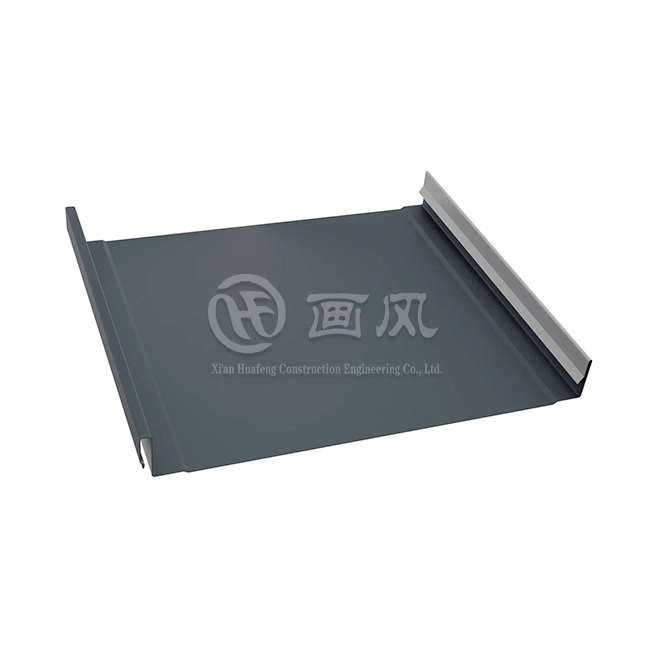
One big difference between a flat-pan panel and a ribbed standing seam metal roofing panel is that the flat-pan panel does not have lengthwise supporting ribs that are rolled into the pan area. These ribs, which are also known as striations or pencil ribs, make the panel more rigid without adding any weight. They also spread out the angles at which light bounces off of them, which reduces the effect of oil canning. This structural detail cuts down on calls backs related to how the panels look when they are installed across wide commercial bays or long residential ridgelines.
How the Standing Seam Locking Mechanism Works
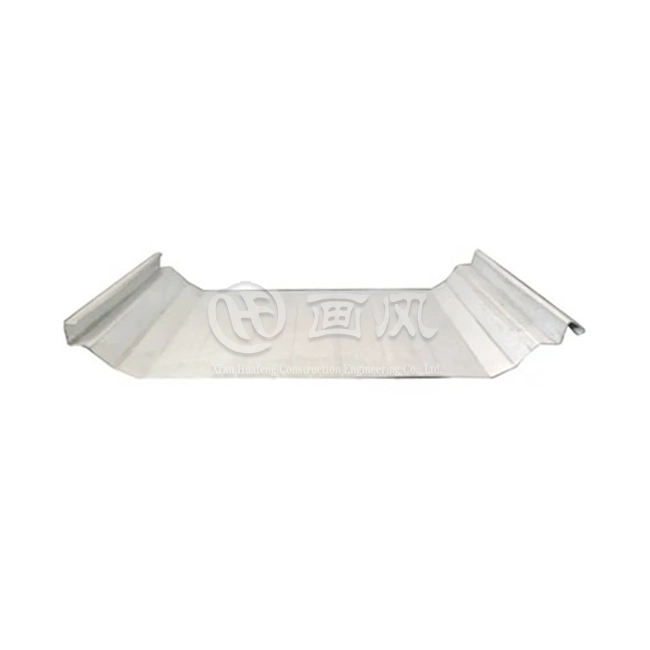
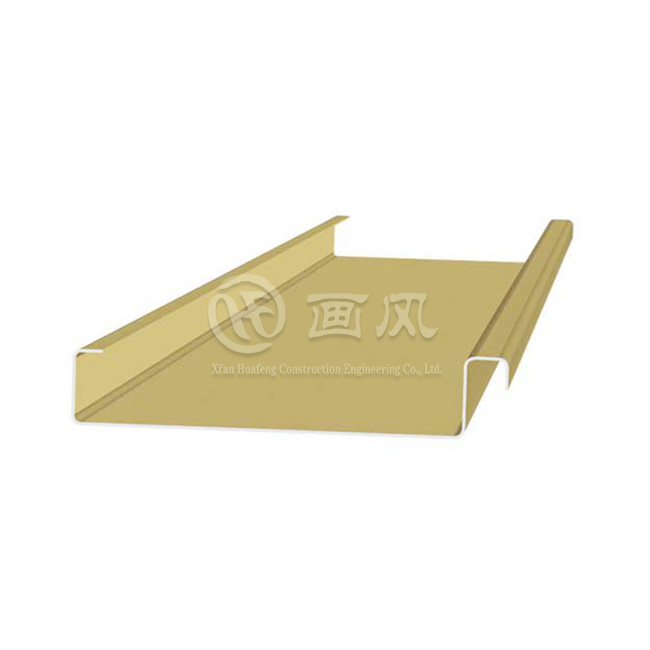
The hidden fastener system is what makes standing seam profiles different from exposed-fastener profiles. Panels fit together at raised vertical seams. Panels can be automatically folded with a seaming tool, or they can be pre-formed for snap-lock installation. Under each seam, floating clips are connected to the structural deck. This lets the panel face move around easily while the temperature changes. This system keeps the weather barrier in place even after decades of growth and contraction because the fasteners don't get worn out.
Where PVDF Coating Changes the Performance Equation?
PVDF, which is sold under brand names like Kynar 500®, is a fluoropolymer resin covering that sticks strongly to metal surfaces. When compared to regular polyester (PE) finishes, PVDF is much better at not chalking, fading, and staying stable in UV light. The AAMA 2605 standard, which is the gold standard for building paints, says that the finish coat must contain at least 70% PVDF resin. All 13 AAMA 2605-22 tests on HF's aluminum panels were passed by SGS. This includes a 5B rating for dry bonding and a 0T rating for covering flexibility with no cracking.
Key Benefits of Choosing PVDF Ribbed Standing Seam Metal Roofing
Professional users care most about three things when it comes to performance: how long the system lasts, how well it uses energy, and how cheap it is to own. These are the main reasons why this character is a good long-term stock:
- Weather and UV durability: PVDF's molecular structure is much more resistant to degradation caused by UV light than polyester. This means that the color will stay on metal roofs in Phoenix or the Gulf Coast for more than 30 years. Everything that HF makes comes with a 30-year guarantee.
- Fire safety: As per AS/NZS 1530.3:1999 testing, HF's 3003H24 aluminum panels had an ignition index of 0, a flame spread index of 0, and a heat release index of 0. All six SGS test samples did not catch fire. This is a ready-to-use data point for projects that need to follow local fire codes.
- Thermal movement accommodation: The ribbed standing seam metal roofing shape helps with growth by itself. Commercial roof panels that are 40 feet or longer can stretch and shrink without warping, buckling, or pulling at the fastener points.
- Low maintenance lifecycle: The hidden fastener design gets rid of the main reason metal roofs leak: screw heads that are left out in the open and come loose over time. With a PVDF finish that doesn't react with mold, salt spray, or chemical cleaners, it doesn't need much upkeep.
These benefits directly address the worries that most roofing workers have when looking for a new panel source: will this cut down on my service calls? Will the finish stay the same color from one project batch to the next?
Comparison with Other Roofing Solutions for B2B Buyers
PVDF Standing Seam vs. Flat-Pan Standing Seam
Structure-wise, flat-pan panels work well, but oil canning can be seen on wide bays. This problem can be fixed with ribbed standing seam metal roofing profiles that don't change the seam height or the way they are installed. When buyers choose ribbed panels for commercial facades, where esthetics are part of the deal, there are fewer chances of client disputes after the panels are installed.
PVDF Standing Seam vs. Asphalt Shingles and Tile
In ideal conditions, asphalt shingles should last between 20 and 30 years. Tile made of clay or concrete is heavier, needs more support, and costs more per square to install on roofs with complicated shapes. On the other hand, metal standing seam panels are much lighter per square foot and can be put up faster on simple hills, which means less work hours, which is a real number on a contractor's job cost sheet.
PVDF Standing Seam vs. Corrugated Metal Panels
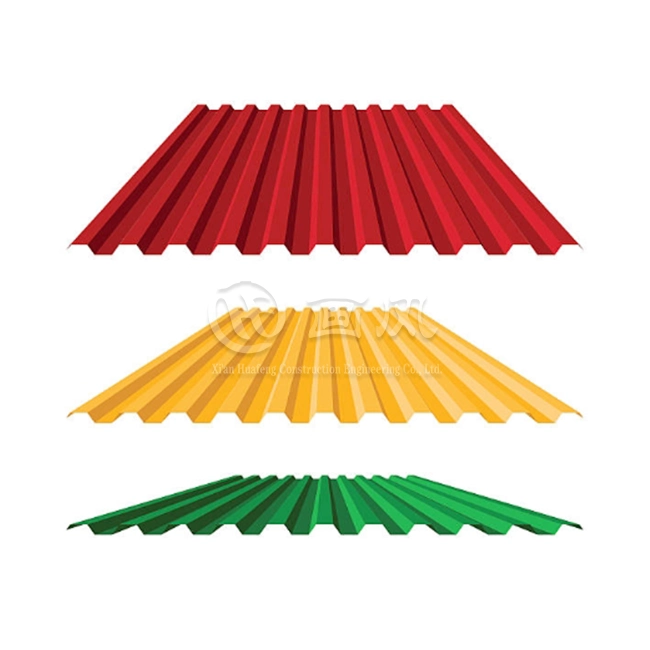
When you use exposed screws on corrugated shapes, you know that they will leak over time. They also don't handle heat movement as well as a floating-clip system does. For any project whose owner wants it to last for 30 years, a concealed-fastener standing seam method is the best choice.
Procurement Considerations for Global B2B Clients
Verifying Compliance Before You Order
This is a must for most business projects in the U.S. and Canada: ASTM E1592 structural performance tests and wind uplift statistics. As well as DIN, JIS, BS, and GB/T standards, HF panels also meet ASTM standards. This gives distributors who serve more than one regional market a single source option. Before you sign off on a purchase order, make sure you get the test report package and check that the panel thickness tolerances match the settings for the seaming tools your installation crew is using.
Batch Color Consistency and PVDF Color Matching
One of the most common problems contractors have with foreign providers is that colors change from one batch of production to the next. The PVDF coating on HF passed the AAMA 2605-22 color uniformity test with a ΔEH of 0.3, which is a very small difference. Panels can be ordered in both common RAL colors and custom shades. For projects with more than one step, try to organize making all the panels at once if you can.
Lead Times, MOQ, and Supply Capacity
HF has three factories with more than 40 roll-forming and processing machines and seven color-coating production lines. The monthly supply capacity is 1,000 tons. After an order is confirmed, the standard wait time is 15 to 20 days. The minimum order quantity is 500 m², which is equal to 1 metric ton. The panel thickness is between 0.5 mm and 1.2 mm, and the seam height is between 25 mm and 65 mm. This range covers most domestic and light business needs in North America. Aluminum metal, Galvalume steel, stainless steel, copper, and titanium zinc are some of the substrates that can be used.
Why PVDF Ribbed Standing Seam Metal Roofing Is the Preferred Choice
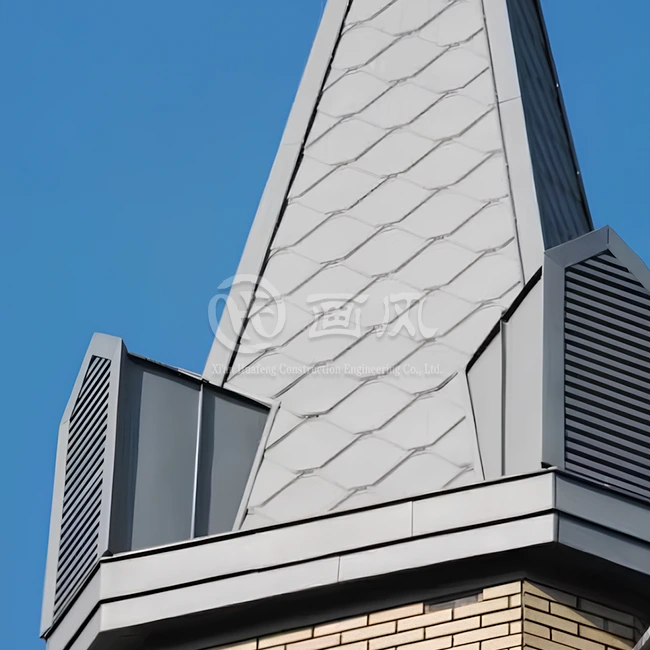
This type of ribbed standing seam metal roofing consistently performs better than alternatives in commercial warehouses, modern homes, agricultural buildings, and rooftops that are ready for solar panels. It does this by outperforming alternatives in terms of lifespan, color retention, installation speed, and compliance documentation. The ribbed shape gives the structure stiffness that flat panels don't have, the PVDF finish meets the highest standard for architectural coatings, and the concealed-fastener seam system gets rid of the most common way for metal roofs to fail mechanically.
Roofing contractors can use this profile to defend their choice of coating to project owners and builders because it guaranties consistent supply, recorded compliance, and proven coating performance over time.
Conclusion
Ribbed standing seam metal roofing gives contractors and distributors in the U.S. residential and light commercial market a measurable performance edge. A stiffened ribbed profile, a PVDF Kynar-grade coating, a concealed fastener seam system, and third-party SGS certification give buyers the proof and performance they need in the field. With three factories that make 1,000 tons of steel a month, HF can keep up a steady supply of projects that need normal North American gage and inch sizes. They also offer a 30-year warranty and 15–20 day wait times.
FAQ
1. Does the ribbed standing seam metal roofing shape make it harder to use seaming tools?
No, the flat pan space between the seams is made from the strengthening ribs. The height, lock angle, and cap profile of the seam itself don't change. Standard mechanical seaming tools that are used in North America will properly engage the seam. Before the first run, check the seam height against the die set that came with your tool.
2. What is the minimum slope for snap-lock ribbed panels?
For snap-lock ribbed standing seam metal roofing to work properly, the angle needs to be at least 3:12. According to ASTM E2140 rules, manually seamed double-lock systems with a continuous sealant bead can work on slopes lower than that.
3. How does HF manage batch-to-batch color consistency?
The AAMA 2605-22 color uniformity test was passed by HF's PVDF coating at ΔEH = 0.3, which is within the tight design limits. If your project has more than one phase, ask that all of the panels come from the same production batch.
4. Can these panels support solar panel mounting?
Yes, S-5! style seam clamps that don't go through the panel face can be used to connect to the standing seam. The ribbed pan doesn't get in the way of the clamps engaging on the seam.
5. What substrates are available beyond aluminum?
HF has panels made of aluminum alloy, Galvalume steel, stainless steel, copper, and titanium zinc, as well as aluminum alloy. These panels can fit a wide range of project budgets and needs for corrosion protection.
Get a Quote from HF — Your Ribbed Standing Seam Metal Roofing Supplier
HF offers ribbed standing seam metal roofing panels with ASTM-compliant paperwork, AAMA 2605-22 SGS-certified coatings, and consistent batch color. These panels come with a 30-year warranty and lead times of 15–20 days. Get in touch with us right away if you need to find suppliers for a single project or to set up a steady flow of supplies. You can get samples, test results, or a price for your project by emailing huafeng@hfmetalroof.com.
References
1. Metal Construction Association (MCA). Metal Roofing Systems Design Manual. 2020.
2. American Architectural Manufacturers Association (AAMA). AAMA 2605-22: Voluntary Specification, Performance Requirements and Test Procedures for Superior Performing Organic Coatings on Aluminum Extrusions and Panels. 2022.
3. ASTM International. ASTM E1592: Standard Test Method for Structural Performance of Sheet Metal Roof and Siding Systems by Uniform Static Air Pressure Difference. 2012 (Reapproved 2018).
4. National Roofing Contractors Association (NRCA). The NRCA Roofing Manual: Metal Panel and SPF Roof Systems. 2020.
5. Sheet Metal and Air Conditioning Contractors' National Association (SMACNA). Architectural Sheet Metal Manual, 7th Edition. 2012.
6. Oak Ridge National Laboratory (ORNL). Reflective Roof Coatings: Energy Performance and Durability. U.S. Department of Energy, 2019.





YOU MAY LIKE
(1)_1763110678300.webp "standing seam metal roof panels")