How to Choose Hidden Seam Metal Roofing Systems
2026-10-29 18:26:59
Selecting the best concealed hidden seam metal roofing begins with knowing the difference between a precision manufactured panel and one that lets your customer down on installation day. Other features high-net-worth customers ask for include the zero visible hardware of a hidden fastener roof, which uses clips and interlocking seams instead of exposed screws, enhanced leak protection and a 50-year service life. This book takes you through every issue that matters: panel accuracy, coating performance, supplier vetting, and ongoing maintenance. Whether you’re looking for a Pacific Northwest custom house or a coastal New England mansion, it starts with the perfect selection.

Understanding Hidden Seam Metal Roofing Systems
Before looking at different sources or asking for samples, it's helpful to know how hidden fastener systems work and why they're better than other options.
How the Concealed Fastener Mechanism Works
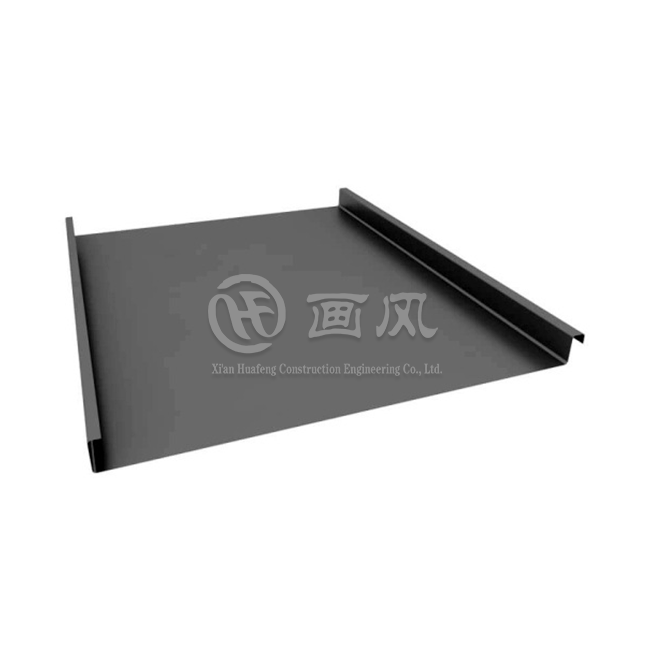
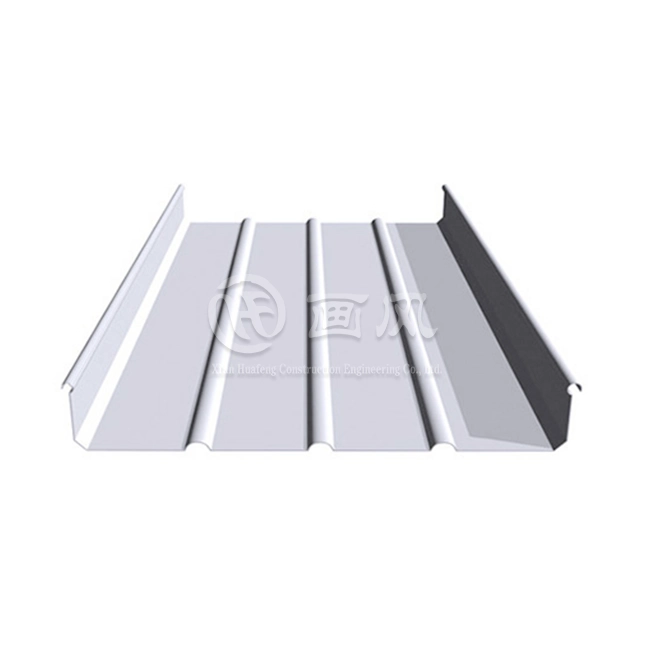
There are concealed clips inserted into the substrate that secure a standing seam panel with disguised fasteners to the roof deck. Then, either by snap-lock contact or by mechanical double-folding with an automated seamer, the panels adjacent to each other lock over the clips. No fasteners may go through the face of the panel. This prevents the rubber washers from aging, and that’s what causes most screw-down roof leaks.
Snap-Lock vs. Mechanically Seamed Profiles
Snap-lock profiles are easy to put together and work with slopes of 3:12 or more. Field seaming equipment is needed for mechanically seamed profiles, but they can keep water out on slopes as low as 0.5:12. Most high-end residential projects can be completed with hidden seam metal roofing systems. However, mechanical seaming is needed for low-pitch architectural roofs where hydrostatic pressure is a real issue.
Performance Advantages That Matter to Architects and Owners
The clip approach enables panels to float as temperatures rise and fall without stressing the attachment points. Panels with a PVDF coating that are certified under AAMA 2605 will not chalk or fade for decades. Test results from SGS of a PVDF-coated aluminum panel with a ΔE color shift of only 0.3 under AAMA 2605-22 prove that high-quality coatings can maintain their appearance over the life of a building.
Core Criteria for Selecting Hidden Seam Metal Roofing Systems
With a clear understanding of the system, procurement decisions come down to five measurable criteria.
Panel Dimensional Precision
For concealed fastener systems, panel flatness and seam geometry tolerances directly determine installation quality. A tolerance deviation beyond ±0.5mm in the female leg causes binding during snap engagement, which forces installers to apply pressure that damages the coating. Request dimensional inspection reports with every sample submission, not just visual approval.
Coating Quality and Warranty Terms
PVDF coatings based on Kynar 500® or comparable fluoropolymer resins give the highest long term color retention. Verify that the supplier’s coating meets AAMA 2605 for adhesion (5B rating), flexibility (0T bend without breaking), and chemical resistance. A third-party SGS certification for a 30-year coating guarantee provides a solid baseline for premium residential projects.
Custom Length and Color Capability
Non-standard panel lengths—common in high-end residential projects where roof runs exceed standard mill lengths—require a supplier with in-house rollforming rather than warehoused stock. Custom RAL color matching with consistent batch production is equally important; a hidden seam metal roofing color shift between the sample and the production run is unacceptable on a $2M home.
Comparing Hidden Seam Metal Roofing with Other Roofing Systems
Understanding where concealed fastener systems stand relative to other metal roofing options helps contractors justify the specification to architects and owners.
Hidden Seam vs. Exposed Fastener Systems
Exposed fastener metal roofs are cheaper to buy initially, but the rubber-washered screws add thousands of potential leak spots. Those washers will fail after 15 to 20 years, with cycles of re-fastening and recoating eroding the cost advantage at the start. Industry field data confirms that a hidden fastener roof reduces the probability of penetration leaks by more than 95 percent compared to screw-down systems, and the panel surface is structurally sound during the entire service life.
Hidden Seam vs. Traditional Asphalt Shingles
Asphalt shingles usually have a 25- to 30-year guarantee, but in strong UV or freeze-thaw conditions such as those in the Northeast and Pacific Northwest, they need to be replaced at roughly 20 years. A premium hidden fastener metal roof in 0.6mm Galvalume or aluminum has a proven 50 year service life with no mid-life replacement expense. The metal system is much better when considering the cost differential over a 50-year period.
Hidden Seam vs. Standing Seam (Field-Formed)
Rollformed hidden fastener panels provide better dimensional accuracy than field-formed standing seam because the rollforming process is done in a controlled environment with fixed equipment. Field formation adds variability from operator competence and environmental temperature. Factory-made panels win on quality assurance for contractors who want panel-to-panel seam uniformity that’s critical on a visible slope facing a street.
Procurement and Supplier Selection Guidelines
After you've written down your technical requirements, the supplier review method checks to see if those requirements make it to the job site in one piece.
Certifications and Standards Compliance
Be sure the supplier’s panels fulfill the requirements of ASTM, DIN, JIS, BS or GB/T depending on where your project is situated. In the United States, projects start with data from ASTM E1592 and UL 580 Class 90 wind impact grades. Architects’ verification for specification clearance should be based on third-party SGS or comparable laboratory test results, not self-reported specifications.
Sample Consistency and Batch Control
A difference between the approved sample and the production batch is the most common way that international sourcing fails. Before you place an order for the whole project, you should ask for a pre-production hidden seam metal roofing panel from the real production run, not a sample batch. Check the color of the finish (using the Delta E measurement), the flatness of the panel, the shape of the seams, and the state of the edges against the approved sample that was made in the same lighting.
Logistics and Delivery Reliability
There is a real chance that the panel surface will get damaged during ship freight. Make sure the supplier protects all panels with inter-leaf film and wraps the corners of the bundles with protective film. With a production lead time of 15–20 days and clear shipping instructions, there is less chance of showing up to a job site with scratched material that a high-end client will reject right away.
Maintenance, Longevity, and Optimization Tips
A concealed fastener roof that was put correctly doesn't need much care, but following a simple maintenance plan will protect your investment for as long as it lasts.
Annual Inspection Protocol
Every year, walk around the roof to make sure that the panel clips haven't moved and that the seam folds are still tight at the ridges and valleys. You should also make sure that any penetration flashings, which are the only real weak spots on a concealed fastener system, are still sealed. Clear out valleys and gutters of garbage to keep water from pooling above the drainage line.
Coating Care and Touch-Up
PVDF coatings can handle most chemical exposures, but damage from mortar or concrete splatter during the building phase should be fixed right away with touch-up paint approved by the maker to keep the metal from being exposed. Do not use concentrated nozzles for pressure washing at seam joints.
Solar and Green Roof Integration
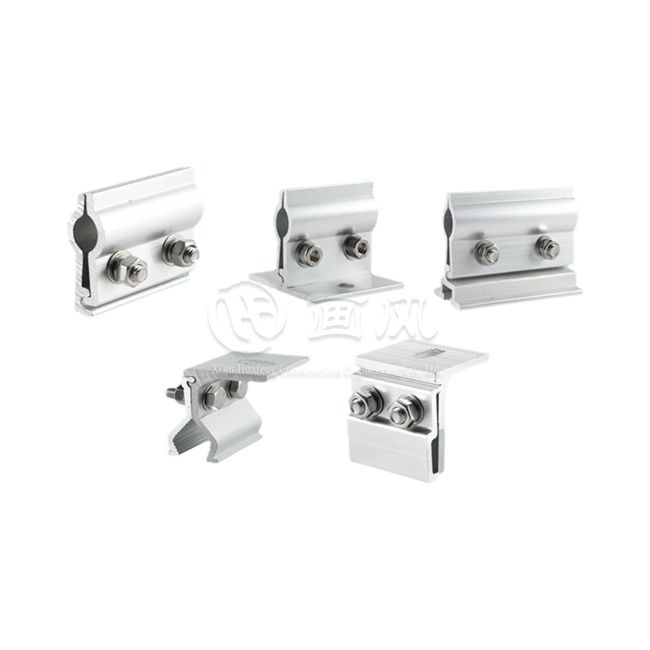
Hidden fastener panels can use solar clamps that don't go through the panel, like S-5 style brackets, which grip the seam rib directly. This keeps the warranty on the panels valid because no holes are made in the roof. Match the clamp spacing to the clip spacing specified by the panel manufacturer to make sure that the extra point loads are spread out in a way that doesn't go beyond the limits of the structural design.
Conclusion
It takes more than finding a design from a catalog to choose a hidden seam metal roofing system. Panel accuracy, coating certification, supplier batch consistency, and logistics protection all play a role in how quickly, cleanly, and to the zero-tolerance standard of a luxury client a project arrives. Long-term contractors will only stick with methods that work the same way from the sample to the end delivery, every time.
FAQ
1. How long does a hidden seam metal roof actually last?
A properly installed concealed fastener metal roof with PVDF coating carries a realistic service life of 50–70 years. HF's panels come with a 30-year coating warranty backed by AAMA 2605-22 SGS test certification. The structural substrate—Galvalume or aluminum—lasts the full building life when the coating remains intact.
2. What is oil canning and does it affect performance?
Oil canning is a visual waviness in the flat panel field caused by internal stress during rollforming or installation. It does not affect structural integrity or waterproofing. Specifying a panel thickness of 0.6mm or greater and requesting striations in the pan area significantly reduces its visibility.
3. What is the minimum order quantity for custom panels?
HF's minimum order quantity is 500 square meters or 1 ton. Custom RAL colors and non-standard lengths are available. Production lead time runs 15–20 days from order confirmation.
4. Can these panels be installed over an existing roof?
Yes, provided the existing deck is structurally sound and planar. The concealed clip system attaches to the deck substrate, not to the old roofing material, so an over-roof installation is technically viable with proper engineering review.
5. What profiles are available?
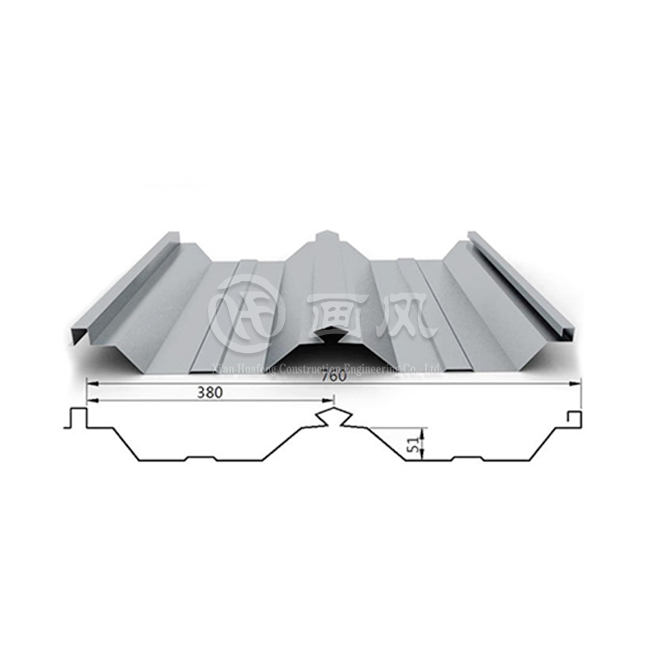
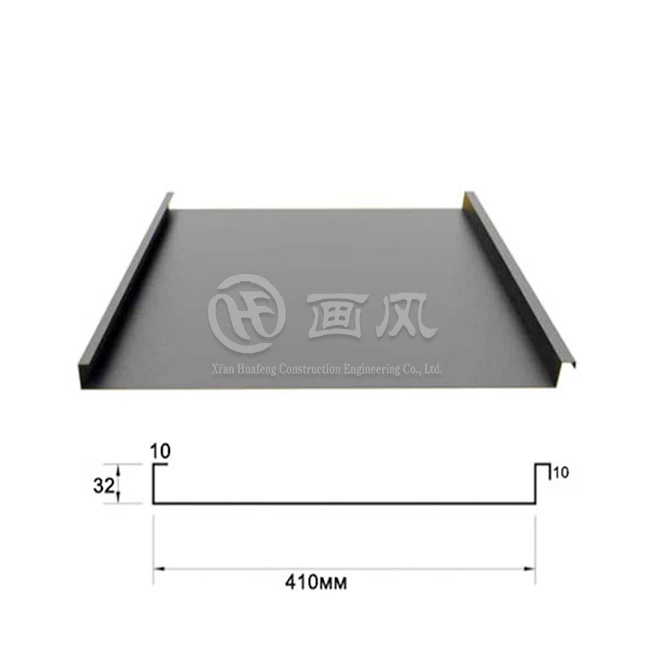
HF produces profiles including 25-330, 25-400, 25-430, 32-410, and 45-400. Panel thickness ranges from 0.4mm to 1.2mm. Surface treatment options include PVDF and PE coatings in the full RAL color range plus custom-matched colors.
Request a Quote from HF — A Trusted Hidden Seam Metal Roofing Manufacturer
HF has three factories with more than 40 machines and seven hidden seam metal roofing production lines. Each month, they send 1,000 tons of concealed fastener panels to contractors in North America and other places. AAMA 2605-22 coating certification, ASTM-compliant dimensional specs, and a 30-year warranty come with every panel when it is shipped. You can get custom lengths, RAL colors, and full installation detail packages. You can email the HF team at huafeng@hfmetalroof.com to get models and a price that fits your needs.
References
1. Mark Robins. “Standing Seam Fastener Essentials.” Metal Construction News, September 1, 2022. The article discusses concealed fasteners, standing seam systems, and thermal movement.
2. Yonghui Li, Chen Wang, Jeffrey Boon Hui Yap, Heng Li, and Hao Jiang. “Flat-to-Slope Roof Retrofitting: Case Study for Energy Efficient Design Protocol.” Journal of Architectural Engineering, Vol. 27, Issue 4, December 2021. DOI: 10.1061/(ASCE)AE.1943-5568.0000507.
3. Metal Construction News. “Roofs — February 2023.” Metal Construction News, February 2023. The issue includes coverage of concealed-fastener insulated metal panels and related roofing products.
4. Metal Roofing Magazine. “METALCON 2022 Preview.” Metal Roofing Magazine, October/November 2022. The article covers METALCON 2022 educational sessions, including metal roof installation and technical topics.
5. Karen Knapstein. “MetalCON 2022 Preview.” Metal Roofing Magazine, October/November 2022. The publication provides information on METALCON 2022 programs and technical education for metal construction professionals.
6. Mark Swagerty. “Learn About the Sustainability of Metal at METALCON 2022.” Metal Roofing Magazine, October/November 2022. The article discusses the durability and economic benefits of metal construction products, including metal roofing.





YOU MAY LIKE
(1)_1763110678300.webp "standing seam metal roof panels")