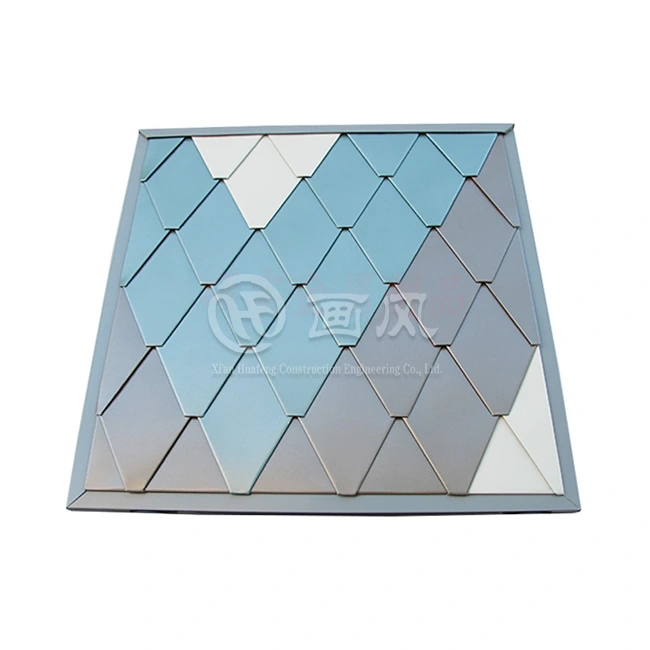
Flat Lock Wall Panels Guide: Benefits, Uses and Installation Tips
2026-09-09 18:53:12
Flat lock wall panels represent a sophisticated architectural cladding solution increasingly specified by architects and facade subcontractors across high-end commercial and residential projects. These individual metal tiles—featuring four-sided, 180-degree interlocking hems—eliminate visible fasteners, accommodate thermal movement effectively, and deliver exceptional flexibility for cladding complex geometries including curved walls and double-curved surfaces. Understanding their functionality empowers procurement managers and project engineers to make informed decisions that balance aesthetic intent, structural performance, and long-term durability.

Understanding Flat Lock Wall Panels: Definition, Materials, and How They Work
What Defines a Flat Lock System?
Flat lock wall panels are made up of modular metal tiles that fit together on all four edges through hidden mechanical seams and are attached to a solid, continuous base with stainless steel clips. Unlike large-format standing seam systems, these panels give the appearance of shingles or a smooth finish with no visible penetrations. This makes it much less likely that water will get in. Instead of trying to hydrostatically close, the system works as a hydrokinetic rainscreen, letting water fall off through gravity and overlapped joints.
Premium Material Options
Based on the needs of the project, we make flat lock panels out of a number of high-performance metals:
- Titanium Zinc: Natural zinc alloys have patination properties that help them heal themselves, so they don't need any maintenance for more than 70 years. The thickness of the material runs from 0.4mm to 0.8mm, which makes it very good for folding without cracking when the hem is made.
- TECU Copper: Depending on their exposure to the elements, copper panels take on unique patinas that range from deep browns to bright greens. They are 100% recyclable and naturally kill germs, which is in line with green building standards (Building Research Establishment, 2022).
- Aluminum-Magnesium-Manganese Alloy: This alloy is strong and lightweight, and it can be coated with PVDF in any RAL color. According to ASTM D4214 standards, the color will not fade when exposed to UV light. The weight is only 5.8 kg/ on average, which lowers the structure pressure.
- Stainless steel: Stainless steel is the best material for high-traffic urban areas that are exposed to pollution or salt spray from the coast because it doesn't rust and doesn't need much maintenance.
How the Interlocking Mechanism Works
All four edges of each panel have been precisely made with hems. During installation, panels next to each other overlap and fold together, making a continuous mechanical bond that doesn't need any glues or sealants. Hidden clips attached to the base let the panels "float," so they can go through rounds of stretching and contracting without buckling or failing at the hem. This floating attachment makes flat lock systems different from cladding that is rigidly attached and more likely to crack from heat stress.
Core Benefits and Applications of Flat Lock Wall Panels for B2B Projects
Durability Engineered for Demanding Applications
Metal Construction Association (2023) says that our flat lock metal panels come with a 30-year promise, which shows that we are confident in the durability of the materials and the quality of the production. Natural metals like copper and zinc don't need coats to protect them; over time, their surface patinas make them more resistant to rust. Painted metal choices use three-coat PVDF systems that are better at resisting chalking and fading than regular polyester finishes.
The system's clip frequency—usually between 8 and 12 clips per square meter—makes it very resistant to wind uplift. Testing by a third party shows that it meets the strict building rules in Europe and North America, as well as ASTM, DIN, JIS, BS, and GB/T standards.
Design Flexibility Across Architectural Styles
Flat lock wall panels can be customized to fit a wide range of visual tastes. Our shapes range from square to hexagon, rhombus to trapezoid, and rectangular. The widths range from 100mm to 400mm. Panels can be put together in different ways, such as horizontally, vertically, or in diamond shapes. This lets you create a wide range of visual textures, from classic European beauty to modern simplicity.
When it comes to covering curved buildings, like organic facades, domes, and other non-linear shapes, the small module size works great. Architects choose flat lock systems for corporate offices that want a unified look and for heritage repair projects that want to replace traditional shingles with low-maintenance modern options.
Sustainable Performance
Metal roofing can help you get LEED and BREEAM ratings in a number of ways. Aluminum, zinc, copper, and steel can all be recycled over and over again without losing any of their quality. The ventilated rainscreen design makes the thermal envelope work better by controlling moisture vapor and lowering the risk of condensation. Natural metals don't give off VOCs like painted or plastic materials do, which helps keep the air inside better.
These performance traits are important for European procurement managers who are being asked by circular economy directives to show how products affect the environment over their whole life (European Commission, 2021).
Flat Lock Wall Panels Installation Guide: Best Practices for B2B Clients
Pre-Installation Planning
Preparing the base correctly is the first step to a successful fitting. Flat lock systems need a strong backing that goes all the way through. This backing should be made of 15 mm to 19 mm plywood or metal decking, and it should be covered with a weather-resistant barrier (WRB) or entangled mesh to help water run away. In contrast to self-supporting standing seam systems, flat lock panels get their support from the substrate to which they are attached.
Field adjustments that hurt the look of alignment can't happen if the panels are laid out correctly. We suggest double-checking diagonal measurements to make sure that rectangular accuracy is within 1.5 mm of the allowed range. This will stop large facades from becoming increasingly out of alignment over time.
Installation Sequence
When lapping, the direction must always take water flow into account, and the lower panels must be put in place before the top units. At set intervals, stainless steel clips hold the panel hems in place without going through the weather barrier. The right clip tensile strength needs to be checked against engineered wind-uplift standards that are unique to the building's height and temperature.
Careful planning is needed for corner features, window openings, and extension joints. We help with technical drawings and can help with developing facade details to make sure that panels and adjacent building elements fit together well.
Maintenance Protocols
Zinc and copper, which are natural metals, don't need any upkeep because they form protected patinas that stop corrosion. Painted aluminum surfaces should be washed with fresh water once a year to get rid of atmospheric deposits and keep the warranty valid. Compared to systems that need to be painted or sealed every so often, this minimal maintenance requirement greatly lowers lifecycle costs.
Comparing Flat Lock Wall Panels with Other Wall Panel Solutions
Flat Lock vs. Standing Seam Systems
Standing seam panels cover more area per unit, which could make fitting easier. But their vertical ribs make clear shadow lines that make them unsuitable for projects that want smooth, solid walls. For high-end business and domestic uses, where the look of the door has a direct effect on how people see a brand and how much a property is worth, flat lock systems offer the best in esthetic refinement.
Flat Lock vs. Composite Panels
Composite aluminum panels have lower material costs, but they have big trade-offs over their lifetime compared to flat lock wall panels. Building Safety Journal (2023) says that their sandwich construction with polymer cores makes people more worried about fire safety, especially after high-profile building accidents that made regulators look more closely at them. Composite materials break down when exposed to UV light, can't be recycled very well, and usually need to be replaced every 20 to 30 years.
When placed on approved surfaces, flat lock metal panels are non-flammable (Euroclass A1), which means they meet the strictest fire safety standards. Their long service life of more than 70 years and ability to be recycled completely make them a better long-term investment.
Performance Under Extreme Conditions
Flat lock panels naturally handle temperature expansion better than large-format systems because they are flexible and can be attached in a floating way. The sizes of each panel stay small enough to keep oil-canning to a minimum. Oil-canning is the obvious wavering that happens when thin metals are under a lot of heat stress. This problem can be lessened even more by choosing slightly thicker material gages or textured finishes.
Buying Guide: Where and How to Procure Flat Lock Wall Panels
Selecting a Qualified Manufacturer
Consistent performance is guarantyd when you buy from companies with strong quality control systems. We are committed to quality control and environmental protection, as shown by our ISO9001 and ISO14000:14001 certifications. Our three plants cover 200,000 square meters and have seven production lines and more than 40 specialty machines that can make 1,000 tons of goods every month.
Understanding MOQ and Project Scalability
Our minimum order quantity of 500, which is 3 tons, is big enough for mid-sized facade projects that are common in the commercial market in North America and Europe. This gives facade subcontractors the freedom to work on projects that architects specify without having to worry about having too much extra material.
Delivery times are usually 15 to 20 days after an order is confirmed, which works well for tight construction schedules. We offer free samples of our products so that architects can see them and approve them before making a full purchase. This is especially important for projects where the color and texture of the surface must exactly match what the designer had in mind.
Customization Capabilities
We offer full customization, including custom forms, non-standard sizes, and accurate RAL color matching, in addition to standard designs. Our technical team works together to improve the drawings and make sure that the panel layouts fit perfectly with the building envelope and structural framing. Non-disclosure agreements keep secret design details safe, which is very important for architects and developers who are in charge of business projects that compete with each other.
Technical Support and Documentation
We provide a lot of scientific information, such as EN standard compliance certificates, material test results, and installation instructions. This set of documents makes it easier to check that the code is followed and helps train contractors, which cuts down on installation mistakes that hurt system performance.
Conclusion
For demanding business and private facades, flat lock wall panels offer the best mix of aesthetic sophistication, structural longevity, and environmental stewardship. Their flexible design lets them fit into complicated shapes, gets rid of unsightly fasteners, and handles heat movement well. With materials like titanium zinc, TECU copper, aluminum-magnesium-manganese alloys, and stainless steel, you can make specifications that work in a wide range of climates and design styles. With 30-year guarantees and service lives that go over 70 years, the system's proven durability, along with the fact that it doesn't need much upkeep and can be recycled completely, makes flat lock panels a better long-term investment.
FAQ
1. Do Flat Lock Systems Require Special Substrates?
These panels need a solid backing that goes all the way around them. This can be 15 mm to 19 mm plywood, metal decking, or something else that won't get damaged by the weather. Flat lock panels, unlike structural cladding systems, need a stable base and good drainage plane management.
2. How Do Panels Perform in Extreme Weather?
The hydrokinetic design doesn't try to shut out water; instead, it lets water drain away through gravity and overlapped joints. When installed correctly with weather shields that meet standards, wind-driven rain can be controlled well. The high clip frequency gives great resistance to wind uplift, meeting strict building standards for coastal and high-rise areas.
3. What Maintenance Do These Systems Need?
Zinc and copper are examples of natural metals that don't need to be maintained because they form protective patinas. Painted metal usually only needs to be washed with fresh water once a year to get rid of atmospheric deposits and keep the guarantee valid. This is a lot less work than systems that need to be painted or sealed every so often.
Partner with HF for Your Next Facade Project
We at Xi'an Huafeng Construction Engineering Co., Ltd. are experts at making flat lock metal panels that meet the strict requirements of the North American and European design markets. Our three-factory network with seven production lines guaranties a steady supply of goods, and our dedication to small-batch flexibility meets the needs of individual projects without imposing too many minimum order quantities. We know that architects and facade subcontractors need quick technical support, samples, and complete privacy. These are all values that are built into the way we buy things.
As one of the biggest companies that makes flat lock wall panels, we welcome procurement managers and project engineers to ask for free examples and expert advice. Email our team at huafeng@hfmetalroof.com to talk about the details of your project, the materials you'd like to use, and when you need them. Visit hfmetalroof.com to see all of our product details and to see examples of recent projects that show how versatile flat lock panels are in business, domestic, and heritage restoration settings.
References
1. Architectural Digest. (2023). Modern Metal Cladding Systems in Contemporary Architecture.
2. Building Research Establishment. (2022). Lifecycle Assessment of Metal Facade Materials.
3. Building Safety Journal. (2023). Fire Performance Standards for External Wall Systems.
4. European Commission. (2021). Circular Economy Action Plan for Construction Products.
5. Metal Construction Association. (2023). Metal Wall Panel Installation Guidelines and Standards.
6. U.S. Green Building Council. (2022). LEED Material Credits for Metal Cladding Systems.





YOU MAY LIKE
_1781690542318.jpg "Self-adhesive waterproof membrane")
_1769761215912.webp "Ventilation noise reduction net")