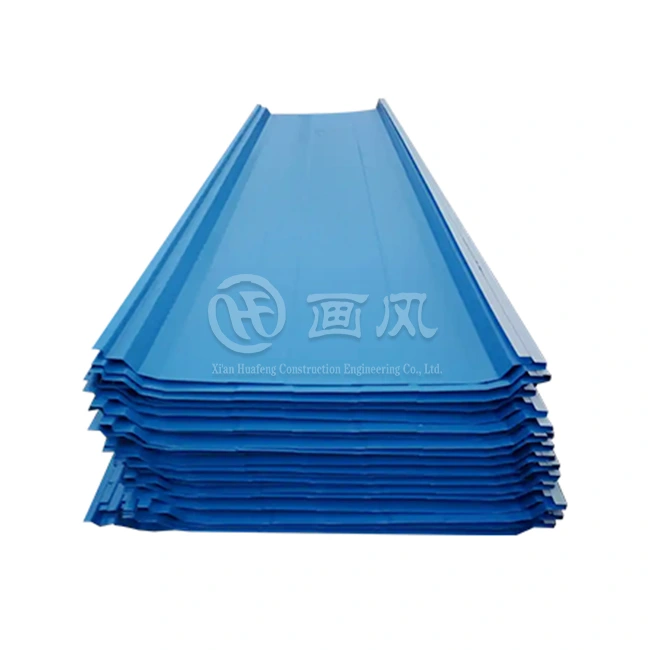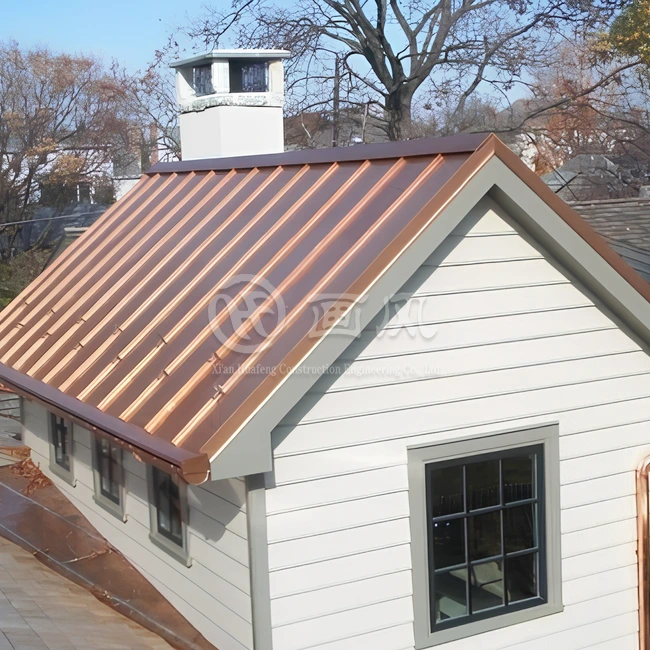
Double Lok Standing Seam Roof Panel OEM Buying Guide
2026-11-03 19:19:35
If you source metal roofing systems for contractors across the U.S. Midwest, Southeast hurricane belt, or Ontario, Canada, this guide is written for you. A double lok standing seam roof panel uses a 360-degree mechanical field seam—folded twice—to create a fully interlocked, watertight joint between adjacent panels. Unlike snap-lock profiles that rely on friction, this system resists wind uplift pressures well above 90 psf, making it the go-to choice for Florida HVHZ zones and coastal commercial builds. Here is what every distributor needs to know before placing an OEM order.

Understanding Double Lok Standing Seam Roof Panels
What Makes the Double Lok System Different?
The Pittsburgh-style 360-degree seam, which is made on-site by an electric seaming machine, is what makes it unique. This double-fold locks panels next to each other mechanically, so there are no visible fasteners. The end result is a solid metal plane that doesn't let water or negative wind pressure through. Only single-lok profiles can fold 90 degrees, and they can't do this on slopes as steep as 1/4:12.
Profile vs. Snap-Lock and Traditional Standing Seam
It's faster to put up snap-lock panels, but they don't have the same wind lifting values. Traditional manually seamed methods work about the same, but many of them need special tools that aren't available anywhere else. The double lok profile is made to work with common electric seamers, like those from McElroy and Berridge. This makes it easier for your installation crews to learn how to use the tools and saves you money.
Materials and OEM Finish Options
HF makes double lok standing seam roof panel out of copper, titanium zinc, aluminum alloy, Galvalume steel, and stainless steel. It is between 0.5 mm and 1.2 mm thick, and the seam height is between 25 mm and 65 mm (1" to 2.55"). You can choose from PVDF fluorocarbon and PE coatings for the finish. The 13 performance items that SGS tested under AAMA 2605-22 for adhesion, flexibility, and chemical protection were all passed, showing that the paints meet architectural-grade standards.
Key Performance and Benefits of Double Lok Standing Seam Panels
Durability and Weather Resistance
The 360-degree mechanical interlock and hot-melt sealant that was applied at the factory in the female leg stop water from getting in, even when the pressure is high. For decades, galvalume substrates (AZ50/AZ55) don't rust. Every panel from HF comes with a 30-year guarantee, which backs up the long-term care promises that distributors make to their contractor networks.
Thermal Performance and Energy Compliance
The floating two-piece clip system separates the skin of the panel from the structure below it. Panels can stretch and shrink easily along runs longer than 100 feet without the fasteners getting tired. This clip shape makes an air gap that lowers heat transfer and helps buildings meet ASHRAE 90.1 energy standards. Non-penetrating seam clamps are used to connect solar PV modules. This protects both the coating guarantee and the waterproof integrity of the system.
Sustainability and Recyclability
Recyclable steel and aluminum panels can be used over and over again, which helps with LEED paperwork. SGS testing showed that HF's coatings are in line with the EU RoHS Directive 2011/65/EU: none of the 10 restricted hazardous substances were found or were found in amounts that were below what was allowed. This paperwork cuts down on compliance paperwork a lot for distributors who work with green-certified commercial projects.
Comparing Double Lok Panels with Alternative Roofing Solutions
Structural Integrity vs. Competing Metal Profiles
Through-fasteners hold corrugated metal panels together, and each square has hundreds of these places, each of which could be a leaky path. Even though snap-lock standing seam is better, most of the tested parts only get as high as UL 580 Class 60. The double lok standing seam roof panel usually gets approved by UL 580 Class 90 and FM 4471. This makes it the only option for places that follow Miami-Dade or HVHZ rules.
Installation Cost and Maintenance Comparison
When distributors look at the total landed cost, these are how the three most popular mechanically attached methods stack up:
- Snap-lock panels: Lower per-panel cost, faster installation, but limited to steeper slopes and moderate wind zones. Requires re-roofing sooner in coastal markets.
- Traditional mechanical seam (single-lok): Moderate wind resistance, widely available tooling, but the 90-degree fold provides less seam engagement than the double lok geometry.
- Double lok standing seam: Higher initial material cost, offset by longer service life (30–50+ years), reduced maintenance call-backs, and premium project margins for your contractor clients.
Because of these differences, double lok is the best specification for high-end home and business accounts where brand image is at stake and callbacks are expensive.
ROI Perspective for Distributors
When builders know about the licensing gap, it's easy to set the price of double-lok panels a little higher than snap-lock panels. Codes often say that projects in wind zones III and IV must have the Class 90 uplift rating, so there is no other option. Distributors who carry certified panels get all of their customers who are concerned with compliance.
OEM Buying Considerations for Double Lok Standing Seam Roof Panels
Certification and Quality Credentials
Before asking for samples from a double lok standing seam roof panel provider, make sure they have UL 580 listing, ASTM E1592 structural test data, and FM 4471 approval. ASTM, DIN, JIS, BS, and GB/T standards are all met by HF panels. If you ask for them, material tracking certificates (MTC) from mills like Baosteel are available. These are very important for projects that need proof of where the base came from.
Customization, MOQ, and Lead Times
Panel packages can be printed with OEM private labels. There are color choices from the whole RAL range as well as unique matches. It only takes 500 m², or 1 metric ton, to place an order, which is small enough for a test 20GP container. HF runs three factories with more than forty production machines and seven production lines, which can handle 1,000 tons of goods every month. Standard delivery takes 15–20 days after an order is confirmed, which fits into the 4–6 week window that most North American distributors manage for restocking.
Warranty and After-Sales Support
Every HF double lok panel that is shipped comes with a 30-year guarantee. To avoid problems caused by different time zones, export account managers handle questions about specifications and MTC paperwork during U.S. business hours. Sample panels for testing seamer compatibility are sent out within two to three weeks of receiving an inquiry.
Installation and Maintenance Guidelines for Double Lok Standing Seam Roof Panels
Step-by-Step Installation Overview
To make sure the installation is done right, check the clip spacing against the ASTM E1592 test data sheet for the panel gage and span. Floating clips are first attached to the purlins, and then the panels are slid onto the clip tabs. A suitable electric seamer is then set to the manufacturer's recommended seaming passes, and the panels are field-seamed. When the seamer presses down on the female leg, the factory sealant in it activates, making the joint weathertight.
Common Challenges and Troubleshooting
Under-sealing is the most common problem in the field. This happens when the electric seamer doesn't make all of the necessary passes, leaving the seam partially open. Crews should run the seamer at full speed and use a profile gage to check the shape of the seams before each panel run. Coating score marks are usually caused by seamer dies that don't match up with the seam height of the panel. Always check that the dies will work with the seam height before you start working.
Routine Maintenance Schedule
Most installations only need to be inspected once a year. Check that the clips are engaged at the ends of the panels, clean out the seam channels, and use low-pressure water and a neutral solution to clean the PVDF surfaces. Do not use rough tools that can damage the coating. If you keep up with simple maintenance, a double-lok roof that was put correctly will last longer than 30 years.
Conclusion
The double lok standing seam roof panel is the specification of choice for distributors who work with contractors in hurricane zones, high-end home builders, and commercial developers who need proof of wind uplift performance. Its 360-degree mechanical seam, floating clip thermal accommodation, and long-lasting PVDF finish take care of all the main concerns about buying, from meeting Miami-Dade requirements to resisting rust over time. Because HF can make things, work with different OEMs, and provide certified test results, it's a good choice for distributors who want to switch from relying on local mills to a reliable, high-quality supply chain.
FAQ
1. Can these panels be used on both residential and commercial projects?
Yes. The HF double lok standing seam roof panel can be used on high-end home roofs, business low-slope projects with slopes as low as 1/4:12, and industrial buildings. The shape height range of 25–65 mm can be used for both building and architecture.
2. What factors affect lead time?
It takes 15–20 days to ship standard orders. RAL colors that aren't standard or gages that aren't standard may add 5–7 days to the finishing schedule. Most of the time, full container loads (40HQ) get the first production slots.
3. How do these panels perform in hurricane conditions?
The automatic seam goes around in a circle and meets the requirements of UL 580 Class 90 wind lifting and FM 4471. For most assembly configurations, this meets Florida HVHZ requirements and Miami-Dade product approval thresholds.
4. Is OEM private labeling available?
Yes, HF allows OEM branding on panel packaging, documentation, and MTC headers, and there is no minimum order quantity (MOQ) requirement above the standard 500 m²/1T.
5. What seaming tools are compatible?
The panel profile is designed to work with the best electric seamers in North America that are used by the McElroy and Berridge crews. Every sample order from HF comes with die specification sheets so that the fit can be confirmed before the full production run.
Request a Quote from HF — Certified Double Lok Standing Seam Roof Panel Supplier
HF ships 1,000 tons of PVDF/PE-coated double lok standing seam roof panel every month from 3 factories with 7 production lines. These panels come in any RAL color, come with MTC paperwork, and come with a 30-year warranty. Within two to three weeks, you can get sample panels and full specification packages. To start your sample order right away, email our export team at huafeng@hfmetalroof.com.
References
1. Metal Construction News — 2023 Metal Roofing Product Guide
2. ASHRAE Standard 90.1 — Energy Standard for Buildings Except Low-Rise Residential Buildings, 2022 Edition
3. UL 580 — Standard for Tests for Uplift Resistance of Roof Assemblies, 2023
4. FM Global Property Loss Prevention Data Sheet 1-29 — Roof Deck Securement and Above-Deck Roof Components, 2022
5. AAMA 2605-22 — Voluntary Specification, Performance Requirements and Test Procedures for Superior Performing Organic Coatings on Aluminum Extrusions and Panels, 2022
6. ASTM E1592 — Standard Test Method for Structural Performance of Sheet Metal Roof and Siding Systems by Uniform Static Air Pressure Difference, 2021.





YOU MAY LIKE