Built for Business: Trapezoidal Standing Seam Metal Roofing
2026-09-12 23:09:13
When a warehouse roof fails mid-project, the cost isn't just the materials — it's the delays, the claims, and the contractor relationships that take the hit. That's why more EPC contractors and procurement teams across Southeast Asia, the Middle East, and beyond are specifying trapezoidal standing seam metal roofing as their structural roofing standard. This system combines mechanical performance, large-span capability, and long service life in a format that works at industrial scale. At Xi'an Huafeng Construction Engineering Co., Ltd. (HF), we've built our production around exactly this demand.

Understanding Trapezoidal Standing Seam Metal Roofing
What Sets the Trapezoidal Profile Apart
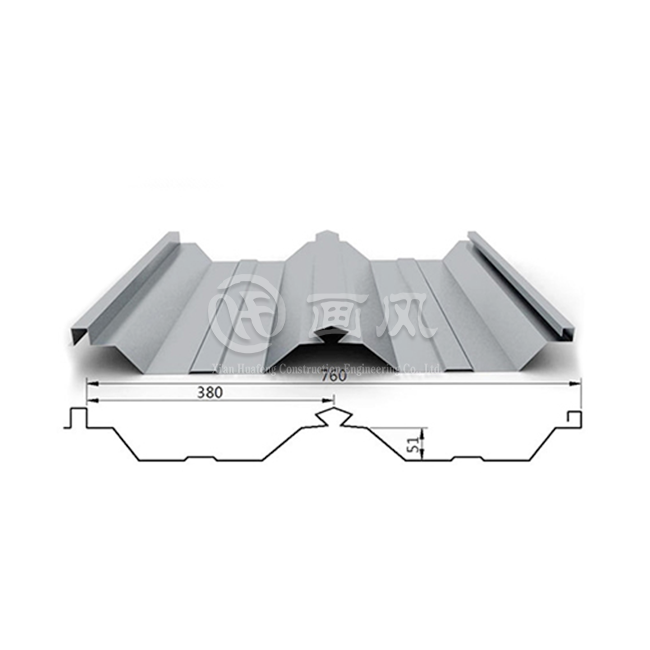
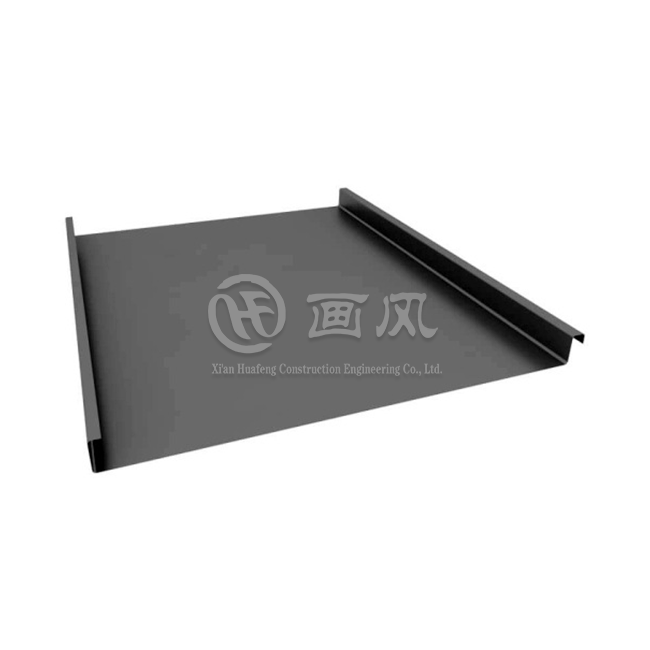
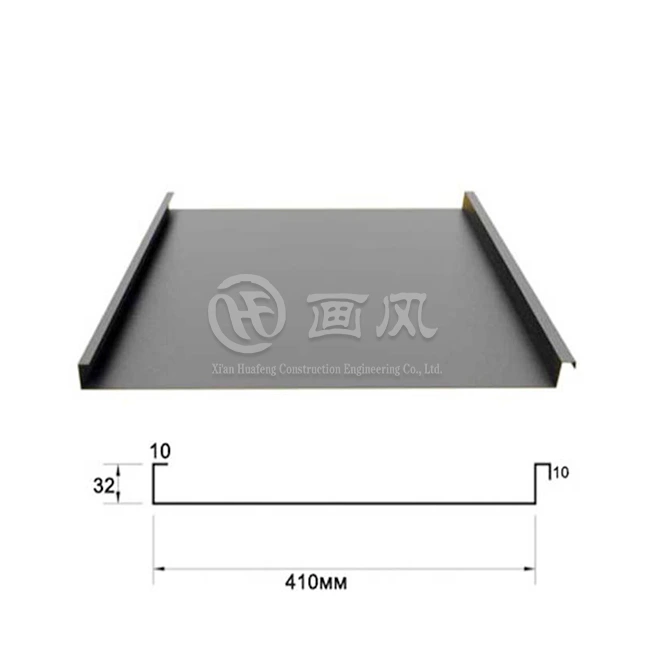
A standing seam metal roof with trapezoidal ribs is very different from a design with flat or round ribs. The trapezoid's angled sides make the panel's section modulus higher, which means it can hold more weight over bigger purlin spans, which are usually 1.5m to 2.5m in factories and warehouses. This is very important when you're covering at least 30,000 square meters and each purlin is worth the cost of the structural steel.
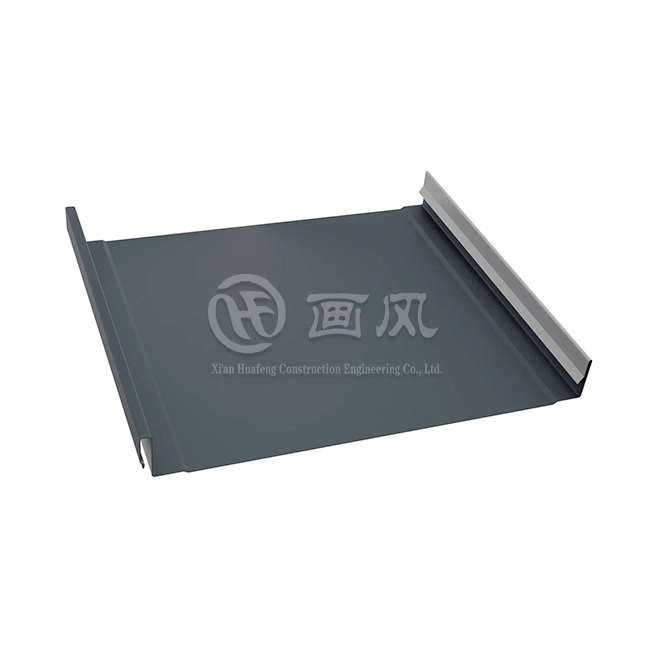
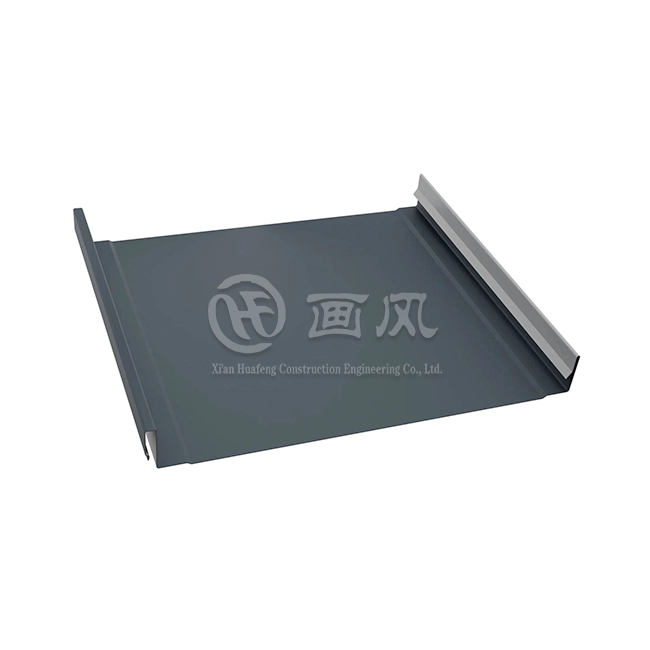
The sheet can move along its length during thermal cycling because there is a hidden clip device under each seam. Screw-down profiles hold the panel to the purlin, which can lead to holes getting longer and water getting in. The floating clip design, on the other hand, doesn't have any fastener wear at all. A capillary break is made in the female seam cap by sealant that is applied at the factory. This keeps the watertight integrity even at slopes as low as 1.5 to 2 degrees.
HF's trapezoidal panels are rolled out of high-tensile Galvalume steel (AZ150 base) and have organic topcoats of PVDF or PE. Depending on the span, the rib height can be anywhere from 25mm to 75mm. All profiles can be cut to exact measurements from drawings, which cuts down on waste on the job site and speeds up installation.
Comparing Trapezoidal Standing Seam Roofing to Other Metal Roofing Types
Performance and Cost Across System Types
Corrugated sheets, snap-lock panels, and trapezoidal standing seam metal roofing systems are often put up against each other by procurement teams. In three important ways, the data actually shows the following:
- Corrugated through-fastener sheets carry the lowest upfront cost but need exposed screws that break down after 8–12 years. The main reason why industrial roofs leak is that washers break. Adding extra costs over time, like re-screwing or layering, eats away at the savings made in the beginning.
- Snap-lock standing seam panels are easier to put together but don't have seams because they use a mechanical connection. When there is negative pressure, snap-lock systems can come loose in areas with a lot of wind uplift, like industrial parks along the coast. Most of the time, they won't work on slopes less than 3 degrees.
- Trapezoidal standing seam metal roofing systems cost more at first, but they last more than 40 years with little upkeep. The double-lock seam that goes all the way around forms a structural diaphragm that has been tested against ASTM E1592 (structural performance under uniform static air pressure) and FM Global 1-90 wind rates.
One thing is clear from these three comparisons: over a 25-year period, the trapezoidal standing seam metal roofing system always has the lowest total cost of ownership for large-span industrial buildings. That estimate is easy for buying teams that are in charge of EPC contracts that last more than one year.
Installation and Maintenance: What Procurement Managers Need to Know
Substrate, Seaming, and Compliance
The purlin level is where the right fitting starts. To keep panels from pre-stressing, which can weaken seams, substrate level limits must stay within ±5mm over a 3m span. HF provides cut-to-length panels with pre-punched clip holes that are exactly what the plan calls for. This saves time and prevents measuring mistakes on large-format roofs.
Robotic electric seamers with nylon rollers that are set up to make a full 360-degree crimp without damaging the PVDF coating are used for field seaming. As part of the project QC file, seamer calibration records should be kept. This information directly supports warranty claims and owner handover packages.
Ongoing Maintenance Requirements
The maintenance needs for this system are really low. For most facilities, routine maintenance includes visual checks every two years to make sure seams are continuous, clips don't move out of place, and flashings are in place at penetrations. The zinc-aluminum galvanic protection at the cut ends of a Galvalume base with an AZ150 coating helps the material heal itself. HF's 30-year guarantee covers panel integrity under normal industrial exposure conditions. This gives buying teams a number they can use to plan for the panel's entire life.
Procurement Insights: Securing the Best Trapezoidal Standing Seam Metal Roofing
What to Verify Before Placing a Large Order
It takes more work to become a trapezoidal standing seam metal roofing supplier for structural roofing panels than for regular sheet metal. Before committing to a large order, experienced procurement managers ask for the following items on a list:
- Third-party wind uplift test reports that use ASTM E1592 or a similar standard, not data from your own lab. The report should list the exact panel profile and seam geometry that were checked.
- Coating specification sheets confirming the base is made of Galvalume and that the PVDF resin content must be at least 70% by weight (AAMA 2605) and AZ150 (ASTM A792).
- Cut-to-length capability with written proof of tolerances. Panels bought to the measurements on the plan avoid having to be cut on-site, which keeps the coating from coming off at the edges.
- Phased delivery scheduling in stages that match the order of your installations. For big roofing jobs, 3–5 delivery batches are usually needed, each tied to the progress of putting up the supporting steel.
- Inspection and acceptance documentation such as mill certificates, coating test records, and packing lists, that meet the needs of the owner or lender for handover.
HF has factories in Anhui, Hangzhou, and Xi'an that have more than 40 making and processing machines and 7 color finishing lines. Our regular wait time is 15–20 days from the confirmation of the order, which works well for projects with tight schedules. Our MOQ of 500㎡ also works for both pilot orders and full-scale supply contracts. You can get a PE or PVDF finish in a wide range of unique colors that are matched to RAL or project-specific standards.
Why Trapezoidal Standing Seam Metal Roofing Is the Preferred Choice for B2B Clients
It is clear that this roofing system makes sense from a structural and financial point of view in industrial construction. Grand View Research estimated that the global metal roofing market would be worth USD 28.9 billion in 2022. Standing seam systems would make up a bigger part of this market because they meet energy code standards and institutional owners require them to have low lifecycle costs.
There are more than 20 registered roofing patents and ISO 9001 and ISO 14001 certifications for HF. They also have first-level curtain wall qualification. Our systems work with S-5! clamp type non-penetrating solar mounting hardware, which meets the green building standards that are being put into more and more EPC contracts in the Middle East and Southeast Asia. Steel and aluminum panels can be recycled, which helps with LEED and other certification processes.
HF's production consistency and record of on-time deliveries have been proven by projects in the transportation, manufacturing, and airport infrastructure sectors. When owner-specified brands are needed, our approval paperwork and test results are strong enough to be accepted by most specification writers and independent engineers.
Conclusion
When buying industrial construction materials, trapezoidal standing seam metal roofing meets the main needs of strong structure over large areas, watertightness at low slopes, thermal movement tolerance, and a service life that lasts longer than most building financing cycles. You can get precise cut-to-length, phased delivery, and full acceptance documents with this method. It solves the three biggest problems in large-format roofing supply: schedule risk, compliance risk, and lifecycle cost. HF built its production facilities so that it can serve this market group in large quantities.
FAQ
1. What is the minimum slope for this roofing system?
Machine-seamed trapezoidal panels with factory sealant work successfully at slopes as low as 1.5 degrees (1:38), as long as the draining design takes into account how much rain falls in the area. Snap-lock links can be made on steeper hills.
2. Can panels be installed over an existing roof?
Yes. Using a sub-framing system, it is possible to install an overlay on old corrugated or built-up roofs. This cuts down on removal trash and keeps buildings running while the roof is being replaced.
3. How does HF handle phased delivery for large projects?
We make sure that the delivery batches work with your installation schedule. The normal wait time for a batch is 15 to 20 days, and we send advance packing lists and mill certificates with every package.
4. What coating option suits high-humidity or coastal environments?
For industrial sites near the coast or those with a lot of humidity, the recommended specification is PVDF coating over AZ150 Galvalume substrate. Over a 30-year period, it holds up much better against UV damage and chalking than PE coats.
5. Does HF provide documentation for owner acceptance?
Yes. There are mill certificates, coating test records, dimension inspection reports, and a warranty certificate with every order. This is all the paperwork that is needed for EPC handover packages.
Partner with HF for Your Next Roofing Project
When it comes to trusted manufacturers, HF offers trapezoidal standing seam metal roofing with 15–20 day lead times and a 30-year warranty. Whether you need a 500㎡ pilot order or a full EPC supply contract, our team can help. We offer cut-to-length fabrication, PE/PVDF finish options, and scheduled delivery in stages. To get specs, test reports, and a quote for your project, email our project team at huafeng@hfmetalroof.com to request specifications, test reports, and a project-specific quotation.
References
1. Grand View Research. Metal Roofing Market Size, Share & Trends Analysis Report. 2022.
2. ASTM International. ASTM E1592: Standard Test Method for Structural Performance of Sheet Metal Roof and Siding Systems by Uniform Static Air Pressure Difference. 2012.
3. ASTM International. ASTM A792: Standard Specification for Steel Sheet, 55% Aluminum-Zinc Alloy-Coated by the Hot-Dip Process. 2010.
4. FM Global. FM Approvals 1-90: Approval Standard for Class 1 Metal Roofs. 2018.
5. Architectural Aluminum Manufacturers Association. AAMA 2605: Voluntary Specification, Performance Requirements and Test Procedures for Superior Performing Organic Coatings on Aluminum Extrusions and Panels. 2017.
6. Metal Construction Association. Metal Roof Systems Design Manual. 2020.





YOU MAY LIKE