Aluminum Striated Metal Roof Panels: What SGS Testing Reveals
2026-11-25 18:47:38
SGS tests show how well aluminum striated metal roof panels work in three areas: how they react to fire, what substances they can't hold, and the quality of their coating. Based on the reports I looked at, six attempts to light a 1.3 mm 3003H24 sample did not work. Ten tests for RoHS substances were passed by a 0.72 mm 5052H26 sample, and thirteen tests for AAMA 2605-22 coatings were passed by a 3.0 mm 3003H24 PVDF sample. Buyers can be sure of these results, but they only apply to the alloy, thickness, and coating that were tested. I'll show you how to read them and match them to your orders below.
A clear test report can help keep disagreements to a minimum before a container ships if you sell metal roofing online or to contractors. My goal is to give you a useful way to compare striated aluminum roofing, look over paperwork, and write a clear question.

What Are Aluminum Striated Metal Roof Panels?
How Striations Work
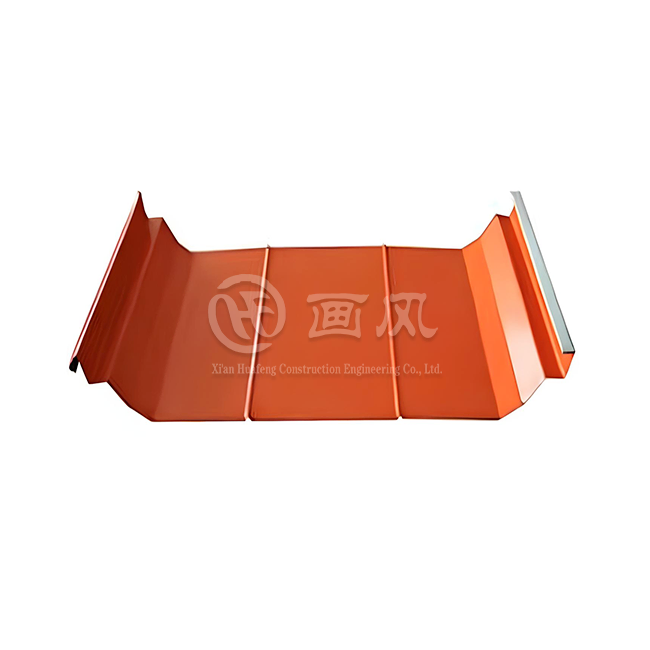
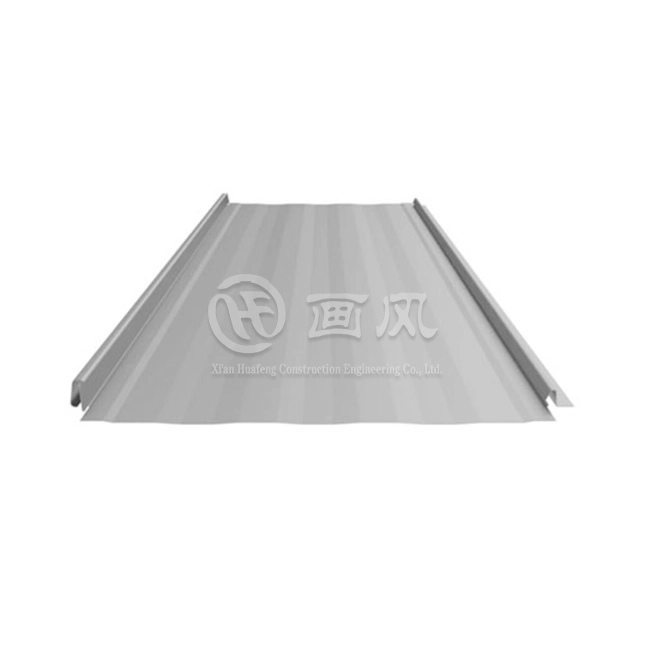
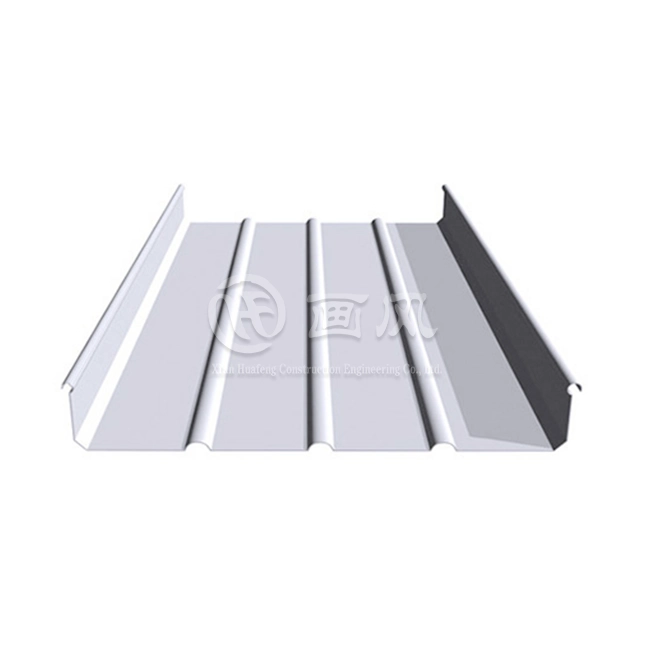
The flat space between the main ribs of striated metal roof panels is pressed with shallow, parallel grooves or ridges. These lines give the sheet more depth, make it stiffer, and help water flow along the panel. Also, they break up light that is reflected. That makes it harder to see oil canning, which is the waviness that shows up when heat moves and the decking isn't level. Oil canning is still there after the strokes, but they hide it from view. This is important for aluminum because it grows about twice as much as steel does when the temperature drops by one degree. On sunny roofs, long aluminum panels move around a lot, and a pattern on the surface that hides the waves makes the roof look smooth.
Striated vs. Corrugated, Ribbed, and Standing Seam Panels
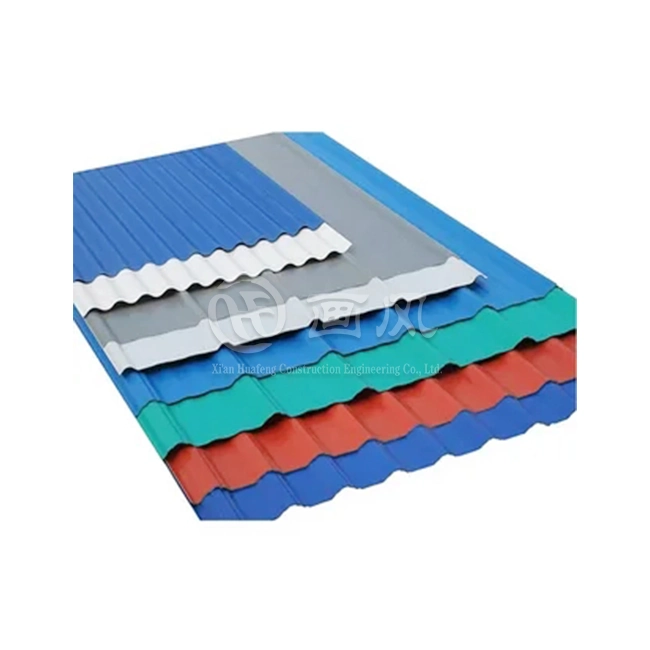
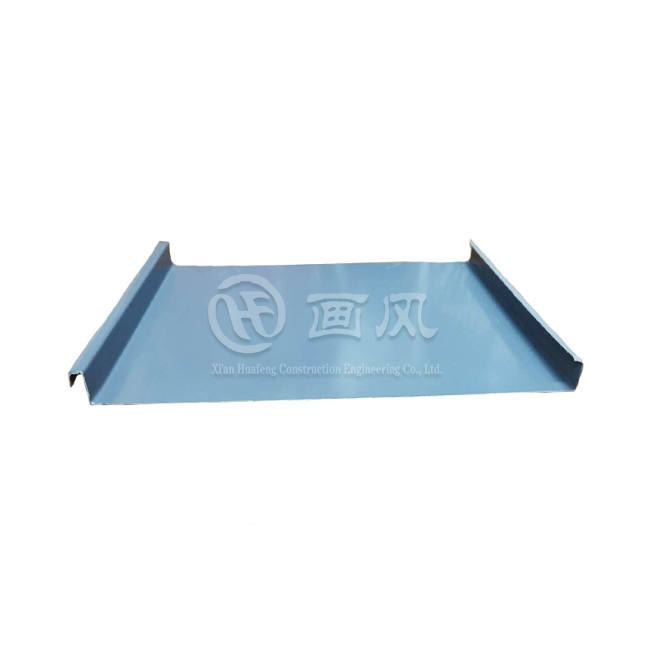
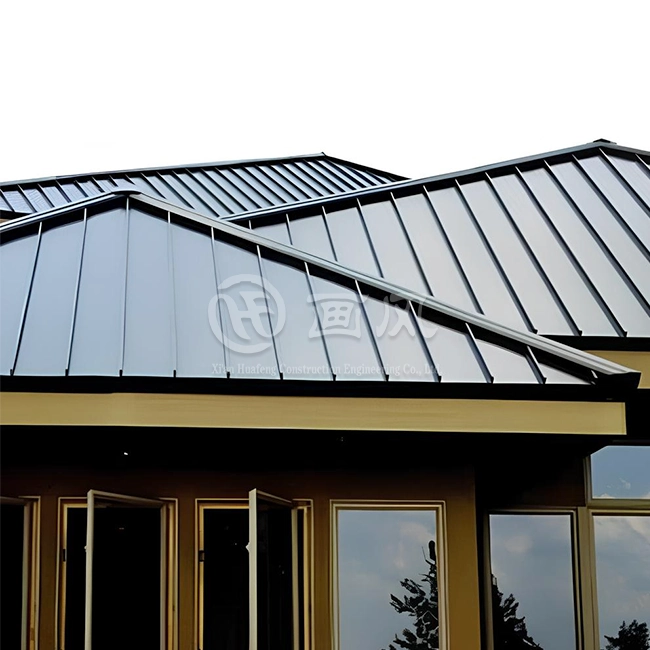
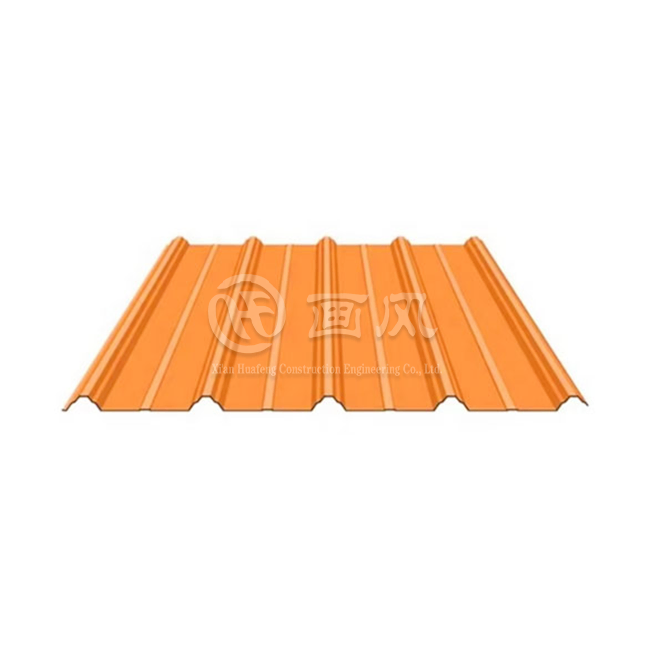
Striation is something on the surface, not the full roof structure. They come in the form of waves and normally have exposed fasteners. Styles that are ribbed or have an R-shaped panel with elevated trapezoid ribs and fasteners showing. Standing seam panels feature elevated seams and concealed fasteners. The flat surfaces of these panels are typically striated. A striated R-panel features fine lines in the flat surface and elevated ribs . If you operate an online shop, these variances depend on what your consumers are looking for and what tools they have. Before you put a profile on the market, check its drawing, seam shape and coverage breadth against the shear and bending instruments your consumers use. Also, including the name of the attaching technique on each product page helps users select the proper item.
HF Striated Panel Specifications
HF is the manufacturer of striated metal roof panels in versions 25-330, 25-400, 25-430, 32-410, 45-400, 65-400 and 65-430. It is available in several thicknesses (0.6 mm to 1.2 mm). Coating: PVDF or PE. RAL and Pantone colours available. We provide Aluminium 3003, 3004, 5052 alloys. Coverage widths are normally 300 to 600 mm, and lengths may be modified to suit, often up to 12 m. Production standards such as ASTM, DIN, JIS, BS and GB/T. Ask for profile drawings of any model so you may compare the sizes against your present catalogue and the tools your clients use.
What SGS Testing Reveals About Aluminum Striated Roof Panel Quality
Fire Behavior: AS/NZS 1530.3 Results
The aluminium sheet was 3003H24 with a 1.3 mm thickness coated with PVDF (8 μm primer, 18 μm topcoat). Tested by SGS Anji. Report Date: 09/26/2024 The six samples were non-flammable. All indices for ignition, flame spread and heat release were 0. The smoke development indexes were from 0 to 1. The lab only noticed superficial changes. It was developed by folks in Australia and New Zealand therefore that’s who it works best for. The AS/NZS 1530.3 technique. Just make sure you know which test your market requires before quoting this result. For projects in the US, municipal regulations typically require for ASTM E84.
RoHS Results for Restricted Substances
SGS Qingdao examined it for compliance with the EU RoHS Directive 2011/65/EU as amended by (EU) 2015/863. The sheet thickness was 0.72 mm and had a polyester coating (11 μm primer, 18 μm topcoat). Written report: November 7, 2024 Lead 10 mg/kg 1,000 mg/kg With 10 mg/kg the limit of 1,000 mg/kg was reached. Mercury, cadmium, hexavalent chromium, PBB, PBDE and four kinds of phthalates (DEHP, BBP, DBP and DIBP) were not detected. RoHS is not a building regulation in the US, it is a rule in Europe. But it indicates the metal and coating were tested for 10 forbidden compounds, which is what some project owners and merchants want. This sample was in polyester mind you, not PVDF.
Coating Results Under AAMA 2605-22
SGS Guangzhou tested a 3.0 mm thick sheet of 3003H24 with three-layer PVDF coating (8 μm primer, 18 μm intermediate coat, 15 μm topcoat). It is a report dated November 19, 2024, with all 13 items passing. Colour uniformity was 0.3, dry film hardness was F and adhesion to dry, wet and boiling water was all 5B. The coating also showed resistance to hydrochloric acid, nitric acid, cement, detergent and window cleaning. It was flexible too, didn't shatter on impact . Gloss level was 30. Adhesion and flexibility are significant in the minds of sellers because they indicate how well paint will withstand being bent at striation lines. You’ll want to know
How to Read the Report Before You Order
Start with the example of a story. These three reports talk about roll-coated aluminum sheet that is 1.3, 0.72, and 3.0 mm thick. They also talk about HF striated panels that are 0.6 to 1.2 mm thick. Different reports also list different alloys, coatings, and thicknesses, so no single sample can prove everything. Then, compare the report number, SGS reference, test method, sample size, and date to the batch you have. Data on wind uplift, which comes from system tests like ASTM E1592, is also not the same as a lab result. If your order is different from the sample that was tested, ask HF what reports cover it and what other testing is available.
Performance Benefits and How Aluminum Compares With Other Metal Roofing
Corrosion Resistance and Weight
A thin layer of natural oxide forms on aluminum, which slows corrosion and heals quickly after a small scratch. A PVDF coating adds one more defense. This is important in places with humid or salty air, like the Gulf Coast and Florida. By volume, aluminum weighs about a third as much as steel. This makes it easier to handle on the roof and lowers the shipping weight per panel. The selection notes from HF say that AA3004 with PVDF is best for coastal areas. You should still be careful with galvanic corrosion. You should use fasteners, sealants, and separators that are safe for aluminum because bare steel, copper, and wet cement can damage it.
Heat, Color, and Appearance
UV light can't damage PVDF coatings, and the color stays true for a long time. An HF report says that PVDF coatings keep their color for 20 to 30 years, while PE coatings only last about half that long. When paired with insulation and air flow, light colors that reflect heat can help keep roofs cooler. By spreading light across the pan, the grooves also make the roof look even. A common reason for returns for online sellers is that the colors don't match. In the daylight, get color chips of classic shades like country red and classic brown and compare them to your color card. The ¥EH 0.3 uniformity result in the AAMA report shows what a lab with controlled color looks like.
Aluminum Compared With Other Roofing Systems
Utility buildings on a budget should use corrugated aluminum. Since concealed fasteners keep penetrations from being seen, standing seam works well on low-slope or high-performance roofs. It's possible that ribbed steel is cheaper or stronger than aluminum, but aluminum is lighter and doesn't rust. Insulated sandwich panels keep heat in better, but they cost more and are harder to work with. Because aluminum moves heat around more, long panels need fastening details that let them slide. There is no one best choice. Compare the price of the whole roof, not just the price per square meter when choosing striated metal roof panels. This includes the panel, the fasteners, the accessories, the labor, the freight, and the upkeep.
Selecting, Installing, and Maintaining Striated Metal Roof Panels
Match the Panel to the Environment
Start with the slope, the amount of rain or snow, the wind, and the quality of the air. Water moves slowly on low-slope roofs, and gaping holes can let water in. There should be at least 0.7 mm of PVDF on industrial roofs and AA3004 with PVDF on coastal sites. 0.6 to 0.8 mm sheet is usually used for residential roofs, and thicker sheet may be used for commercial buildings. We offer ribs that are up to 65 mm high, which are better at blocking wind pressure. Then match the color, coating, hinges, flashings, sealants, and alloy. Ask for SGS reports and mill certificates that are linked to your batch.
Installation Details That Prevent Leaks
Even good panels can leak if they aren't put in correctly. Before you put up the first panel, make sure the deck is level, the slope is right, and there are no drainage problems. Instead of dragging panels, lift them and stack them on blocks. As you go, peel off the protective film. Scrape off the metal shavings after cutting because they rust and stain the finish. Place the fasteners where they're supposed to go and stop tightening them when the washer fits snugly in place. Too much compression can break the seal. Allow for movement of heat in long runs. Pay extra attention to places where leaks are likely to start, like ridges, eaves, valleys, skylights, and cuts.
Service Life, Maintenance, and Risk Factors
I don't want to give you a number for service life because it depends on the alloy, thickness, coating, climate, drainage, installation, and whether it is exposed to salt or chemicals. HF offers a 30-year warranty; ask for a copy of the terms and conditions in writing. Once or twice a year, check the roof, clean it of debris, make sure the drainage and fasteners are working, and wash it gently with mild soap. Fix small dings quick. Galvanic contact, mismatched sealants, trapped moisture, rough handling, a lot of foot traffic, and bad storage are all common problems. Any of these things can make the warranty less useful and raise the cost of ownership.
Buying and Applying Striated Metal Roof Panels for B2B Projects
What to Put in Your RFQ?
When you ask a precise question, you get similar quotes. Include the location of the project, the type of building, the roof area, the slope, the support spacing, the model or profile, the alloy, the thickness, the coating, the color, the panel lengths, the accessories, the packaging, the delivery terms, and the inspection needs. When selling something online, the number of SKUs, color mix, and length mix should also be written down. Don't forget that the price per square meter is only one part of the total cost. It also includes freight, accessories, labor, waste, and the ability to get replacements. Ask for pre-shipment samples and written information about the packaging for your striated metal roof panels so that you can tell your carrier and customers what they can expect in terms of scratch protection.
Supply Capacity and Order Terms at HF
The business Xi'an Huafeng Construction Engineering Co., Ltd. began in 2018 in Shaanxi Province. It plans, makes, sells, and installs metal roofing systems. There are three plants in our network. One plants raw materials in Anhui, and the other two plants process them in Hangzhou and Xi'an. We have over 40 machines that cut, press, and bend metal, as well as seven color coating lines. It is possible to supply 1,000 tons per month. You need to order at least 500 square meters, which is 1 ton, and it will be delivered in 15 to 20 days. Our quality system meets the standards of ISO 9001 and ISO 14001, and we have more than 20 patents for roofs. Talk to our staff about how to mix colors and lengths within the limits of your minimum order.
Project Applications
Commercial buildings and warehouses need good looks, easy installation and inexpensive upkeep. Farm and factory roofs should be kept dry and cleaned periodically. They also need protection from ammonia, dust, chemicals and moisture. Residential constructions need light weight, colour options and resistance to corrosion in coastal environments. Striated panels may also be used to wall, soffits and canopies. The biggest problem with recurring orders is making sure the sizes and colours are consistent from batch to batch. Customers want replacement panels to match panels which went out before. Keep a portion of each lot so you may compare it with other lots that arrive later.
Conclusion
Reports from SGS on aluminum striated metal roof panels show what can and cannot be proven by lab evidence. In six tests, the sheets didn't catch fire, they met all ten RoHS substance limits or showed that none of them were present, and they passed 13 AAMA 2605-22 coating items. Each result is related to a different alloy, coating, and thickness, and none of them can be used instead of wind uplift data or sound installation. Striations hide oil cans, aluminum reduces weight and worries about corrosion, and PVDF helps colors stay true. What makes a roof age is still its slope, fasteners, flashings, and how well it is taken care of. In real life, this means making sure that the details in the report match the batch you buy, comparing the price of the whole roof system instead of just the panels, and writing down the color, size, and warranty terms.
FAQ
1. Do striations stop oil canning?
Because they break up the light that is reflected, it is harder to see the wave. It's still important to have flat, level decking and the right screws for a smooth finish.
2. Is aluminum better than steel?
Neither wins all the time. Steel can be stronger or less expensive at first, but aluminum is lighter and doesn't rust. Pick based on budget, environment, and time frame.
3. Can I use these panels on low-slope roofs?
Only if the system has been tested and designed. Follow the supplier's system data for the minimum slope. It depends on the type of seam, the laps, and the sealants.
4. Which SGS documents should I request?
Find reports that match your alloy, thickness, and coating. You should also ask for mill certificates and a written warranty. HF can show you the three SGS reports listed above and let you know which ones are right for your order.
Request Striated Metal Roof Panels Samples and a Quote From HF
Looking for a company that sells striated metal roof panels and can back up their materials? Based on your question, HF can send you profile drawings, color samples, copies of the SGS report, and a quote. Email us at huafeng@hfmetalroof.com with your models, thickness, coating, colors, and quantity, and we'll get back to you with details and lead times.
References
1. AAMA 2605-22, Voluntary Specification, Performance Requirements and Test Procedures for Superior Performing Organic Coatings on Aluminum Extrusions and Panels, 2022
2. ASTM D3359-23, Standard Test Methods for Rating Adhesion by Tape Test, 2023
3. AS/NZS 1530.3:1999, Methods for Fire Tests on Building Materials, Components and Structures: Simultaneous Determination of Ignitability, Flame Propagation, Heat Release and Smoke Release, 1999
4. Directive 2011/65/EU of the European Parliament and of the Council on the Restriction of the Use of Certain Hazardous Substances in Electrical and Electronic Equipment (RoHS), 2011
5. ASTM B209-21a, Standard Specification for Aluminum and Aluminum-Alloy Sheet and Plate, 2021
6. ASTM E1592-05(2017), Standard Test Method for Structural Performance of Sheet Metal Roof and Siding Systems by Uniform Static Air Pressure Difference, 2017





YOU MAY LIKE