Where to Buy Striated Standing Seam Roof Panels from a Supplier
2026-09-03 19:40:35
Finding a reliable source for striated standing seam roof panels can make or break your commercial roofing project. As a procurement manager, I understand you're not just buying metal panels—you're investing in a weathertight envelope that needs to perform for decades while meeting strict certification requirements. The right supplier delivers more than product; they provide engineered solutions with proper documentation, consistent lead times, and technical support that keeps your installation crews productive. Whether you're bidding on a 50,000-square-foot retail center in Ohio or a school renovation in Georgia, sourcing panels that meet UL/FM ratings while controlling costs requires strategic supplier selection.

Understanding Striated Standing Seam Roof Panels
Engineering Aesthetics, Thermal Movement Control, and Performance Certifications
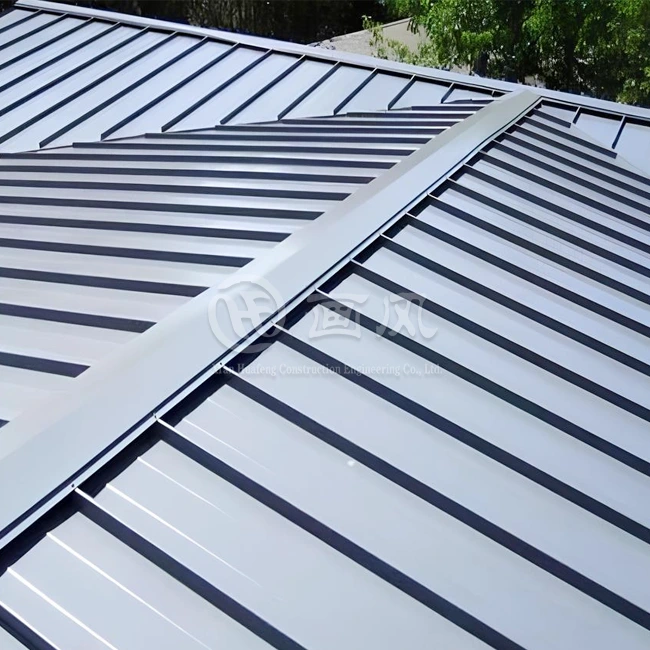
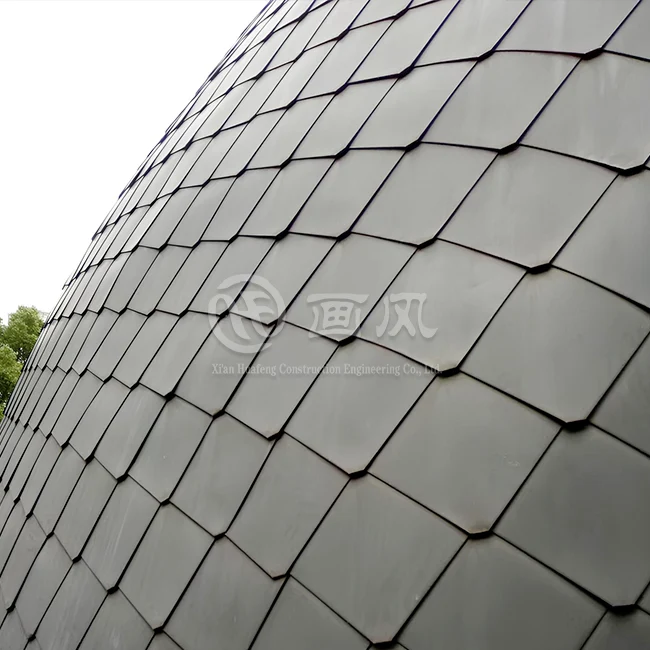
Striated standing seam systems are the next step in architectural metal roofing. They combine proven weathertightness with better looks. The feature that sets it apart is the group of shallow, lengthwise lines that are rolled into the flat pan area between the vertical seams. These lines aren't just for looks; they solve the problem of oil canning, which is the noticeable wavering that happens when smooth metal panels expand and contract due to heat stress.
The engineering behind striated standing seam roof panel solves problems that happen in the real world. In the summer, when a 60-foot panel gets to 40 degrees, the metal wants to move. In traditional flat pans, every manufacturing stress and thermal ripple shows up as distortion. Micro-stiffening ribs in striated shapes break up light reflectivity, which makes these moves almost impossible to notice. This makes a roof surface that looks the same across large areas, which is very important for commercial projects with a lot of foot traffic where architects demand exactness in the way things look.
For use inland, 24-gauge Galvalume steel with an AZ55 metallic finish is often used. For coastal areas where salt spray speeds up rusting, aluminum alloy (3003-H24 or 5052-H26) is used. Panels come in a range of widths, from 0.6mm to 1.2mm, and rib heights, from 25mm to 65mm, based on how much wind resistance is needed. Premium coatings like PVDF (Kynar 500 or Hylar 5000) come with 30-year fade guarantees. For jobs with smaller funds, polyester finishes are a more affordable option.
For business bids, performance data is important. For structural performance, good panels meet ASTM E1592 standards, get UL 580 Class 90 wind uplift ratings, and pass ASTM E1680 water penetration tests. If your contract includes liquidated damages for missed deadlines or poor performance, you must get these certifications. They're your risk-reduction strategy.
How to Choose the Right Striated Standing Seam Roof Panel Supplier
When choosing a seller, you need to look at more than just the price per square foot. Your choice strategy should look at five important factors that have a direct effect on the success of the project.
Production Capacity and Lead Time Reliability
For commercial projects, the flow of materials needs to be reliable. A supplier with more than one production line can take your order without having to change their schedule. Look for makers whose monthly capacity is more than 1,000 tons. This means they can handle your 80,000-square-foot job without having to wait longer for supplies. Check their standard delivery window. Reliable suppliers keep the time between confirming an order and the container leaving at 15 to 20 days. When you're bidding, add two weeks to your schedule for getting materials to allow for time for customs clearance and domestic freight.
Certification Documentation and Quality Assurance
The building inspector won't sign off until they have the material test certificates that your architect needs. Suppliers should give mill test certificates (MTC) that show the chemical make-up of the steel, its yield strength, and the weight of the coating. For fire-rated parts, ask for SGS test results that show they meet AS/NZS 1530.3:1999 requirements with a zero spark index. For projects that need to be approved by Miami-Dade or listed on FM Global, providers need to know how to follow North American certification rules. A good supplier is registered with ISO 9001 and can give you third-party coating performance reports that meet AAMA 2605 standards. These reports prove that the PVDF coatings will keep their color after twenty years of UV exposure.
Technical Support and Shop Drawing Services
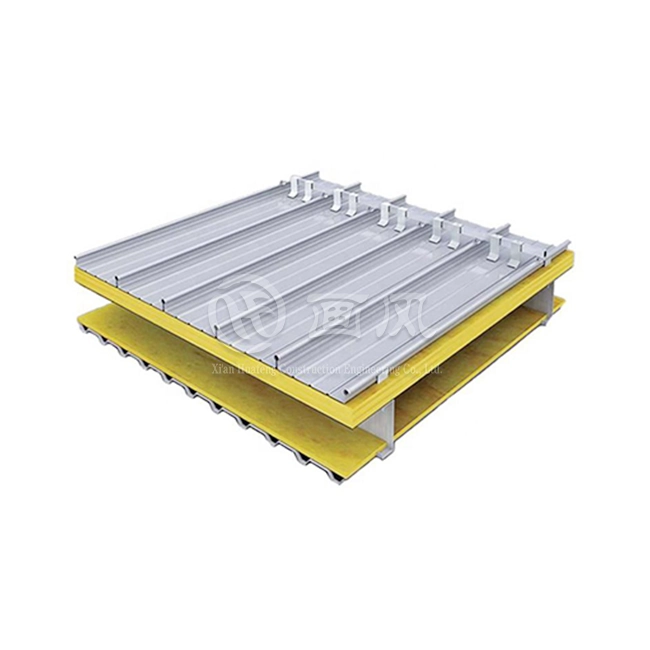
Metal roofing is not a commodity; it is a system that was designed to work together, especially for striated standing seam roof panel installations. The best suppliers offer help before the panels are installed. This includes making sure that the panels will work with your seaming equipment, figuring out how much heat will move over long runs, and giving you fabrication drawings with trim details. Responsive technical staff keep the work from being held up in the field, which can be expensive, when your estimate needs help with where to put an expansion joint or when your boss has questions about a valley transition. Suppliers who know how to install standing seams can tell you how far apart the clips should be for your wind zone and how to increase the panel gage in places where there is more lifting.
Customization Capabilities and Color Consistency
Custom colors that aren't on standard charts are becoming more and more important in commercial building. Suppliers who have their own color coating lines can match exact RAL or Pantone specs and deliver panels that match the models that were accepted by the owner. More importantly, they make sure that each batch is the same, which is very important when your project takes six months and you order panels in three shipments. Ask for information about the coil batch and their color matching process. Large roofs make even small differences in color stand out more. Suppliers who use spectrophotometers to check the quality of their products reduce this risk.
Commercial Terms and Payment Flexibility
The project's cash flow determines what to buy. Check the minimum order amounts. Some sellers need full container loads (at least 500 square meters), while others can handle smaller test orders. Talk about payment terms that work with the billing cycle for your project. Standby letters of credit or progress payments tied to production goals can help you keep your working capital in good shape. If you need more than 20,000 square feet, ask for project-level prices. This will help your bid compete with others. Write down the warranty terms so they are clear, especially when it comes to damage caused by installation in the field versus manufacturing defects.
Comparing Striated Standing Seam Roof Panels with Other Roofing Solutions
Cost, Performance, and Longevity Trade-Offs Across Roofing Systems
Knowing how striated panels compare to other options can help owners who are trying to save money and builders who care about looks make decisions about what to specify.
Snap-lock standing seam systems can be put together more quickly because they don't need field seaming tools because they connect mechanically. The cost of installation may be 30% less, but the wind uplift performance is lower—usually maxing out at UL 60 ratings instead of UL 90 for mechanically seamed striated panels. When the slope is less than 3:12, snap-lock works well, but the exposed clip method makes more thermal bridging places that can make insulation less effective.
The first cost of exposed fastener panels is the lowest; sometimes they are half the price of installing striated standing seam roof panel systems. However, as neoprene washers break down over 15 to 20 years, screw holes become the main place where they fail. Maintenance costs add up over time as the roof is re-roofed and torqued again and again. The difference in looks is big—screw lines can be seen, which means open fasteners can't be used in architect-designed buildings. With a striated standing seam, there are no holes in the weathered surface, and water flows away through the seams that are hidden.
Metal panel systems look like traditional roofing profiles, but they take a lot more work to install because each piece has to be placed individually. Even though they can fit more complicated roof shapes than long panels, the higher seam density makes it more likely that they will leak. In commercial settings, this level of complexity is rarely needed because striated standing seam offers similar looks with better weatherproofing and lower lifecycle costs.
When it comes to total cost, striated panels usually fall in the middle of the first-cost range but are the most expensive over the course of their useful life. The initial premium is worth it because the coating comes with a 30-year warranty, doesn't need much maintenance, and is more resistant to thermal cycling. When you look at proposals, you should compare the installed cost per square to the expected service life and maintenance intervals. When looking at annual costs over 40-year building lifespans, striated standing seam always has the lowest cost.
Procurement Process and Best Practices for Buying Striated Standing Seam Roof Panels
Accurately defining the project is the first step toward efficient buying. The next step is to work with suppliers in an organized way and confirm delivery.
Specification Development and Submittal Preparation
Start with full roof plans that show the lengths of the panel runs, the angles of the seams, and where the penetrations are. Your estimator needs accurate square footage, but buying needs more specifics. Mark areas that need thicker gages because of higher wind zones, make notes about custom colors, and make a list of the trim profiles that are needed. Make a full List of Materials that includes sealants, clips, closures, and ridge caps. Attach the relevant parts of the building code and pages from the project manual that list the certifications that are needed. When asking for quotes, send a single, complete document instead of several separate ones. This will cut down on pricing mistakes and speed up the process.
Supplier Pre-Qualification and Bid Analysis
Source striated standing seam roof panel items not just based on price. Use a scoring matrix to choose three to five qualified suppliers based on their production capacity, certification documentation, and delivery reliability. Ask for examples from jobs of the same size that were finished in the last two years. Make sure they keep your gage in stock and can get your color finish without having to wait for a special order. When comparing prices, don't just look at the unit price; also look at the total landing cost, which includes freight, insurance, and any rush fees. If a supplier offers 10% less expensive materials but takes three weeks longer to deliver, the overall cost of your project may go up because of the longer terms and conditions.
Order Timing and Material Coordination
Place orders for panels as soon as the contract is awarded, even before the shop drawings are finished. Lead times get longer as you move up the supply chain. Getting the steel coil, coating it, slitting it, roll-forming it, and putting it in containers all take days. If the materials are available, the normal production cycle takes 15 to 20 days. If your color needs special coating, add two weeks. Plan for delivery to come one week before the finish date of your roof deck. This way, if there are any problems with customs or freight, your installation crew won't have to wait. Plan staging places with your manager to make sure there is enough room for bundles of panels that are longer than 40 feet.
Quality Verification Upon Delivery
Check packages as soon as they arrive, while the driver is still there. Compare the number of bundles to the packing list, make sure the lengths of the panels match your order, and look for damage to the paint or dents on the ends of the panels that are showing. Open at least one bundle to check the state of the material. Look for regular striation patterns, even color, and the right way to apply the protective film. Any problems with the photos should be written down and reported to the supplier within 24 hours. If quality problems are fixed before installation starts, there won't be any arguments about who is responsible for broken materials.
Conclusion
To find striated standing seam roof panels, you need to carefully look at a supplier's production ability, certification paperwork, expert support, and pricing. The panels themselves look better because they don't let oil leak in, and they're proven to be weathertight and require little upkeep. When lifecycle costs are compared to those of other systems, standing seam systems always offer the best value for commercial uses, even though they cost more at first. To be successful at procurement, you need to carefully create specifications, plan when to place orders, and make sure that deliveries are made on time. Partnering with makers that offer full technical help and approved quality systems lowers the risk of the project while keeping prices low by making the most of volume.
FAQ
1. What wind uplift ratings can striated standing seam panels achieve?
When properly placed, striated panels with automatically seamed joints usually get UL 580 Class 90 ratings, which means they can withstand wind speeds of up to 110 mph. Depending on the panel gage, clip spacing, seam height, and how the substrate is attached, the actual performance will vary. Coastal projects or buildings taller than 60 feet may need engineering estimates to make sure they can handle the wind loads that will be present at the spot. Suppliers should give ICC-ES evaluation reports that list the tried combinations of assemblies.
2. How do striations affect panel cost compared to flat standing seam?
There aren't many price differences—usually less than 5% per square foot. Striations are just a simple change that is made to a roller die during production. They don't require any extra material or processing steps. Panel gage, coating type (PVDF vs. polyester), color choice, and order number are still the key factors that affect cost. No matter the striation pattern, premium architectural finishes or metallic colors raise the price by 15 to 25 percent.
3. Can these panels be installed on low-slope commercial roofs?
It is possible for mechanically seamed striated panels to work well on slopes as low as 1/4:12 if the factory applies sealant to the female seam leg. Make sure that the sealant tape your provider provides is included and that the installation teams don't over-crimp the seams when they are in the field, as this can weaken the sealant. According to building code rules, slopes less than 1:12 may need more flooring.
Partner with HF for Your Commercial Roofing Material Needs
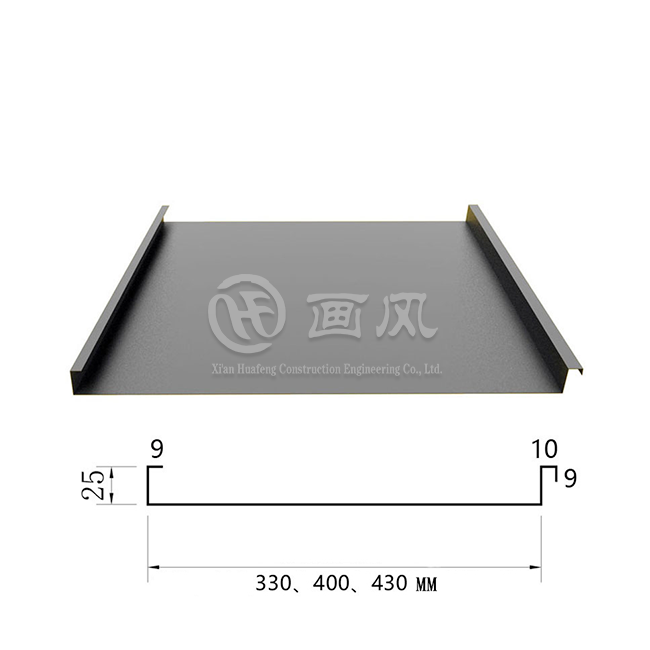
It takes more than just comparing price sheets to find the right striated standing seam roof panel supplier. You need a manufacturing partner that can help with complex commercial projects from the planning stages to the installation stages. HF has three strategically placed factories that cover 200,000 square meters and have seven color coating lines and more than 40 specialized roll-forming machines that can make more than 1,000 tons of products every month. Custom orders with standards ranging from 25-330 to 65-430 rib profiles and thicknesses from 0.6mm to 1.2mm always have a wait time of 15 to 20 days thanks to our manufacturing infrastructure.
Our method is different because we offer full technical help that is specifically designed for business contractors. We offer certified mill test certificates and performance documentation that has been checked by SGS. This includes AS/NZS 1530.3:1999 fire resistance reports (all test samples had a zero ignition index), EU RoHS compliance verification, and AAMA 2605-22 coating certification that covers 13 performance parameters. Our panels meet the international standards set by ASTM, DIN, JIS, BS, and GB/T. These are the certifications that your architects ask for and that building officials need.
Our service model is based on what the project needs. We accept orders with a minimum size of 500 square meters, and we offer discounts for bigger business bids. We can match colors from the full RAL and Pantone libraries, and our spectrophotometer quality control makes sure that each batch is the same across multiple orders. The technical staff works directly with your estimators to figure out things like heat movement, make sure seams are compatible, and make sure the details of making custom trim are clear. When time pressure builds, our production planning team puts business projects at the top of the list to protect your key path.
You can talk to our business sales team about your future projects and ask for product samples by emailing huafeng@hfmetalroof.com. You can get technical specs, look through our library of certifications, and find installation instructions at hfmetalroof.com. As a well-known company that makes striated standing seam roof panels, we know that your success depends on the reliability of your materials and the predictability of your supply chain. We keep these promises with every order.
References
1. Metal Construction Association. (2021). Technical Bulletin: Standing Seam Metal Roof Systems.
2. American Architectural Manufacturers Association. (2022). AAMA 2605-22: Voluntary Specification, Performance Requirements and Test Procedures for Superior Performing Organic Coatings on Aluminum Extrusions and Panels.
3. ASTM International. (2020). ASTM E1592-20: Standard Test Method for Structural Performance of Sheet Metal Roof and Siding Systems by Uniform Static Air Pressure Difference.
4. National Roofing Contractors Association. (2023). The NRCA Roofing Manual: Metal Panel and SPF Roof Systems.
5. UL Solutions. (2023). UL 580: Tests for Uplift Resistance of Roof Assemblies.
6. SGS Group. (2024). Building Materials Testing and Certification Services.





YOU MAY LIKE
(1)_1763110678300.webp "standing seam metal roof panels")