Structural Standing Seam Metal Roofing for Warehouses: What to Know
2026-10-14 11:00:03
If you manage procurement for large-scale warehouse or industrial construction projects, you already know that the roof is not just a cover — it is a structural and financial decision. Structural standing seam metal roofing has become the go-to system for warehouses, distribution centers, and pre-engineered steel buildings worldwide. With concealed fasteners, interlocking panel seams, and the ability to span open purlin framing without a solid deck, this system addresses the two biggest industrial roofing failures: thermal cycling fatigue and water intrusion. This guide walks you through everything you need to evaluate, specify, and procure the right system for your next project.

Understanding Structural Standing Seam Metal Roofing
What Makes It "Structural"
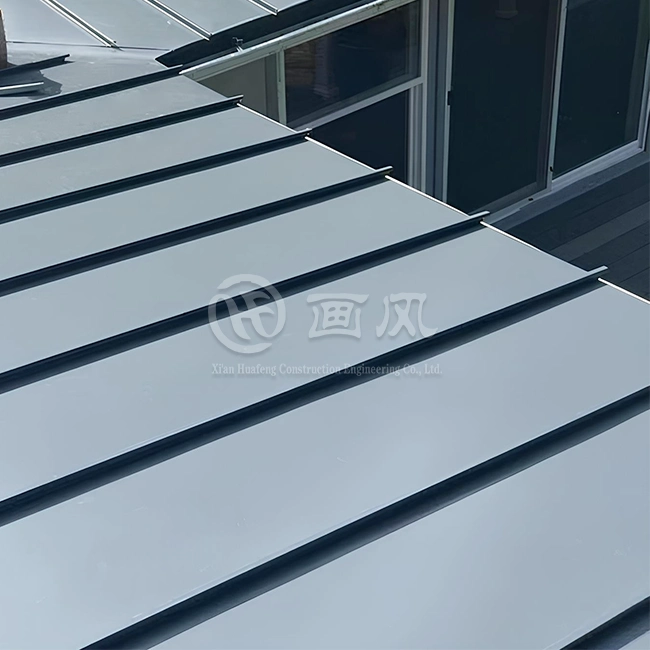
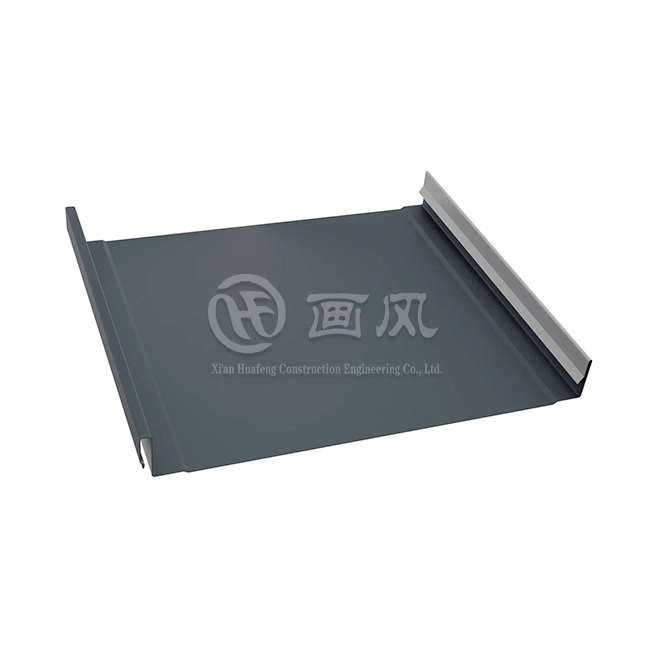
Unlike architectural standing seam panels, which need a solid base, structural panels go straight across open purlins or bar joists, which are usually spaced 5 feet apart and act as load-bearing beams. The total cost of the project and the amount of additional frame steel used go down. The system is approved for low-slope situations with slopes as low as ¼:12, which is about 1 degree. This means it can be used in huge warehouses with near-flat roofs as standard.
How the Interlocking Seam Works
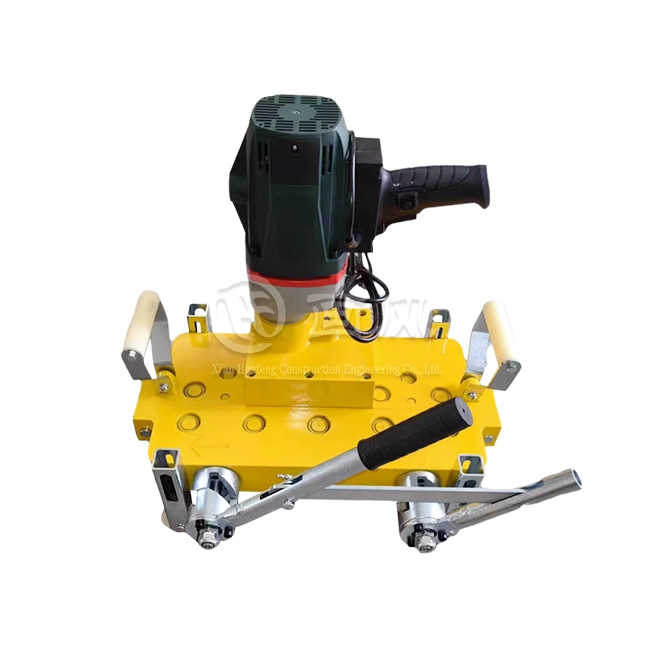
Machine-seamed joints are what make the system work. A robotic electric seamer crimps the legs of two panels together to make a double-lock (360-degree Pittsburgh seam). This traps the butyl sealant that was applied at the factory inside the female leg. This makes a hydrostatic seal instead of just a surface that lets water escape. This makes a continuous barrier that doesn't let water through and works well in standing water, heavy snow loads, and hurricane-force wind uplift. It has been tested according to UL 580 and FM 4471 standards.
Durability, Efficiency, and Sustainability
ASTM D4214/D2244 test standards show that metal roofing panels coated with PVDF (Kynar 500®) don't chalk or fade in color when exposed to UV light for 30 years or more. Reflective finishes lower the temperature of the roof's surface, which lowers the building's cooling needs. Steel and aluminum panels can be recycled in their entirety when they reach the end of their useful life. This is an aspect that is becoming more important for green building standards like LEED and ESG reports by businesses.
Comparing Structural Standing Seam Metal Roofing with Traditional Warehouse Roofing Options
Cost and Lifespan Side by Side
In business settings, asphalt roofs usually last between 15 and 20 years. Because rubber washers wear out over time, corrugated metal panels with visible screws usually need to be re-fastened and sealed every 10 to 15 years. A structural standing seam metal roofing system, on the other hand, usually lasts between 40 and 60 years if it is installed correctly. The much lower costs of upkeep over the life of the installation more than make up for the higher cost of installation itself.
Weather Performance Differences
There are thousands of exposed screw holes in corrugated and through-fastened panels. Each one could be a leaky spot. The floating clip system allows for thermal expansion on long panel runs (often 2–3 inches of travel on a 300-foot-long warehouse roof) without putting stress on the panel skin or making fastener fatigue holes, and structural standing seam panels remove 95% of visible fasteners.
Visual and Functional Design Factors
Standing seam panels look current and well-thought-out in distribution centers, retail stores, and shipping hubs because of their clean, ribbed shape. Most panel seams are between 1.5 and 3 inches high. Higher gaps (2–3 inches) make it possible for structures to span farther and let more water drain away. While corrugated profiles are cheap, they look very utilitarian and don't have the ability to span structures like a true standing seam geometry does.
Installation and Maintenance: What Warehouse Managers Should Know?
Installation Process and Timeline
Verification of the purlin plan, installation of clips at engineered spacing, roll-forming or delivery of panels in cut-to-length sheets, mechanical seaming, and then ridge and eave details are the steps that are usually taken in a big warehouse project. Crews with a lot of training and on-site roll-forming tools can usually cover 3,000 to 5,000 square feet of warehouse roof every day. Cut-to-length panels sent from the factory reduce waste in the field, but they need to be ordered with exact measurements.
Routine Maintenance Best Practices
When compared to roofing or shingle systems, structural standing seam metal roofing doesn't need as much maintenance. Here are the normal upkeep tasks that should be done every year:
- Annual visual inspection: Check annually to make sure the seams are strong, the clip movement slots are clear, and the sealant at the ridge caps and penetration flashings is in good shape.
- Bi-annual cleaning: Every six months, clean out the valleys and ditches of any garbage that has gathered to keep water from standing and speeding up the coating's wear.
- Fastener check at the perimeter: Since field fasteners are hidden, perimeter trim screws should be checked for backing out or washer wear.
Maintenance that is done on a regular basis keeps the roof in good shape and keeps small problems from turning into expensive structural issues during busy times.
Long-Term Cost Comparison
The Metal Construction Association says that over the course of 30 years, building owners who choose high-performance metal roofing systems save an average of 40% on maintenance costs compared to those who choose built-up roofing (BUR) or single-ply membrane systems. When you think about how much it will save you in energy costs and the number of times you won't have to replace your roof, the case for structural standing seam becomes clear.
Procurement Guide for Structural Standing Seam Metal Roofing Panels
What to Look for in a Supplier?
As much as unit price counts when buying panels for a big industrial job, it's also important to make sure the supplier is qualified. Trustworthy manufacturers of structural standing seam metal roofing should give you test reports from a third party that cover structural performance (ASTM E1592), air infiltration (ASTM E1680), and water penetration (ASTM E1646). They should also be able to cut the material to the length you need, offer a delivery schedule that fits with your project's schedule, and provide full acceptance paperwork for owner or backer approval.
Pricing Factors and Customization Options
Panel prices depend on the type of material, coating system, thickness, and number of panels ordered. Some important factors are:
- When it comes to material choice, Galvalume steel plates are the cheapest option for normal industrial use. Aluminum alloy is best for coastal or high-humidity areas, while stainless steel and copper are best for high-end or corrosive uses.
- Coating system: Polyester (PE) coatings are cheap and work well for interior-facing or low-UV uses. PVDF coatings, on the other hand, are used when chemical protection and long-term color retention are needed.
- Thickness and seam height: Panels should be between 0.5 mm and 1.2 mm thick and have seam heights between 25 mm and 65 mm. The seam heights should match the distance between the purlins and the design load requirements.
When you buy in bulk, you can usually get tiered prices. For orders between $500K and $2M, it's common to talk about phased payment structures, which include a down payment and progress payments based on shipment milestones.
HF Structural Standing Seam Metal Roofing: Product Specifications
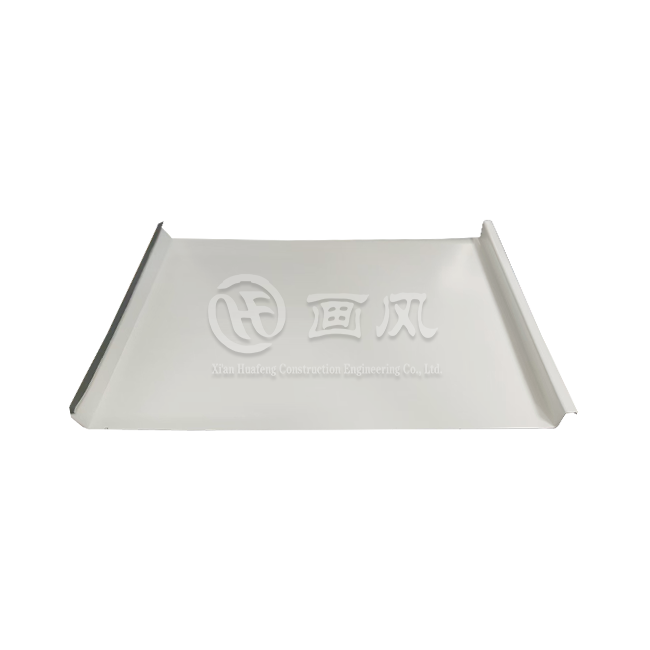
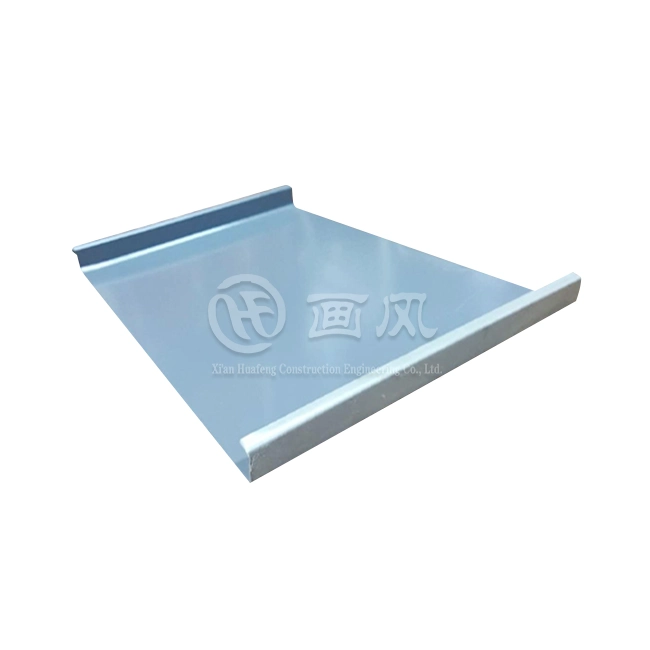
Xi'an Huafeng Construction Engineering Co., Ltd. makes HF, which are structural standing seam metal roofing panels that are made to meet ASTM, DIN, JIS, BS, and GB/T standards. The panel thickness ranges from 0.5mm to 1.2mm, and the seam heights range from 25mm to 65mm. Aluminum alloy, steel, stainless steel, copper, and titanium zinc are some of the materials that can be used. PVDF and PE finishes come in all RAL colors and can also be made to match your needs. HF has three factories, seven production lines, and more than 40 machines. They can supply 1,000 tons of goods every month and have a standard delivery window of 15 to 20 days. The MOQ is 500 m², which is equal to 1 ton, and all of the goods are guaranteed for 30 years.
Why Structural Standing Seam Metal Roofing Is the Preferred Choice for Warehouses?
Return on Investment and Compliance
Studies from Oak Ridge National Laboratory show that in hot areas, cool structural standing seam metal roofing with shiny coats cut the amount of cooling energy used each year by 7–15%. With a 40–60 year service life, it's easy to see how a large warehouse roof can pay for itself. Many green building programs, like LEED and BREEAM, give points for metal roofing materials that can be recycled and coatings that reflect light. This helps companies meet their sustainability goals.
Industry Adoption and Real-World Performance
Southeast Asian, Middle Eastern, and Latin American pre-engineered steel building (PESB) manufacturers all use structural standing seam profiles for industrial shed and warehouse construction. This is because the panels span 5-foot purlin spacing without secondary decking, which lowers the total weight of the steel that is installed. In metal-over-metal re-roofing, sub-framing systems put new structural standing seam panels over old, worn-out roofs. This lets warehouse operations continue as usual while the roof is being replaced, which is a big plus for shipping facilities.
Future Material and Technology Trends
High-tensile Galvalume substrates (Grade 80, 80 ksi yield strength) allow for thinner gages with the same level of structural performance. This makes it possible for international projects to ship materials that are lighter. Large distribution center roofs are starting to use solar-ready standing seam clips that can hold photovoltaic rail systems without having to drill holes in the roof. Because of these changes, choosing a good solid metal roof system early on is a smart long-term building choice.
Conclusion
Structural standing seam metal roofing provides warehouse owners and EPC workers with a system that truly works over decades, covering open frame, fighting wind uplift, controlling thermal movement, and needing very little upkeep. When you put together hydraulic seam geometry, floating clip engineering, and high-performance finishes, you get rid of the ways that traditional roofing materials fail. When purchasing teams look at big industrial projects, they need to make an easy choice: they need to be able to verify test results, offer cut-to-length production, handle phased logistics, and find a supplier that can safely deliver on a large scale.
FAQ
1. What is the minimum slope for a structural standing seam metal roof?
The minimum required by the business is ¼:12, which is about 1 degree. This hill has enough good flow to keep water from pooling for a long time, which wears down sealants over time.
2. How does the system handle thermal expansion on a long warehouse roof?
Individual panels can move away from the structure without touching it thanks to two-piece sliding (floating) clips. The panel is only attached at the eave or ridge, and the clip body can move up to 2–3 inches. This keeps the fasteners from wearing out and the holes from getting longer.
3. What test standards verify wind uplift resistance?
The main protocols are UL 580 and FM 4471. To get the negative pressure number needed for storm or cyclone compliance, clip spacing may need to be lowered from 5 feet to 2.5 feet in places with a lot of wind.
4. What is the difference between structural and architectural standing seam panels?
The structural plates span open supports (purlins) on their own and are automatically joined to at least 2 inches of height. Architectural panels need a solid deck under them to support them, and the seams are usually 1 to 1.5 inches high and snap-lock.
5. Is oil canning a reason to reject delivered panels?
The Metal Construction Association says that oil canning is a normal part of light-gauge cold-formed metal and doesn't mean that the structure isn't being accepted unless it's because of stress caused by the installation. Choosing pencil ribs in the panel pan makes it look less bulky.
Request a Quote from HF — Trusted Structural Standing Seam Metal Roofing Manufacturer
HF sells structural standing seam metal roofing panels and can supply 1,000 tons per month. Lead times are 15–20 days, and the company offers a 30-year warranty backed by SGS-certified test reports. Whether you need Galvalume steel for a big industrial shed or aluminum alloy panels for a coastal transport hub, our team can make what you need according to your plans and on time. To get a price on your project right away, email our team at huafeng@hfmetalroof.com.
References
1. Metal Construction Association. MCA Guide to Metal Roofing. Metal Construction Association, 2021.
2. Oak Ridge National Laboratory. Thermal Performance of Reflective Roof Coatings in Commercial Buildings. U.S. Department of Energy, 2019.
3. American Iron and Steel Institute. Design Guide for Cold-Formed Steel Structures. AISI, 2020.
4. Underwriters Laboratories. UL 580: Tests for Uplift Resistance of Roof Assemblies. UL Standards, 2018.
5. Factory Mutual Global. FM 4471: Approval Standard for Class 1 Panel Roofs. FM Approvals, 2020.
6. Sherwin-Williams. PVDF Coatings for Architectural Metal: Performance Data and ASTM Compliance. Sherwin-Williams Coil Coatings, 2022.





YOU MAY LIKE