5 Installation Tips for Black Metal Standing Seam Roofing
2026-09-20 18:26:15
When custom home builders and design-build firms ask me what separates a flawless metal roof from a costly callback job, the answer almost always comes down to installation discipline. Black metal standing seam roofing delivers the bold, matte aesthetic that defines contemporary luxury residential design — but only when every stage, from substrate prep to final seam lock, is executed with precision. This guide walks through five field-tested installation tips that protect your investment, your warranty, and your client's curb appeal.

Tip 1 – Understand the Key Components and Materials Before You Order
Choosing the right materials is what makes or breaks a project before even a single panel is put up. There are more parts to standing seam systems than just metal sheets. The clips, fasteners, sealants, and coating chemistry all affect how well the system works in the long term.
Choose the Right Substrate and Coating
When it comes to matte black finishes, steel panels coated with PVDF (Kynar 500®) are the best in the business. PVDF has a tested Delta E color change of less than 5 units over 30 years. This means that the black won't turn gray, which is important for high-visibility residential facades. Polyester (PE) coats are cheaper up front, but they fade quickly in UV light, which takes away from the high-end look your customers are paying for.
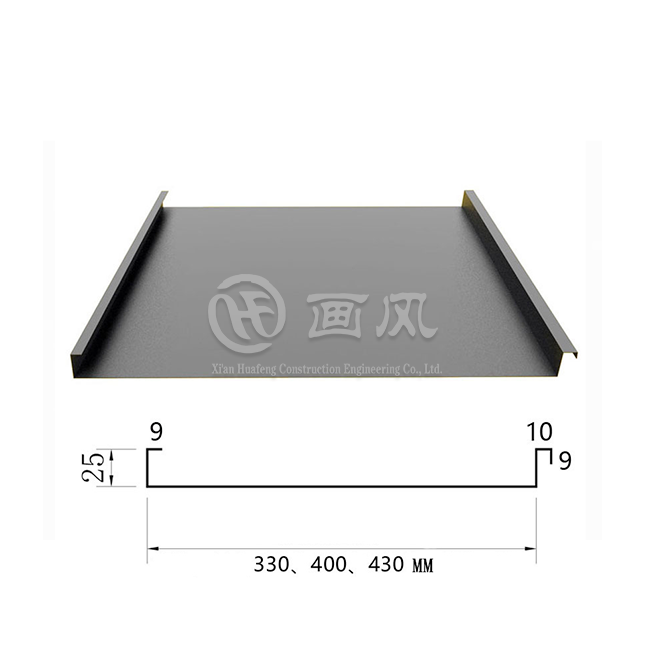
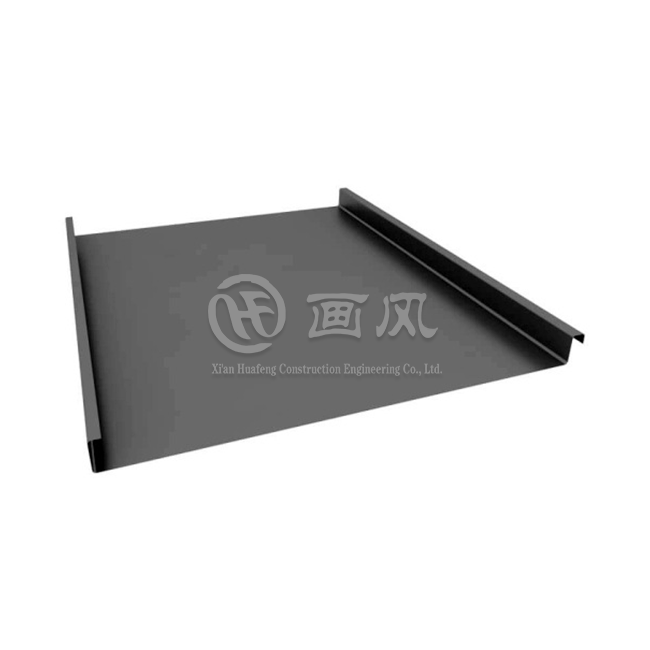
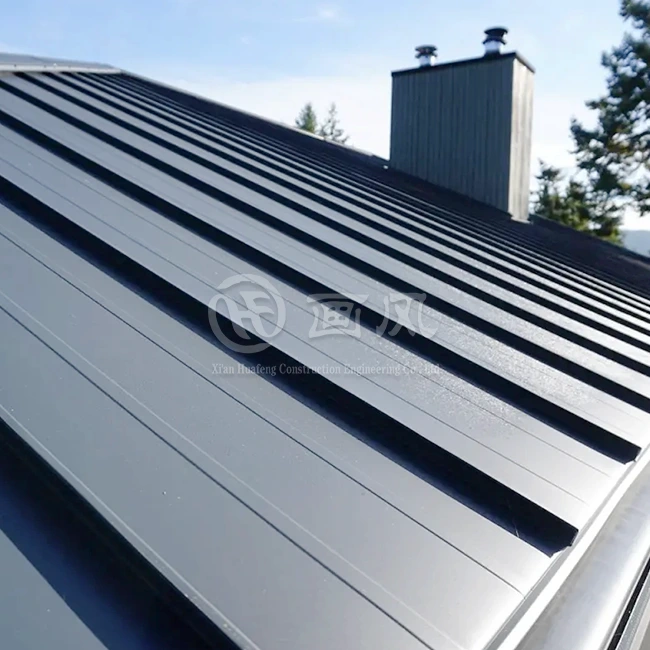
HF's black metal standing seam roofing come in a range of shapes, such as 25-330/400/430, 32-410, 45-400, and 65-400/430, and are 0.6–0.8 mm thick. The panels can be treated with either PVDF or PE on the outside. The goods are approved by ASTM, DIN, JIS, BS, and GB/T standards, which gives purchasing teams the proof they need for building permits in North America and Australia.
Verify Clip and Fastener Compatibility
A standing seam roof is different from an exposed-fastener agricultural panel because it has a concealed clip system. Two-piece floating clips let heat move along the length of the panel by 2 to 3 inches. This is important for black metal, which gets 20 to 30°F hotter than lighter-colored roofs when it's in full sunlight. Choose clips that are rated for the wind-uplift zone where you live, and check with the maker to make sure the fastener pressure specification is correct before you start installing.
Tip 2 – Prepare the Roof Deck and Substructure with Rigor
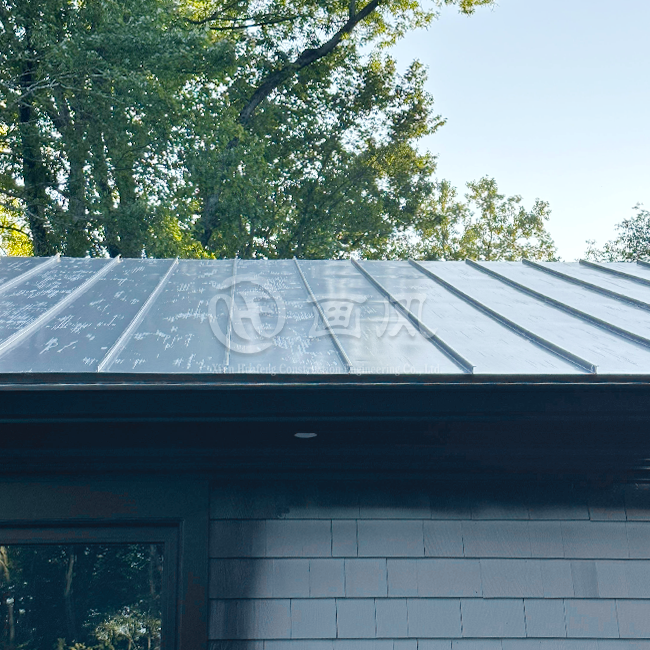
For matte black panels, you can't go without a base that is physically sound and flat. Because black is the color that makes uneven surfaces stand out the most, any deck undulations are seen right away by clients as oil canning, which is the appearance of waviness.
Assess Deck Flatness and Moisture Barriers
Before the panels get there, make sure that the deck is level across all of the rafter bays. The Metal Construction Association (MCA) says that oil canning is not a structural flaw, but adding striations or pencil ribs to the panel pan makes it look a lot better. Install a self-adhesive vapor-permeable flooring that meets ASTM D1970 or a similar standard. This moisture barrier stops galvanic corrosion at the panel-to-deck contact and meets most energy codes in North America that need constant air barriers.
It is also important that there is enough air flow and insulation under the screen structure. When you have the right R-value for your attic and ridge-and-soffit ventilation, less heat is transferred into conditioned space. This is a real-world example of energy efficiency that you can use to convince picky clients of your value.
Tip 3 – Follow Proven Best Practices During Panel Installation
Methodical placement directly affects both how well it looks and how well it stands up to the weather. When you rush to engage seams or skip alignment checks, you make leak paths and cosmetic flaws that are hard to fix and cost a lot of money to fix.
Snap-Lock vs. Mechanically Seamed Profiles
Choosing the right seam shape depends on the pitch of the roof and how much wind it needs to move. This is how the two main methods are different:
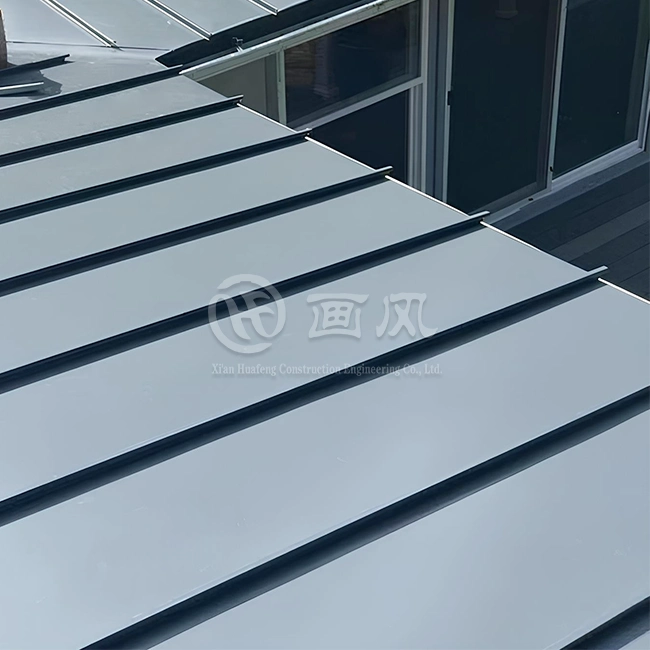
- Snap-lock profiles suit slopes of 3:12 and steeper. The panel leg clicks into the female receiver without any extra tools being needed. This makes installation faster on steep home roofs. This is the most common choice for custom homes with steep roofs.
- Mechanically seamed profiles are mandatory for slopes less than 3:12 or in high-wind zones (HVHZ). A powered seaming machine crimps the legs that fit together into a double-lock fold. This makes a hydraulic seal that stops wind-driven rain from getting through at the seam level. UL 580 or FM 4471 test protocols are used to check the wind uplift resistance, and the rating is based on the clip spacing.
Both system types can handle solar panels using non-penetrating seam clamps. This keeps the waterproofing intact without cutting through the panel face, which is a feature that is becoming more and more popular in high-end builds.
Manage Thermal Expansion Actively
Over a 100-foot stretch, black metal standing seam roofing can grow considerably. Fix the panel to either the eave or the ridge, and let the other end hang down freely on sliding clips. Don't tightly attach both ends; this can cause the panel faces to break, which usually voids the manufacturer's warranty.
Tip 4 – Implement Thorough Quality Control and Safety Protocols
Quality assurance isn't a list that you fill out after the job is done; it happens at the same time as every part of the work. Before accepting the first delivery, procurement managers who are looking for panels for more than one project at the same time should set up batch-consistency procedures.
Critical Inspection Checkpoints
When a project has more than one phase, coating batch consistency is the QC item that gets ignored the most. Small differences in shade between groups of coils cause "checkerboarding" on big roof planes, which can be seen under raking light and is hard to fix without re-roofing. Ask for mill certificates that prove all the panels come from the same production coil. Additional inspection points include:
- Seam caliper checks on manually seamed pieces to make sure the fold shape is correct without scoring the paint, which can cause rust to start.
- Fastener torque calibration records for every clip row.
- ASTM E1646 water penetration testing on important commercial installations to make sure the sealant bead stays continuous inside the female seam leg.
For safety reasons, people installing metal roofs need to wear shoes that won't slip on metal surfaces, have fall-arrest systems that are attached to structural members instead of the panel seams, and plan their work so that installation doesn't happen when it's below 40°F, because that's when sealants lose their flexibility and panels break.
Tip 5 – Plan for Maintenance and Long-Term Performance
A matte black roof with a PVDF coating that was put correctly doesn't need much care, but following a set plan will protect both the finish and the warranty.
Routine Inspection and Cleaning Protocol
Check the seals at penetrations and cut the flashings once a year. Building up debris in panel valleys speeds up covering wear and moisture buildup. Use a light soap solution and a soft brush to clean the panel surfaces. Do not use rough pads, as they will scratch the PVDF layer and speed up the chalking process. To keep the drainage design, gutters and drains should be cleaned out every spring and fall.
Minor repairs to scratched or damaged coating can be addressed with touch-up paint from the original panel manufacturer. Take pictures and write down the dates and times of all repairs to help with future warranty claims. HF's black metal standing seam roofing come with a 30-year warranty, and the easiest way to make a claim is to keep records of when they were installed.
Conclusion
To build a high-end residential matte black standing seam roof, you need to be careful at every step: checking the materials, preparing the substrate, using the right seam locking method, making sure that each batch is tested the same way, and writing down a maintenance plan. Each of the tips above is based on a real failure mode that has been seen in the field. When these five areas of expertise work together, the result is a roof that looks great and lasts for decades, which is why it costs so much.
FAQ
1. Will a black metal roof make the interior significantly hotter?
Even in dark colors, modern PVDF-coated screens radiate 30 to 40 percent of the sun's energy. When the attic has enough air flow and the insulation has the right R-value, heat transfer to the inside is about the same as or less than with asphalt shingles. The thermal performance data should be checked against the requirements of the local energy code.
2. What causes oil canning and how can it be minimized?
The oil canning is a normal feature of light-gauge cold-formed metal and not a problem with the structure. To break up the flat visual plane, choose a thicker gage (22 ga over 24 ga), panel widths that are 400 mm or less, and profiles with striated or ribbed panel pans. Making sure the deck is flat before installing it also lessens the effect by a large amount.
3. How do I confirm batch color consistency across a large order?
For each delivery, ask for mill certificates and production coil numbers. Every panel should come from the same covering run. HF has three plants and seven production lines that can handle up to 1,000 tons of stock per month. This allows for large orders to be fulfilled all at once and lowers the risk of checkerboarding on large roof planes.
4. What is the minimum order quantity?
The least you can buy from HF is 500 square meters, which is equal to 1 ton. Delivery usually takes 15–20 days.
Request a Sample or Quote — HF Black Metal Standing Seam Roofing Supplier
HF (Xi'an Huafeng Construction Engineering Co., Ltd.) makes black metal standing seam roofing panels that meet ASTM, DIN, JIS, BS, and GB/T standards. Their products come with a 30-year guarantee and can offer 1,000 tons of metal per month. We can give you a trial sample that meets a designer's requirements or a price for buying in bulk for your next high-end project. Our technical team will get back to you with coil batch paperwork, profile drawings, and confirmed lead times. To get samples, email huafeng@hfmetalroof.com with information about your project or go to hfmetalroof.com.
References
1. Metal Construction Association (MCA). Metal Roofing Systems Design Manual. 2020.
2. American Iron and Steel Institute (AISI). Cold-Formed Steel Design Manual. 2016.
3. ASTM International. ASTM E1646: Standard Test Method for Water Penetration of Exterior Metal Roof Panel Systems. 2019.
4. Cool Roof Rating Council (CRRC). Rated Products Directory and Technical Bulletin on PVDF Coatings. 2022.
5. National Roofing Contractors Association (NRCA). The NRCA Roofing Manual: Metal Panel and SPF Roof Systems. 2021.
6. Underwriters Laboratories (UL). UL 580: Tests for Uplift Resistance of Roof Assemblies. 2018.





YOU MAY LIKE