How much overlap on corrugated roofing sheets?
2026-02-07 18:54:35
Picture this scenario: you've just completed installing your corrugated roofing, only to discover water seeping through the overlaps during the first heavy rain. This costly mistake could have been prevented with proper overlap specifications. For Ibr Corrugated Roofing Sheets, the standard overlap requirements are one to two corrugations for side laps and 150-320mm for end laps, depending on your roof pitch—getting these measurements right from the start ensures a watertight seal that protects your investment for decades.
Understanding Corrugated Roofing Sheet Overlap Requirements
When it comes to installing corrugated metal roofing systems, understanding proper overlap measurements is fundamental to achieving a weatherproof, long-lasting roof. The overlap serves as your primary defense against water infiltration, wind uplift, and structural compromise. For Ibr Corrugated Roofing Sheets specifically, these measurements are not arbitrary numbers but carefully calculated specifications based on decades of engineering expertise and real-world performance data. The overlap requirements directly correlate with your roof's pitch angle, local weather conditions, and the specific profile of your IBR corrugated sheets. Many contractors and DIY installers underestimate the critical importance of these measurements, leading to premature roof failure, costly repairs, and potential damage to building contents. Professional roofing manufacturers like Xi'an Huafeng Construction Engineering Co., Ltd. have developed precise overlap specifications through extensive testing and field experience across diverse climate conditions, from coastal regions experiencing heavy rainfall to arid zones with extreme temperature fluctuations. Understanding these requirements before beginning installation saves time, materials, and prevents the frustration of discovering leaks after project completion.
The Science Behind Side Lap Overlaps for IBR Corrugated Sheets
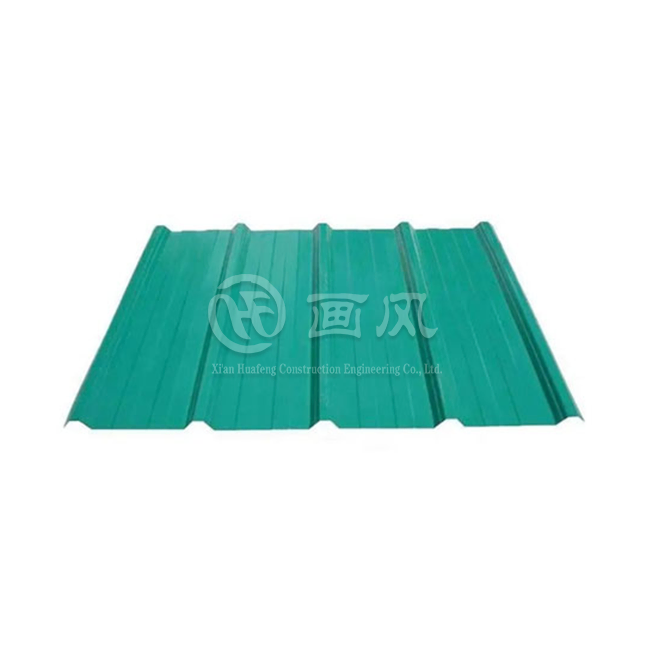
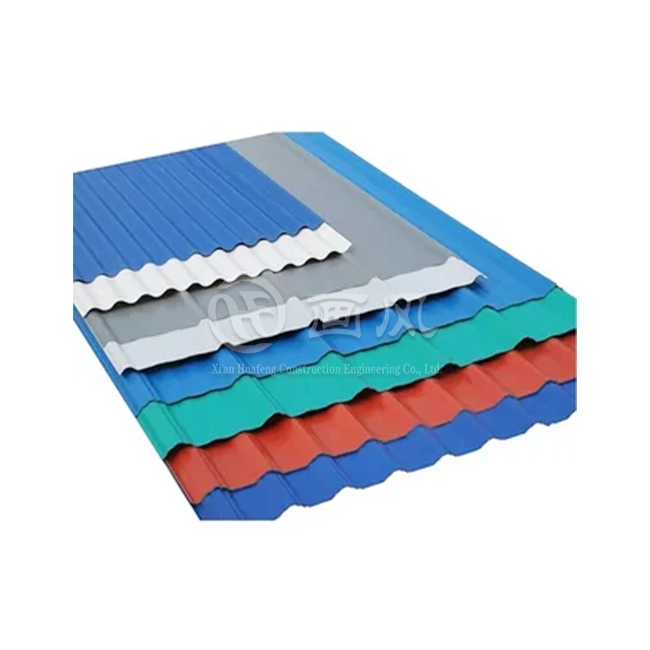
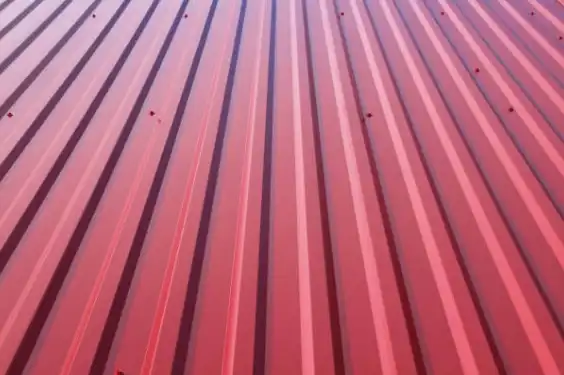
Side lap overlaps occur where adjacent sheets meet across the width of your roof structure. For Ibr Corrugated Roofing Sheets, the industry standard calls for overlapping at least one full corrugation under normal conditions, though exposed locations or areas prone to wind-driven rain may benefit from a two-corrugation overlap. This overlap creates a mechanical barrier that channels water downward along the sheet profile rather than allowing lateral migration between panels. The wave-shaped design of ibr corrugated sheets—featuring a combination of trapezoidal and arc profiles with wave heights ranging from 30mm to 75mm—enhances this drainage capability significantly. When properly aligned, each corrugation peak on the overlapping sheet nests perfectly into the valley of the adjacent sheet, creating an interlocking seal that resists both water penetration and wind uplift forces. The effective coverage width of IBR sheets typically ranges from 750mm to 1100mm depending on the specific profile, but after accounting for the overlap, your actual coverage reduces by approximately 76mm to 152mm per sheet. This reduction must be factored into material calculations to avoid shortages during installation. The key to successful side lap installation lies in ensuring the corrugations align perfectly—any misalignment creates gaps where water can enter, compromising the entire roofing system's integrity. Professional installers often use soft wood blocks and mallets wrapped in protective cloth to tap sheets into precise alignment before fixing, preventing damage to the coating while achieving that critical tight fit.
End Lap Overlap Specifications Based on Roof Pitch
End lap overlaps become necessary when your roof dimension exceeds available sheet lengths, requiring sheets to be installed in sequence down the slope. The overlap measurement for end laps varies significantly based on roof pitch and represents one of the most critical decisions in corrugated roofing installation. For Ibr Corrugated Roofing Sheets installed on roofs with pitches of 15 degrees or greater, a minimum end lap of 150-180mm provides adequate protection against water infiltration. However, as roof pitch decreases, overlap requirements increase substantially to compensate for reduced gravitational water flow. Roofs with pitches between 10 and 15 degrees require end laps of 200-220mm, while shallow-pitch roofs between 5 and 10 degrees necessitate overlaps of 300-320mm or more. These measurements aren't suggestions—they're engineering requirements based on water flow dynamics and capillary action principles. On lower-pitch roofs, water moves more slowly, increasing the potential for wind-driven rain to migrate upward through insufficient overlaps, a phenomenon known as water creep. To further enhance waterproofing on lower-pitch applications, professional installers apply butyl tape or specialized roofing sealant along the overlap joint before securing the upper sheet. Xi'an Huafeng Construction Engineering Co., Ltd. recommends this practice for all applications where the slope falls below 10 degrees, as the additional sealing layer provides critical secondary protection. The company's 30-year warranty on ibr corrugated sheets reflects their confidence in these installation standards when properly followed. When planning end lap overlaps, also consider the direction of prevailing winds in your location—sheets should always be overlapped with the upper sheet positioned to shed water in the direction opposite to prevailing winds, minimizing the risk of wind-driven water penetration at the joint.
Installation Best Practices for Proper Overlap Achievement
Achieving the correct overlap measurements requires more than knowing the numbers—it demands systematic installation procedures and attention to detail throughout the process. The installation sequence begins with proper roof preparation, ensuring purlins are level, properly spaced, and structurally sound to support the Ibr Corrugated Roofing Sheets without deflection. Starting installation from the corner away from prevailing wind direction is crucial, as this positioning ensures that side lap overlaps shed water effectively rather than channeling it into joints. The first sheet must be positioned perpendicular to both the eaves and ridge lines; any deviation compounds across subsequent sheets, creating a saw-tooth effect at the eaves and complicating overlap alignment. Professional installers use stretched string lines along purlin centerlines to maintain consistent fastener placement and ensure sheets remain properly aligned throughout installation. Each ibr corrugated sheet should extend beyond the bottom purlin by approximately 100mm, allowing rainwater to drain into gutters or clear of wall structures, preventing water damage to building facades.
Fastening Techniques That Preserve Overlap Integrity
Proper fastening is inseparable from achieving effective overlaps with Ibr Corrugated Roofing Sheets. Fasteners must be installed through the crown or peak of corrugations rather than valleys, as this positioning prevents water pooling around screw holes and maintains the sheet's structural profile. For IBR sheets, self-tapping screws equipped with EPDM or neoprene washers provide weathertight seals at each fastener penetration point. The fastening pattern typically calls for 4-5 fixings across each sheet per purlin, with one fastener specifically securing the overlap area where two sheets meet. This overlap fastener is critical—it clamps the two sheets together, preventing movement and maintaining the watertight seal. However, over-tightening fasteners represents one of the most common installation errors, as excessive torque crushes the corrugation profile, compromises the washer seal, and creates depressions where water can accumulate. Fasteners should be tightened just enough to compress the washer seal without deforming the metal sheeting. Xi'an Huafeng Construction Engineering Co., Ltd. manufacturing specifications for their ibr corrugated sheets include metal thickness options from 0.4mm to 1.2mm, with thicker gauges requiring slightly different fastening torque to avoid over-compression. The company's quality control processes ensure consistent material properties across their production runs from their three factories equipped with seven production lines and over 40 specialized machines, guaranteeing that fastening specifications remain consistent regardless of order size or timing.
Tools and Materials for Professional-Grade Overlap Installation
Successful installation of Ibr Corrugated Roofing Sheets with proper overlaps requires specific tools and supplementary materials. Essential equipment includes electric screwdrivers with adjustable torque settings for consistent fastener installation, tape measures for precise overlap measurement, metal cutting shears or specialized nibbler tools for trimming sheets to fit roof dimensions, and soft mallets with wood blocks for aligning sheets without damaging protective coatings. For cutting operations, angle grinders fitted with appropriate metal-cutting discs provide clean edges, though safety protocols including eye protection, hearing protection, and proper ventilation are absolutely mandatory when using power cutting tools. Beyond basic tools, professional-grade installations incorporate supplementary sealing materials that enhance overlap performance. Butyl tape applied along end lap overlaps before the upper sheet is positioned creates an additional waterproof barrier, particularly valuable on lower-pitch roofs or in regions experiencing heavy rainfall. This tape remains flexible throughout temperature cycling, accommodating the thermal expansion and contraction that all metal roofing systems experience without cracking or losing adhesion. For side lap overlaps in exposed locations, some installers apply thin beads of polyurethane or silicone-based roofing sealant along the overlap joint for additional wind-driven rain protection. However, Xi'an Huafeng Construction Engineering Co., Ltd. technical specifications note that when IBR sheets are installed according to standard overlap requirements on appropriate roof pitches, these additional sealants are typically unnecessary on pitches exceeding 10 degrees, as the mechanical overlap itself provides adequate weatherproofing. The company's ibr corrugated sheets feature premium coatings including PE (polyester), HDP (high-durability polyester), and PVDF (polyvinylidene fluoride) finishes that resist UV degradation, corrosion, and color fading throughout the material's 30-year service life, reducing maintenance requirements and ensuring long-term overlap integrity.
Common Overlap Mistakes and How to Avoid Them
Despite clear industry standards, several common mistakes frequently compromise corrugated roofing installations. Understanding these errors helps ensure your Ibr Corrugated Roofing Sheets project achieves its full performance potential from day one. The most prevalent mistake involves insufficient overlap measurements—attempting to stretch material coverage by reducing overlaps below recommended specifications. This false economy inevitably leads to leak problems, often manifesting months after installation when warranty claims become complicated and repair costs escalate. Another frequent error occurs when installers fail to account for effective coverage width in material calculations, ordering based on sheet nominal width rather than coverage width after overlaps. This miscalculation typically results in material shortages discovered mid-project, causing delays and potential compromises in overlap specifications when trying to complete work with insufficient materials. Misalignment of corrugations during side lap installation represents another critical failure point—even minor misalignment creates gaps where water can enter, negating the protective benefits of proper overlap dimensions. This problem often stems from rushing installation or failing to use alignment techniques like soft-block tapping to seat sheets properly before fastening. Incorrect fastener placement also undermines overlap effectiveness; fasteners installed in valleys rather than crowns allow water accumulation and eventual penetration, while over-tightened fasteners deform sheet profiles and compromise washer seals. For end lap overlaps, failing to consider roof pitch when determining overlap length causes numerous failures, as does neglecting to apply sealant tape on low-pitch applications where capillary action and wind-driven rain pose elevated risks. Xi'an Huafeng Construction Engineering Co., Ltd. provides comprehensive installation guidance with their ibr corrugated sheets, including detailed drawings that specify overlap requirements for various roof configurations, ensuring customers have the technical information needed to avoid these common pitfalls.
Why Choose Professional-Grade IBR Corrugated Roofing Sheets?
The quality of your corrugated roofing materials directly impacts how well overlaps perform throughout the roof's service life. Inferior materials may meet dimensional specifications initially but can warp, distort, or corrode prematurely, compromising overlap integrity and necessitating costly repairs or premature replacement. Professional-grade Ibr Corrugated Roofing Sheets from established manufacturers like Xi'an Huafeng Construction Engineering Co., Ltd. undergo rigorous quality control throughout production, ensuring consistent dimensions, coating thickness, and material properties across every sheet. The company's manufacturing facilities in Anhui, Hangzhou, and Xi'an utilize advanced roll-forming technology with real-time quality monitoring, producing sheets with precise corrugation profiles that align perfectly during installation—critical for achieving effective overlaps. Their material specifications include galvanized steel, galvalume, and color-coated steel substrates with thickness options from 0.4mm to 1.2mm, allowing selection of appropriate gauge for specific structural requirements and span distances. The coating systems—PE, HDP, and PVDF—provide graduated levels of corrosion resistance and color retention, with PVDF finishes offering maximum protection for coastal environments or industrial zones where atmospheric corrosives accelerate material degradation. These coatings maintain their protective properties throughout decades of exposure to UV radiation, temperature cycling, and moisture, ensuring that overlaps remain watertight rather than failing due to coating breakdown and subsequent corrosion. Beyond material quality, professional manufacturers provide technical support throughout the project lifecycle, from initial design consultation through installation guidance to long-term maintenance recommendations. This comprehensive support proves invaluable when addressing site-specific challenges like unusual roof geometries, extreme pitch angles, or severe weather exposure that may require overlap adjustments beyond standard specifications.
Manufacturing Excellence Ensures Overlap Consistency
The manufacturing processes employed by Xi'an Huafeng Construction Engineering Co., Ltd. demonstrate how production quality directly impacts installation success. Their seven color coating production lines and ten longitudinal and transverse shearing production lines maintain tight dimensional tolerances across production runs, ensuring that every Ibr Corrugated Roofing Sheet features identical corrugation spacing, wave height, and profile geometry. This consistency is essential for overlap performance—even minor variations in corrugation dimensions can create alignment difficulties during installation, leading to gaps or requiring excessive force to seat sheets properly, potentially damaging protective coatings. The company's fully automatic punching production lines create pre-drilled fastener holes when specified, ensuring precise fastener placement that maintains overlap integrity without field drilling that could compromise coatings. Their raw material procurement standards require certification from premium steel suppliers including Baosteel, Guangzhou, and Xinyu brands, with incoming material inspection protocols that verify thickness, coating weight, and material properties before production begins. This rigorous material qualification ensures that finished ibr corrugated sheets maintain specified structural properties throughout their service life, resisting the deformation and distortion that compromises overlaps in lower-quality products. The company's ISO9001 and ISO14001:14001 certifications, along with SGS verification, demonstrate their commitment to manufacturing excellence and environmental responsibility. With production capacity exceeding 1000 tons monthly and minimum order quantities starting at 500 square meters, they accommodate both large commercial projects and smaller residential applications, providing the same quality standards regardless of order scale. Their 15-20 day delivery timeframe and customization capabilities for color, pattern, and design allow architects and builders to specify exactly the right product for each application while maintaining confidence in overlap performance and long-term durability.
Conclusion
Proper overlap specifications for corrugated roofing sheets represent the foundation of weatherproof, durable roof systems. For Ibr Corrugated Roofing Sheets, side lap overlaps of one to two corrugations and end lap overlaps ranging from 150mm to 320mm based on roof pitch ensure long-term performance when combined with quality materials and professional installation techniques.
Cooperate with Xi'an Huafeng Construction Engineering Co., Ltd.
Xi'an Huafeng Construction Engineering Co., Ltd. stands as your trusted China Ibr Corrugated Roofing Sheets factory, China Ibr Corrugated Roofing Sheets supplier, and China Ibr Corrugated Roofing Sheets manufacturer offering premium Ibr Corrugated Roofing Sheets wholesale solutions. Established in 2018 in Shaanxi Province, this high-tech enterprise recognized by the province in 2020 holds first-level building curtain wall qualifications and third-level steel structure qualifications. With extensive manufacturing infrastructure including a 200,000-square-meter raw material production plant in Anhui and processing facilities in Hangzhou and Xi'an, the company delivers one-stop solutions from design through construction. Their Ibr Corrugated Roofing Sheets for sale feature competitive Ibr Corrugated Roofing Sheets price points without compromising on High Quality Ibr Corrugated Roofing Sheets standards backed by ISO9001, ISO14000:14001, and SGS certifications plus over 20 registered patents. As a leading industry innovator integrating green sustainable development with advanced metal roofing technology, Huafeng has successfully completed prestigious projects including Xiongan Station Commercial Body, Xi'an International Convention and Exhibition Center, and Inner Mongolia Tongliao Art Museum. Their engineering design expertise, seven raw material production lines, multiple quality certifications, customized solutions, and comprehensive one-stop service from raw materials to accessories ensure your roofing project achieves optimal overlap specifications and long-term performance. Contact their expert team today at huafeng@hfmetalroof.com to discuss your specific requirements and receive professional guidance on achieving perfect corrugated roofing overlaps for your next project.
References
1. "Metal Roofing Installation Guidelines" - National Roofing Contractors Association (NRCA), Technical Services Department
2. "Corrugated Metal Panel Design and Installation Manual" - Metal Construction Association, Engineering Standards Committee
3. "Weather Resistance of Building Envelopes: Metal Roofing Systems" - American Society of Civil Engineers (ASCE), Building Envelope Technology Committee
4. "Practical Guide to Metal Roofing Overlap Requirements" - Steel Construction Institute, Roofing Systems Division
5. "Performance Standards for Corrugated Metal Roofing" - International Code Council (ICC), Building Safety Standards





YOU MAY LIKE
(1)_1763110678300.webp "standing seam metal roof panels")