How Double Lok Roof Panel Ensures Superior Weather Resistance
2026-07-23 20:01:27
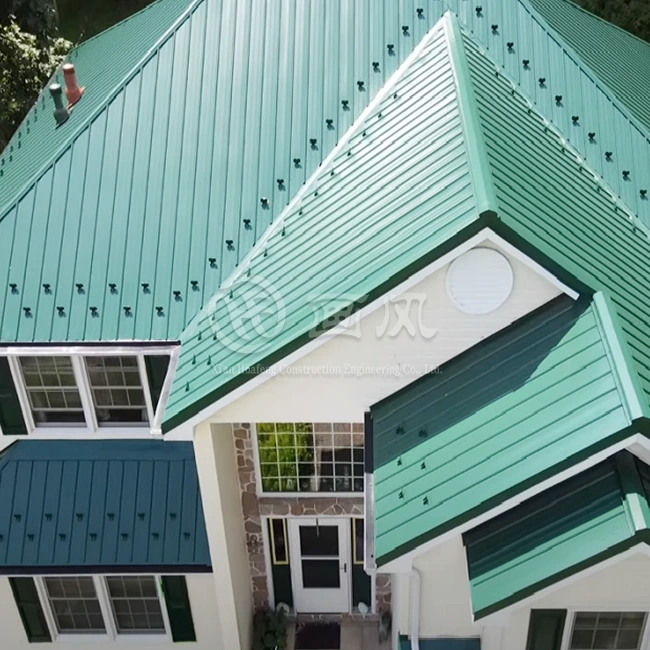
When extreme weather threatens building integrity, the double lok roof panel delivers unmatched protection through its 360-degree mechanically seamed design. This architectural-grade standing seam system creates a monolithic barrier against water intrusion, wind uplift, and thermal stress—challenges that compromise conventional roofing within years. For procurement professionals managing commercial construction projects across the United States, understanding this technology means securing roofs that withstand hurricanes in Florida, snow loads in Colorado, and desert heat in Arizona without costly callbacks or premature replacements.

Understanding the Weather Resistance Challenge in Roofing
Weather resistance is a roof's ability to keep its shape and protection even when the weather is constantly beating down on it. There are special risks for industrial and commercial buildings. The main cause of failure is moisture getting inside, which can damage the building, lead to mould growth, and break down equipment that can stop activities for weeks. Normal fastening systems wear out after five to seven years of thermal cycling, which is the constant expanding and contracting caused by changes in temperature.
Another very important issue is wind uplift. Coastal areas often have hurricane-force winds that reach 120 miles per hour, which create suction forces that pull panels off of roof decks that aren't properly attached. When snow builds up, it adds compression loads, and the freeze-thaw processes speed up the breakdown of materials. Damage caused by bad weather costs more than just the cost of repairs. Lost production, inventory, and the risk of being sued all add up to the real cost.
There is more and more pressure on procurement teams to choose roofing systems that get rid of these risks while still meeting budget and environment goals. Built-up roofing, EPDM membranes, and exposed-fastener metal panels are all examples of traditional solutions that have problems. When exposed to UV light, membrane systems break down. Fasteners that are left out in the open make thousands of possible leak spots. The engineering problem needs a solution that can deal with all weather threats at the same time, without lowering the cost or shortening the life of the structure.
How Double Lok Roof Panel Works to Ensure Weather Resistance
The Engineering Behind Double-Lock Seaming
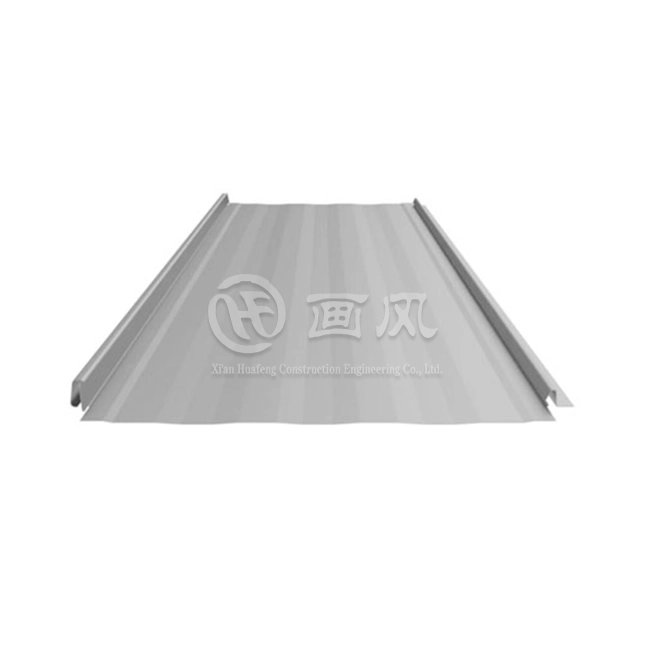
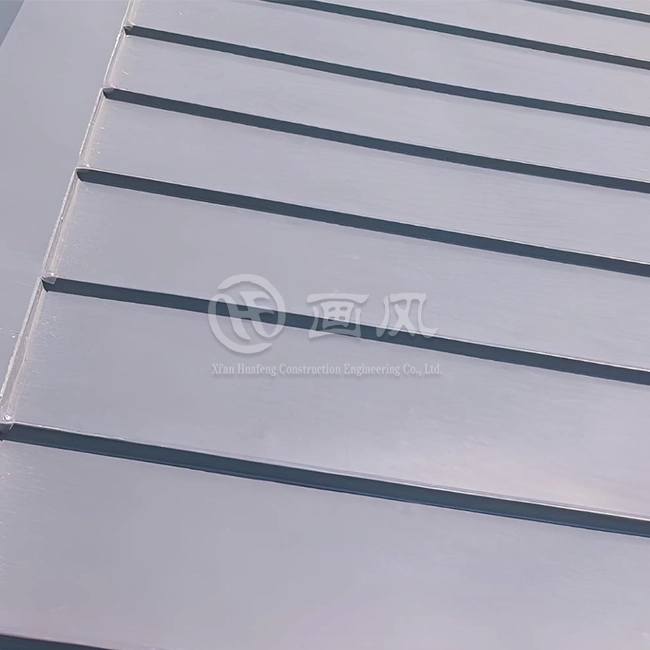
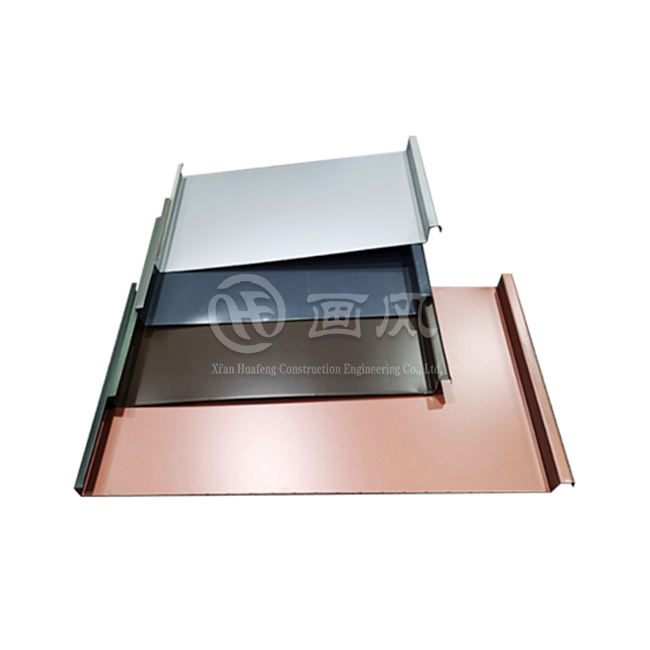
The double lok roof panel's trapezoidal leg geometry and mechanical seaming process make it very good at keeping out the weather. This design is different from snap-lock systems because it uses an electric seaming machine to fold the male and female legs together in a full 360-degree Pittsburgh seam. This makes a capillary break, which is a mechanical barrier that keeps water out even when the hydrostatic pressure is high, like on low-slope roofs with a minimum 1/4:12 pitch.
Butyl glue that is sprayed at the factory inside the female leg adds extra security. During seaming, compression sets off this mastic, which fills in tiny gaps and makes sure that panels longer than 100 feet are watertight. Testing according to ASTM E1646 standards shows that there is no water penetration at pressures that are the same as those experienced during a Category 5 hurricane.
Advanced Material Technology and Coatings
These panels are made by HF from high-quality materials like aluminium alloy, Galvalume steel, stainless steel, copper, and titanium-zinc, each chosen for its ability to withstand certain weather conditions. Galvalume coating (55% aluminium, 45% zinc) protects against galvanic corrosion by sacrificing the coating layer to keep the purity of the parent metal. This makes the product last longer in salty seaside settings where oxidation happens faster.
How the surface looks is just as important. Polyvinylidene fluoride (PVDF) resin-based coatings that meet AAMA 2605 standards don't chalk, fade, or break down chemically for more than 30 years. The SGS-certified PVDF coatings from HF do very well in 13 important tests, such as keeping their colour uniformity (ΔE=0.3), not cracking when hit, and being resistant to acids, alkalis, and industrial pollutants. PE (polyester) finishes are cheaper than regular paints in mild temperatures and stick to surfaces better and are more flexible than regular paints.
With a width range of 0.5 mm to 1.2 mm, engineers can choose the best gauge for wind load estimates and span needs. With panel heights ranging from 25mm to 65mm (1" to 2.55"), you can add structural depth and increase the moment of inertia to keep the structure from buckling under snow loads while keeping the clean lines that are wanted in building applications.
Thermal Management Through Floating Clip Systems
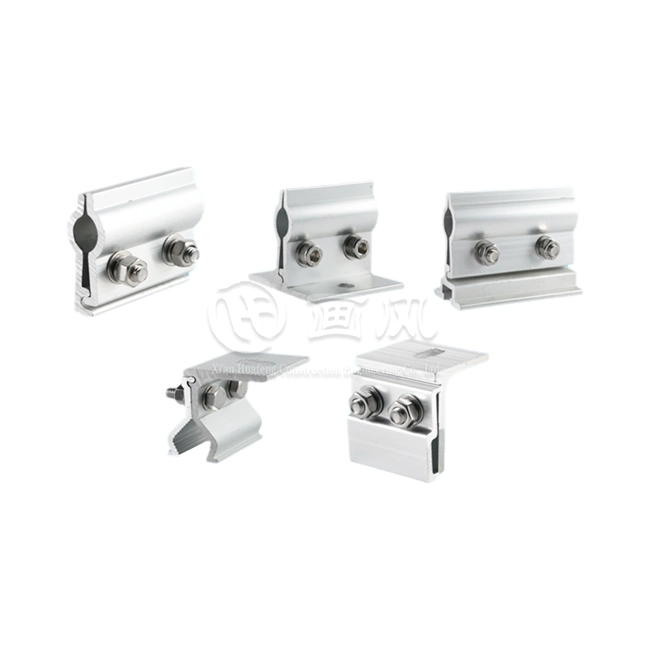
Thermal movement has always been the weak point of metal roofs. When the temperature changes every day, a 200-foot roof can grow by more than two inches. Panels that are rigidly attached bend, making oil-canning waves and stretched seams. This is easily fixed with HF's articulating two-piece clip system. Clips connect to structural purlins, and panel edges rest on raised tabs. This lets the panels move longitudinally without putting stress on the fastening.
With this moving design, there is no fastener wear, which is what usually leads to leaks in other systems. Clips stay in place while panels move freely, allowing for expansion without affecting the integrity of the seams. This makes a roof that works the same in year 25 as it did when it was first installed, which is an important factor when figuring out lifespan costs.
Comparative Analysis: Double Lok Roof Panel vs Other Roofing Solutions
Performance Metrics That Matter to Procurement
Snap-lock and automatically seamed systems are the two main types of standing seam systems. Snap-lock panels are easy to install, but they don't have high wind uplift rates (UL 90 grades are the highest). UL 90 and FM Global 1-90 approvals are given for mechanical seaming. These are the highest wind resistance certifications that can be found. This difference is a must for construction near the coast or on buildings taller than 60 feet.
Corrugated metal walls are cheaper at first, but the fasteners are immediately exposed to the weather. Each screw goes through the profile of the panel, making a leaky spot that is only sealed by a neoprene washer. Washers break down after 10 to 15 years and need expensive repairs to be fixed. With hidden fasteners, this risk is completely eliminated, and upkeep is reduced to simple tasks like cleaning out the gutters and removing debris.
Both traditional asphalt roofs and barrier systems have major problems when used in business settings. Shingles need to be replaced often (15–20 years), and they don't protect well against wind. TPO and EPDM gaskets don't let water pool, but they can still be punctured, damaged by UV light, and have seams break. The energy efficiency is lower because the dark colours on the surface absorb solar radiation, which makes cooling loads 15–25% higher than with reflective metal roofing.
Lifecycle cost analysis shows what the real value is. Even though double lok roof panel systems cost more to install (usually $4–7 per square foot compared to $2–4 per square foot for visible fastener panels), they don't need to be replaced for 30 years. Maintenance costs go down by 60 to 80%. Cool roof reflection (Solar Reflectance Index values above 0.65) saves energy and lowers HVAC costs by $0.10 to $0.25 per square foot per year. When building lifespans are more than 20 years, ROI calculations always favour mechanically seamed systems.
Installation and Maintenance: Maximizing the Weather Resistance Advantage
Critical Installation Standards
The engineered potential becomes real-world performance when it is installed correctly. Before starting to prepare the substrate, make sure that the space between the purlins meets the engineering requirements. For normal uses, this is usually done every 5 feet. Which underlayment to use depends on the slope. For low-slope projects, you need an ice-and-water shield or self-adhesive membranes that can handle long-term water exposure.
The placement of clips is based on patterns that are estimated from wind zone maps and building height. In perimeter zones, where lifting forces are strongest, spacing must be closer (3 feet between zones). In corner areas, you need more clips and maybe even stronger panels. The process of mechanical seaming needs people who have been trained to do it. When you under-crimp, holes appear, and when you over-crimp, coats crack, which lowers the resistance to corrosion.
HF has three factories, and each one is strategically placed to serve a regional market. Technical field representatives who do on-site training and quality audits help ensure the quality of installations. Our seven production lines keep an eye on stocking levels to make sure that material delays don't throw off project plans. With a monthly production capacity of 1,000 tonnes and delivery windows of 15 to 20 days, even large-scale projects get regular batches of materials, so there are no worries about colour variation.
Maintenance Protocols for Extended Lifespan
Weather resistance doesn't mean that the double lok roof panel doesn't need any maintenance, but it does mean that it doesn't need much. Every year, inspections look at how much debris is in the valleys, how well the gutters work, and the condition of the sealant at penetrations like HVAC curbs, skylights, and ridge vents. Rain is all that's needed to clean panel surfaces. Low-pressure washing is sometimes helpful in industrial settings to get rid of accumulating dirt.
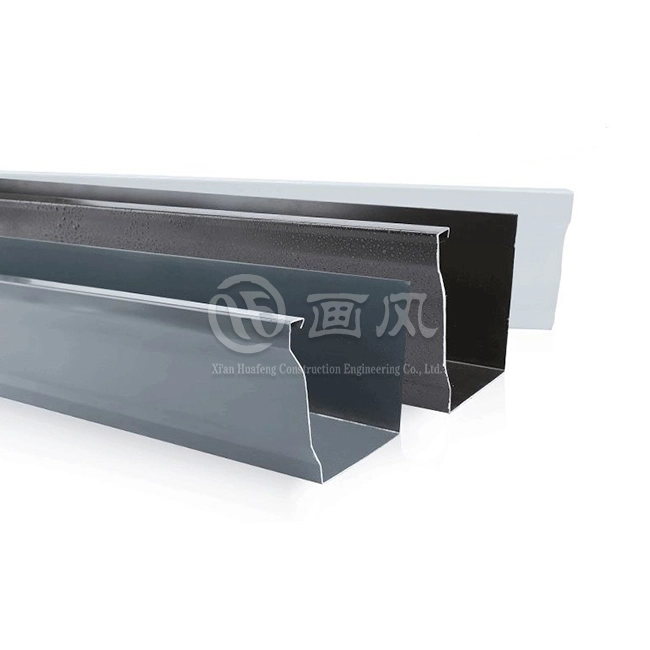
Seasonal care is needed in areas with extreme weather. Snow belt areas should remove ice dams at the eaves to keep water from backing up under the edges of the panels. Fasteners and flashings should be inspected every six months in coastal sites, where salt spray speeds up rust. Deserts don't need much attention other than making sure that thermal expansion clips haven't gathered dust that makes them hard to move.
Customisation options solve problems that are unique to each project. HF can match colours to RAL standards and make special mixtures for places like chemical plants, farms that are exposed to ammonia, and marine structures. With a minimum order quantity of 500 square meters, or about 1 tonne, you can keep prices low for medium-sized projects. People who buy in bulk for multi-building projects or national rollouts can get big savings and first dibs on production schedules.
Trusted Brands, Suppliers, and Quality Assurance in Double Lok Roof Panels
Certification Standards That Protect Your Investment
Material approvals are an objective way to check the quality of a product. The American Society for Testing and Materials (ASTM) sets standards for the composition of metals, the thickness of coatings, and their mechanical properties. Certifications from the German Institute for Standardisation (DIN), the Japanese Industrial Standards (JIS), the British Standards (BS), and the Chinese National Standards (GB/T) show that a company can make things that meet world standards. Suppliers with multiple standard approvals have the quality control systems needed to make sure that production is always the same.
Fire protection certificates are important for insurance purposes and to make sure that building codes are followed. The AS/NZS 1530.3:1999 test on HF panels found that they had no ignition index, no flame spread, and no heat release. This is the best fire safety rating. During the exposure, none of the test samples caught fire, and only minor surface discolouration was seen. This performance goes above and beyond what is needed for Class A fire ratings. This lowers insurance rates and allows installation in areas where fires aren't allowed.
Environmental compliance is becoming a bigger factor in purchasing choices. EU RoHS (Restriction of Hazardous Substances) approval makes sure that products don't have any lead, mercury, cadmium, hexavalent chromium, or banned phthalates that are above certain limits. All ten controlled substances were either not found at all or were present at levels 10–100 times lower than what was allowed by SGS testing of HF substrates. This is important for getting LEED certification and for companies that report on their sustainability.
Long-term durability claims are backed up by AAMA 2605 testing, which is the gold standard in the building coating business. HF panels passed all 13 tests that were needed, including 5B adhesion ratings (the highest grade, meaning that the coating did not come off when tested with cross-hatch tape), impact resistance without cracking, and chemical resistance to acids, alkalis, and solvents. These results directly affect the trust in our promise. Our 30-year service life guarantee is based on performance data that has been checked by a third party, not marketing claims.
Why HF Stands Apart as Your Manufacturing Partner
Xi'an Huafeng Construction Engineering Co., Ltd. brings unique advantages to B2B partnerships. Our 200,000-square-meter facility in Anhui controls the production of raw materials, and we also have specialised panel processing plants in Hangzhou and Xi'an. This integrated method guarantees quality stability that distributors who buy from different mills can't achieve. Seven colour coating lines and ten longitudinal/transverse shearing lines make it possible to make custom profiles and meet tight delivery dates without affecting standard production.
When describing complicated projects, technical knowledge is important. Our engineering team has first-level building curtain wall qualification and third-level steel structure qualification. These are legal credentials that require proof of knowledge and project history. We do more than just sell double lok roof panels; we also work together on system design, thermal calculations, and integrating structures. Over 40 specialised machines, such as shearing equipment, presses, and precision bending systems, make prototyping and custom fabrication possible that isn't possible with standard distributors.
Being named a high-tech company in Shaanxi Province shows that we are dedicated to new ideas and high quality standards. Our 20+ registered patents cover seaming improvements, clip designs, and installation methodologies that enhance weather performance. Our environmental and quality management systems are governed by ISO9001 and ISO14001 certifications. These give procurement teams the audit trails and paperwork they need for business vendor approval processes.
Conclusion
For commercial roofing to be weatherproof, it needs more than just basic waterproofing. It needs engineered systems that deal with how wind, water, thermal stress, and material science all work together. The mechanically seamed design, superior substrates, and advanced coatings of the double lok roof panel have been shown to provide proven security in a wide range of climates, from hurricane-prone coasts to snow-belt mountain areas. For procurement professionals, the value proposition extends beyond initial cost to encompass lifecycle performance, minimal maintenance requirements, and warranty confidence backed by certified testing. Finding the right manufacturing partner—one with the ability to produce, the technical know-how, and quality certifications—turns decisions about specifications into long-term risk reduction and operational dependability.
FAQ
1.What minimum roof slope works with double lok standing seam systems?
These mechanically seamed panels accommodate slopes as low as 1/4:12 (approximately 1.2 degrees), making them suitable for nearly flat commercial roofs. The 360-degree seam lock and factory-applied sealant make walls that keep water out and can handle brief ponding. Steeper pitches help with drainage but aren't necessary for structural reasons. This gives architects more design options for modern low-slope business looks.
2.How do these panels perform under extreme snow loads?
The load capacity is based on the panel height and substrate gauge. When placed over properly spaced purlins, HF's 65mm profile height and 1.2mm gauge steel give the structure depth to withstand snow loads of more than 60 pounds per square foot. The form of the continuous seam gets rid of the weak spots that come with modular pieces. It's important to note that the smooth surface and dark colour choices make snow melt faster than with rough roofing materials.
3.Can solar panels work with double-lok roof systems?
Yes, they are perfect for solar installations—standing seam shapes. Non-penetrating clamps grip the raised seam without drilling, maintaining roof guarantee and waterproofing. The continuous panel lengths provide uninterrupted mounting tracks for ideal array setups. Many engineers choose the double lok roof panel specifically because they know they will be able to add solar panels in the future. This is because the clamp system lets the panels be installed without changing the roof or stopping service.
Partner with HF for Your Next Roofing Project
To choose the right metal roofing system, you need to work with a double lok roof panel maker that knows what's at stake in business building. HF blends the ability to make things—1,000 tonnes per month across three strategically placed factories—with the technical know-how gained from installing thousands of successful systems. Our SGS-certified panels meet ASTM, AAMA 2605, and fire safety standards. They also come with a 30-year promise that shows we are confident in the performance of the materials.
Our team offers engineering support, custom colour matching, and reliable delivery that keeps projects on schedule, whether you're in charge of a new construction project, a retrofit application, or a multi-site development program. Email us at huafeng@hfmetalroof.com to talk about project details, get samples of materials, or find out how our solutions can help you deal with your unique weather problems. You can look at detailed specs, case studies, and licensing paperwork at hfmetalroof.com. Come on, let's build roofs that will last decades, not just years.
References
1. American Architectural Manufacturers Association. (2022). AAMA 2605-22: Voluntary Specification, Performance Requirements and Test Procedures for Superior Performing Organic Coatings on Aluminum Extrusions and Panels. Schaumburg, IL: AAMA Publications.
2. ASTM International. (2021). ASTM E1592-05: Standard Test Method for Structural Performance of Sheet Metal Roof and Siding Systems by Uniform Static Air Pressure Difference. West Conshohocken, PA: ASTM Standards.
3. Metal Construction Association. (2023). Technical Bulletin: Standing Seam Roof Systems Design and Installation Guidelines. Glenview, IL: MCA Technical Services.
4. National Roofing Contractors Association. (2022). The NRCA Roofing Manual: Metal Panel and SPF Roof Systems. Rosemont, IL: NRCA Publications.
5. FM Approvals LLC. (2021). Approval Standard for Class 1 Panel Roofs (FM 4471). Johnston, RI: FM Global Research.
6. Cool Roof Rating Council. (2023). Product Rating Program Manual: Radiative Properties and Thermal Performance of Roofing Products. Portland, OR: CRRC Technical Committee.