Ikkita qulfli metall tom yopish nima? To'liq tizim qo'llanmasi
2026-11-05 19:07:29
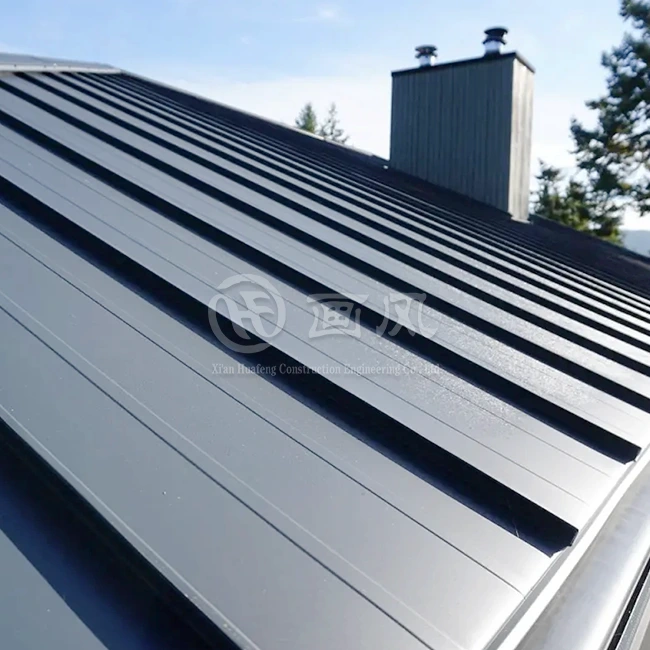
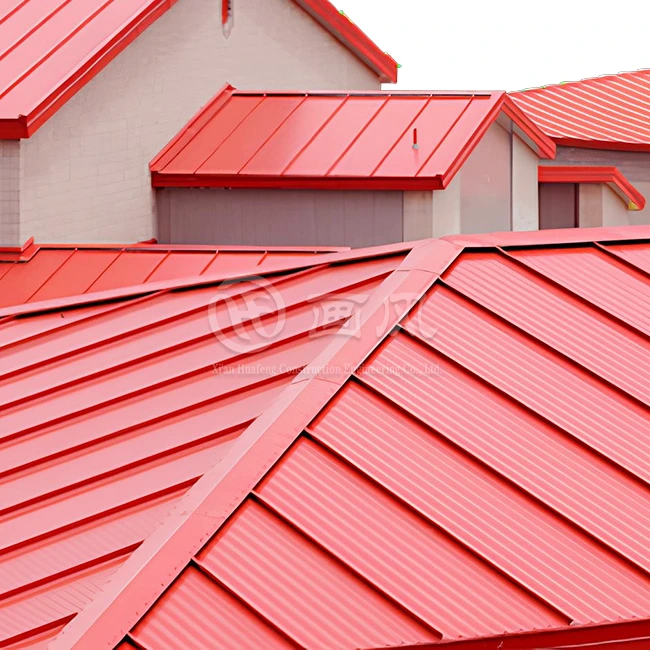
Ikkita qulfli metall tom yopish is a mechanical standing seam system where adjacent metal panels are joined by folding the seam twice, creating a 360-degree interlocked connection. This geometry produces a nail-free, watertight surface that performs reliably on roof pitches as low as 0.5:12. Architects specify it for airports, museums, and high-end commercial facades precisely because the folded seam resists wind uplift, thermal cycling, and water infiltration simultaneously. This guide walks procurement managers and facade subcontractors through every critical dimension of the system.

Ikkita qulfli metall tom yopish tizimini tushunish
How the Double-Fold Seam Works?
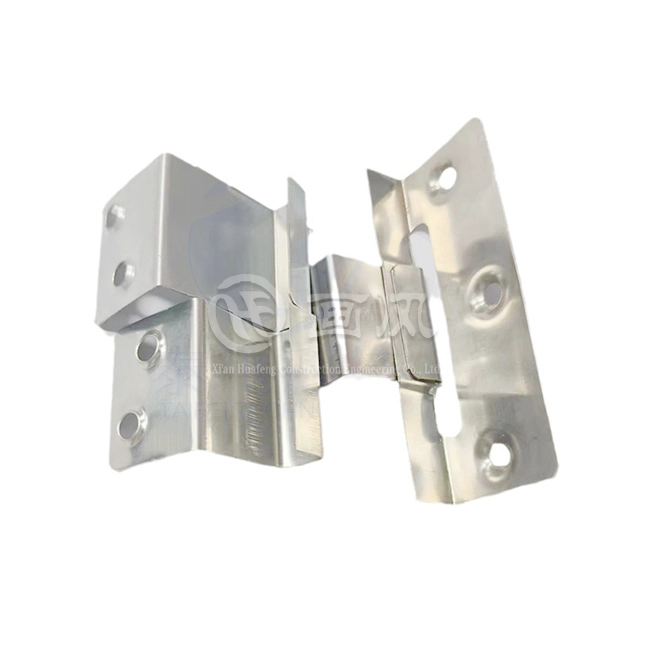
The seam itself is what makes it unique. On-site, a mechanical seaming machine rolls the male and female panel legs together, making a 180-degree fold that is then stretched out again. Depending on the shape chosen, the finished seam is about 25 to 65 mm high. Because the lock is structural and not adhesive, it doesn't need sealant to keep its shape when it's packed down.
Panel profillari va material variantlari
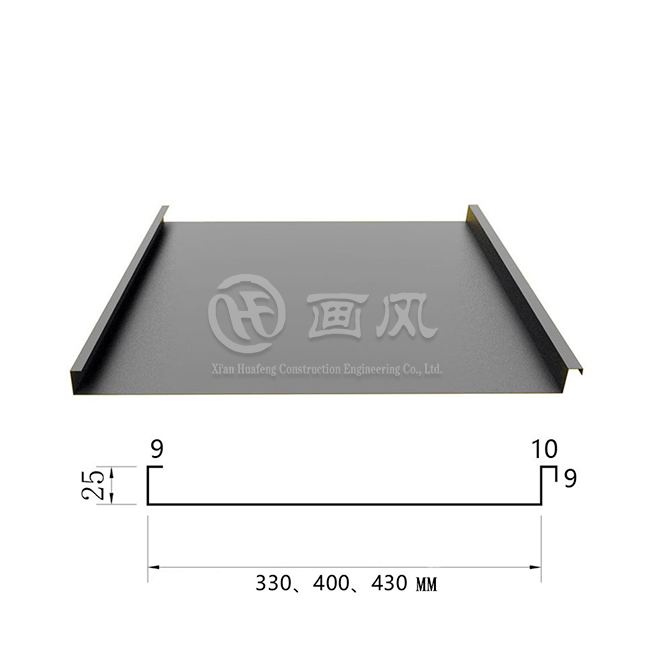
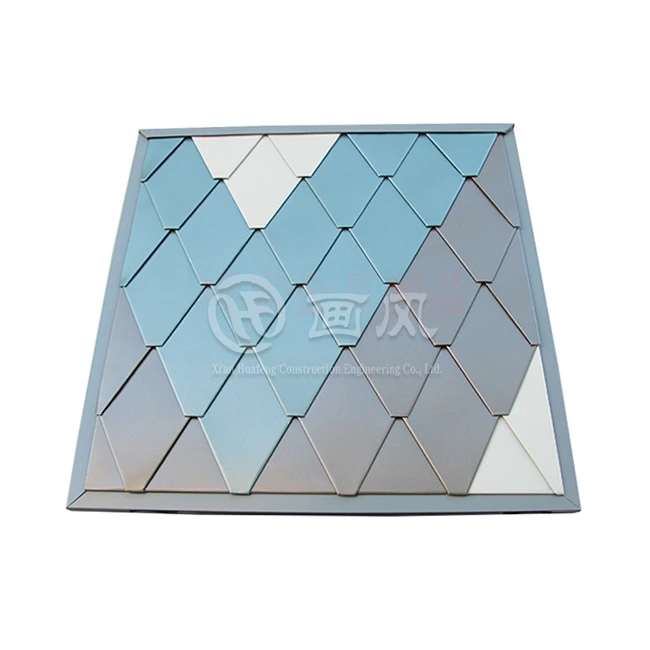
HF makes double lock panels in four shape groups: 25-330/400/430, 32-410, 45-400, and 65-400/430. This gives specifiers full control over the width and height of the seams. Aluminum alloy AA3003/AA3004 and galvanized steel AZ150 are two base materials. The panels are between 0.6 mm and 1.2 mm thick. You can get surface coatings in any RAL or Pantone color, made of either PVDF fluorocarbon or PE polyester. All 13 parts of AAMA 2605-22 were passed by the PVDF coating, and the color uniformity result was ΔE = 0.3.
Evolution from Traditional Roofing
From the 18th century on, er-xotin qulfli metall tom yopish has been used on public buildings in Europe. In the 20th century, when builders needed a seam that could stand up to hurricane-force uplift without any visible fasteners, the double-lock type became popular. The technology is now written down in ASTM, DIN, JIS, BS, and GB/T standards. This means that buying teams working on projects across borders can use a single technical report to make sure they are following the rules.
Key Benefits and Performance Dimensions
Ob-havoga chidamlilik va strukturaviy mustahkamlik
The double-fold seam usually goes above and beyond the UL 90 wind lifting rating. The roof skin stays together during dynamic load cycles because the hidden clips slide inside the seam bundle instead of being screwed through the panel face. A hot-melt sealant that was applied at the factory inside the female leg further stops capillary water entry. This means that the system can be used in nearly flat shapes where snap-lock panels would leak.
These are the main features of this system's performance that make it stand out on tough projects:
- Fire safety: The aluminum panels carry a Class A non-combustible rating. SGS combustion testing under AS/NZS 1530.3:1999 recorded an ignition index of 0, a flame spread index of 0, and a heat release index of 0 across all six test samples.
- Chemical compliance: EU RoHS testing on the 5052H26/0.72 mm specification confirmed that all ten restricted substances were either undetected or well below threshold, supporting specification on European public-sector projects.
- Lifespan: Corrosion resistance and UV stability give the system a documented service life of 30–50 years. HF offers a 30-year warranty against manufacturing defects.
When procurement managers show material submittals to architects or building control authorities, these written results give them the third-party proof they need.
Energiya samaradorligi va hayot aylanishi narxi
Because metal is naturally reflective, it keeps heat from entering. When paired with a ventilated space below the panels, the method can really cut down on the amount of cooling that business buildings need. Over a 30-year lifespan, less frequent maintenance and no re-roofing cycles make the total cost of ownership much lower than single-ply membrane or asphalt options.
Xizmatga qo'yiladigan talablar
uchun er-xotin qulfli metall tom yopish, the ridge cap and eave flashings only need to be checked once a year for most installs. There are no fastener pull-through points to watch because the panel face doesn't have any exposed fasteners. Damage that only affects a small area usually only affects one run of panels. This run can be replaced without affecting the seams around it.
O'rnatish va xarajatlarni hisobga olish
Bosqichma-bosqich o'rnatish ish jarayoni
When professionals fix something, they follow a set order. The steel substructure or wood deck needs to be level and have a slope of at least 3 degrees to help water drain away. After floating clips are attached to the base at the right distance, the first panel is put in place. Before the automatic seamer rolls the seam to full lock height, each panel fits into the one before it. There are expansion joints built into the clip spacing so that long runs of panels don't buckle when the temperature changes.
Procurement and Lead Time
HF has three factories in Anhui, Hangzhou, and Xi'an. These factories have more than 40 processing machines and seven color-coating production lines. The monthly delivery capacity is 1,000 tons. The smallest amount that can be ordered is 500 m², which is equal to 1 metric ton. The usual wait time from order confirmation is 15 to 20 days. With these numbers, project managers can match up when materials will be delivered with when they need to be installed without having to carry around a lot of extra supplies.
Budgeting Factors
The cost of material differs depending on the gauge, type of coating, and height of the profile. PVDF-coated metal between 0.7 and 0.9 mm is the best value for money when it comes to business facades. The cost of labor varies on the length and height of the seams. Seams that are higher need more passes, which takes more machine time. Value engineering surprises during tender can be avoided by getting a project-specific quote early in the design phase.
Comparative Analysis: Double Lock Metal Roofing vs Other Solutions
Double Lock vs. Snap-Lock Standing Seam
uchun er-xotin qulfli metall tom yopish, the trade-off is clear: because snap-lock panels don't need to be seamed together mechanically, the cost of installation labor is lower. Wind uplift performance is what you give up. Snap-lock seams can come apart in strong winds that last for a long time, but mechanically double-locked seams can't be taken apart without special tools.
Double Lock vs. Traditional Shingles and Tiles
The double-lock system is the right choice for projects in ASCE 7 exposure categories C or D. Compared with traditional shingles and roof tiles, double-lock metal roofing also provides a lighter roof assembly, fewer exposed joints, and a continuous interlocked seam that reduces the number of potential water-entry points. Metal panels can cover large roof areas without the individual replacement units required by tile systems, while the concealed fastening arrangement helps protect the roof surface from weather-related deterioration.
Material and installation costs can vary by gauge, coating, profile, substrate, and project complexity, so the initial cost should be evaluated alongside expected maintenance and replacement requirements. Shingles and tiles can require more frequent repair or replacement of individual units, whereas a properly installed double-lock system is designed for long service life with periodic inspection of seams, flashings, and coatings. Shingles may suit smaller residential projects where low initial material cost is the priority, while tiles can be appropriate where traditional appearance and architectural character are important. Double-lock metal roofing is generally better suited to large commercial, public, transportation, and high-end architectural projects where low weight, weather resistance, long service life, and clean visual lines are key requirements.
Double Lock vs. Corrugated Metal Sheets
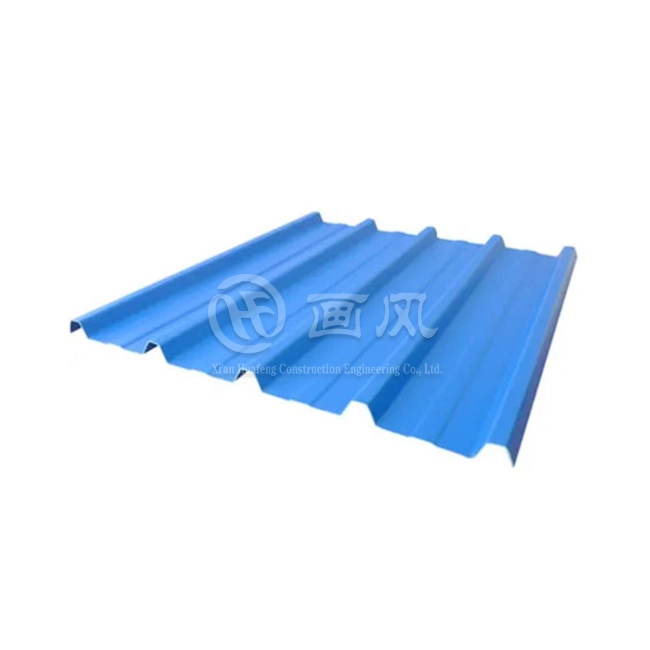
Corrugated profiles have exposed fasteners and overlapping laps that depend on the condition of the sealant to keep water out. They work well in industrial and agricultural buildings where precision in appearance is not as important. The double-lock system is the best choice for public buildings, transportation hubs, or BIPV-integrated roofs that need to have clear sight lines and good weather performance over time.
Loyihangiz uchun to'g'ri tanlov qilish
Matching System to Environmental Conditions
A seam height of 65 mm works well for large structures in places with a lot of wind or snow. The 25 mm profile works well on facades in sheltered cities where a clean look is important. In areas where hail is common, panels that are thicker than 0.9 mm are less likely to get dented. If you choose the right combination from the start, you won't have to make expensive changes while the building is being built.
Yetkazib beruvchining ishonchliligini tekshirish
If you are interested in buying a double-lock metal roof, ask the company for third-party test results that cover paint performance (AAMA 2605-22), fire behavior, and RoHS compliance. In North America, this is ASTM, in Germany it's DIN, and in the UK it's BS. Make sure that the production standards stick to the project's area code. HF has ISO 9001 and ISO 14001 certifications, as well as more than 20 registered roofing patents and test reports from SGS that cover all three of the above categories.
Kelajakdagi mulohazalar
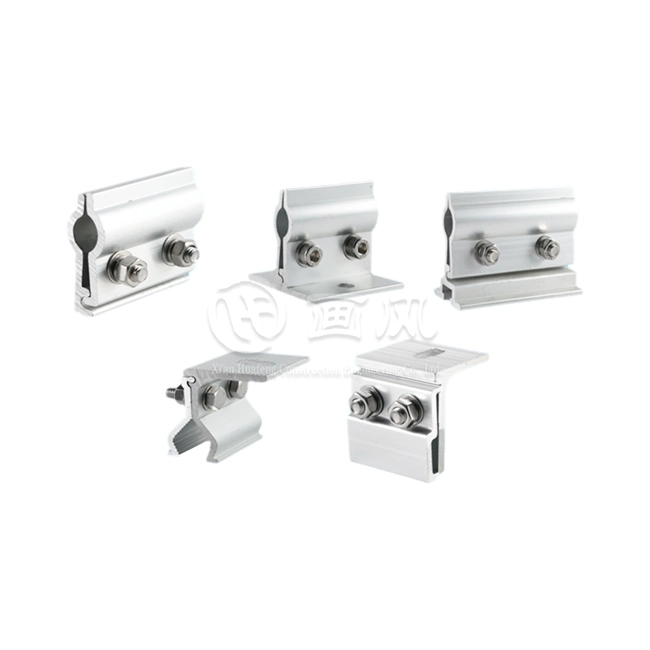
More and more green-certified projects require BIPV integration, which means mounting photovoltaic modules directly onto the standing seam using clamps that don't go through the material. The seam height of the 65-400/430 shape makes it a stable surface for most industrial PV rail systems. Aluminum with recycled material and low-carbon steel coil are also being required by public bids in North America and Europe.
Xulosa
Wind uplift protection, watertight seam geometry, long service life, and stylistic freedom are all delivered by er-xotin qulfli metall tom yopish. The system works well in airports, stadiums, office buildings, transit hubs, and high-end housing projects. As the seams can be 25 mm to 65 mm high, the panels can be 0.6 mm to 1.2 mm thick, and the product meets all ASTM, DIN, JIS, BS, and GB/T standards. It can also cover all RAL and Pantone colors. SGS certification from a third party on fire, environmental, and coating performance gives purchasing managers the proof they need to confidently close bids.
FAQ
1. What is the minimum roof slope for a double-lock system?
When factory sealer is in the seam, a manually seamed double-lock panel can be put up on slopes as low as 0.5:12, which is about 2 degrees. 3:12 is usually needed for standard standing seam.
2. Tizim uzoq panelli ishlarda issiqlik kengayishini qanday boshqaradi?
Floating clips lock into the seam bundle but slide along the substrate. This lets panels over 30 meters long move freely when the temperature changes without the fasteners buckling or pulling.
3. Can double-lock panels be installed over an existing roof?
Yes, as long as the substructure is checked to see how much weight it can hold and the surface is level. To make a clean bearing plane, a new purlin or hat-section framework is often put in place first.
4. Odatdagi xizmat muddati qanday?
It has been shown that PVDF coating and proper installation can last for 30 to 50 years. HF stands behind its products with a warranty that lasts for 30 years.
5. Minimal buyurtma miqdori qancha?
It takes 15–20 days to deliver, and the smallest order is 500 m², which is equal to 1 metric ton.
Get a Project Quote from HF — Double Lock Metal Roofing Manufacturer
From three factories that can make a total of 1,000 tons of metal roofing panels every month, HF (Xi'an Huafeng Construction Engineering Co., Ltd.) has provided er-xotin qulfli metall tom yopish panels to public and private projects in Europe and North America. Our team helps with reviewing drawings, making samples, NDAs, and EN/ASTM compliance paperwork. To get a model and project-level price, email huafeng@hfmetalroof.com loyihangiz tafsilotlari bilan.
Manbalar
1. Metall listlar va konditsioner pudratchilari milliy assotsiatsiyasi (SMACNA). Arxitektura metall listlari qo'llanmasi, 7-nashr. 2012-yil.
2. Amerika Arxitektura Ishlab Chiqaruvchilari Assotsiatsiyasi (AAMA). AAMA 2605-22: Alyuminiy Ekstruziyalari va Panellarida Yuqori Samarali Organik Qoplamalari uchun Ixtiyoriy Spetsifikatsiya, Ishlash Talablari va Sinov Jarayonlari. 2022.
3. ASTM International. ASTM E1592: Yagona statik havo bosimi farqi bo'yicha metall listli tom va yonbag'ir tizimlarining strukturaviy ishlashi uchun standart sinov usuli. 2020.
4. Metall konstruksiyalar assotsiatsiyasi (MCA). Metall tom yopish tizimlarini loyihalash bo'yicha qo'llanma. 2019.
5. Milliy tom yopish pudratchilari assotsiatsiyasi (NRCA). NRCA tom yopish qo'llanmasi: Metall panel va SPF tom tizimlari. 2022.
6. Amerika Qurilish Muhandislari Jamiyati (ASCE). ASCE 7-22: Binolar va boshqa inshootlar uchun minimal loyihalash yuklamalari va tegishli mezonlar. 2022.





Yoqishi mumkin