Avantages des panneaux de toiture à joints debout à verrouillage angulaire pour les régions enneigées
2026-11-23 18:02:35
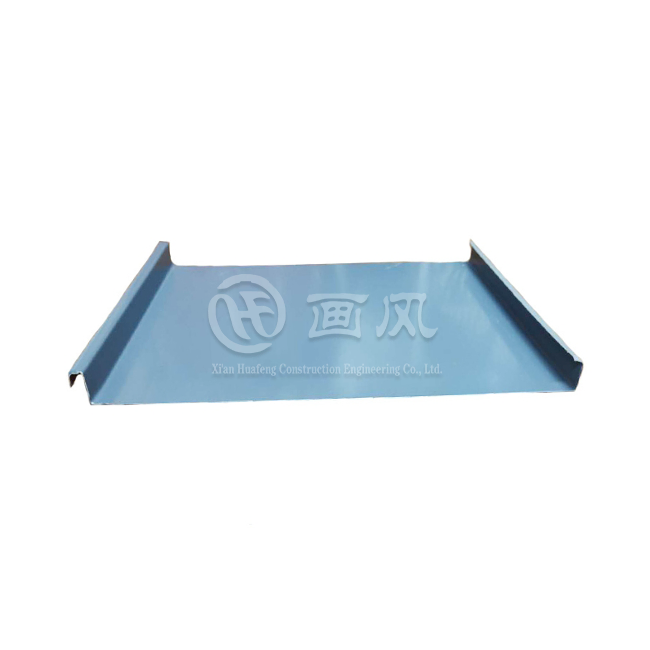
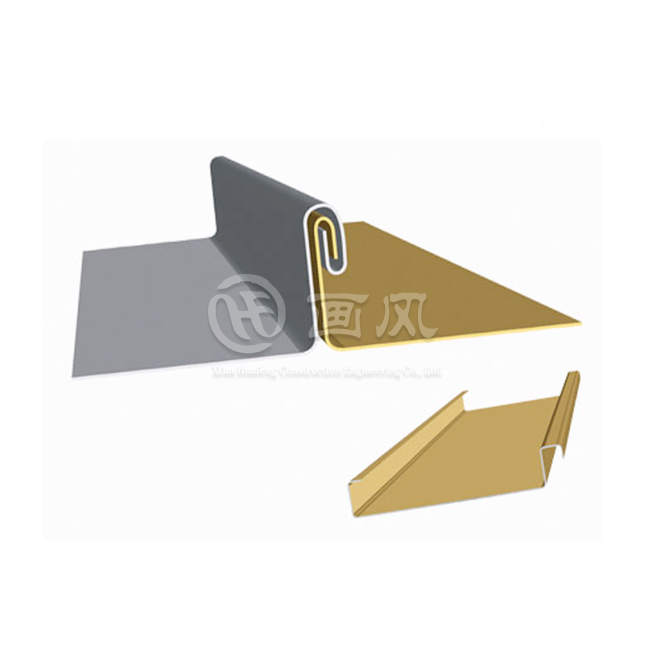
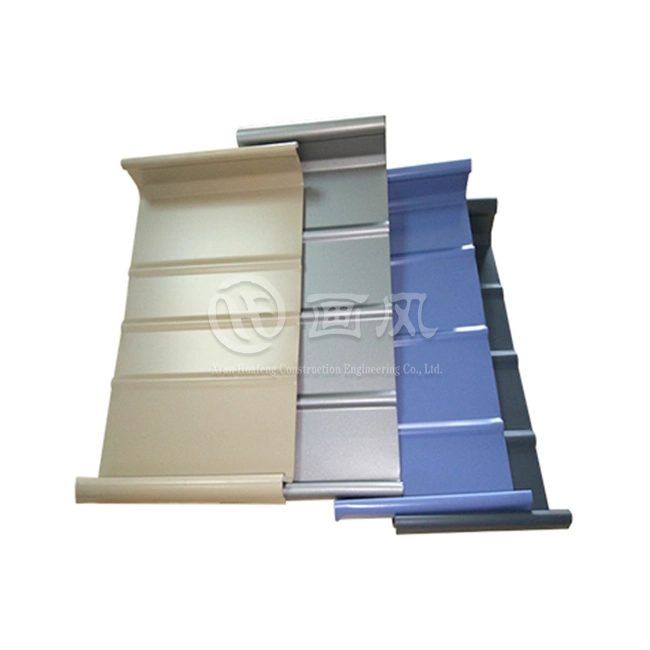
If you manage roofing projects in snow-heavy states like Colorado, Minnesota, or the Pacific Northwest, you already know how punishing winter weather can be on a roof. panneaux de toiture à joint debout à verrouillage angulaire are engineered specifically to handle those conditions. The angular fold mechanical seam—typically a 90-degree single lock or a 180-degree double lock—creates a tight, structural joint that resists snow load pressure, water infiltration, and the constant stress of freeze-thaw cycling. Unlike snap-lock systems that rely on friction alone, these panels use a mechanical seaming machine to engage each panel edge through concealed clips, making them a dependable solution for contractors who cannot afford callbacks in February.

Understanding Angle Lock Standing Seam Roof Panels in Snowy Climates
It's helpful to know what makes this type of metal panel different from others on the market before choosing one for a job in a cold area.
How the Angle Lock Mechanism Works
The angular seam fold presses each panel edge against a hidden clip that is attached to the substrate. This shape sends wind uplift and snow load forces straight into the structure deck, not through bolts that are visible. And now there is a joint that stays tight even when 40 inches of wet snow cover the roof.
Thermal Movement and Freeze-Thaw Resilience
Each panel can move up and down on its own thanks to floating clips. In places where the temperature changes every day from -10°F to 40°F, the ability to move around stops the fastener holes from getting longer, which is what causes leaks in through-fastened systems. HF panels come in a range of thicknesses, from 0.7 mm to 1.2 mm, so engineers can find the right gage for any load.
Corrosion-Resistant Coating Options
HF has coating systems for panneaux de toiture à joint debout à verrouillage angulaire in PE, HDP, and 70% PVDF. The PVDF choice has a color change of ΔE ≤ 0.3 after rapid weathering. It was tried under AAMA 2605-22 and all 13 performance items were passed. For builders in coastal or salty road areas, the AZ150 Galvalume alu-zinc steel base acts as an extra shield against rust below the topcoat.
Advantages of Angle Lock Standing Seam Panels for Snowy Regions
The panel design takes into account the three main reasons why cold-weather roofs fail: structural overload, water leakage, and faster material degrading.
Voici les principaux avantages en matière de performance dont les décisions d'approvisionnement doivent tenir compte :
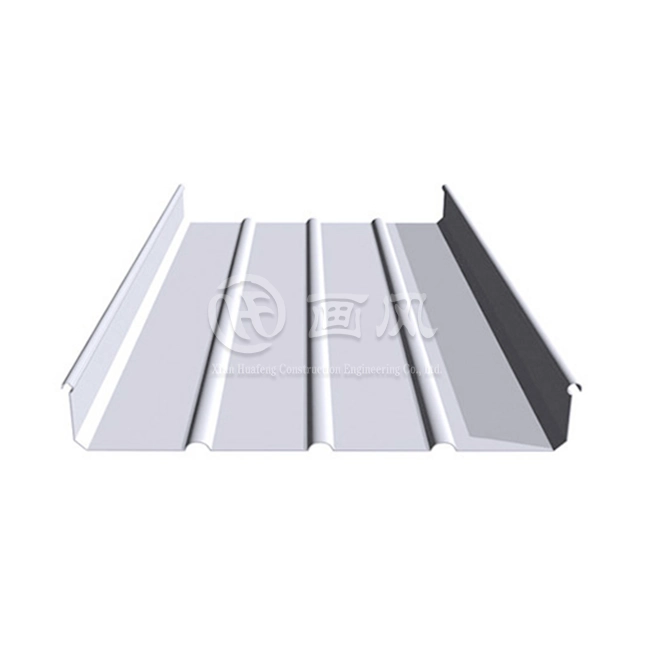
- Snow load capacity: The vertical rib height—ranging from 50 mm to 115 mm on HF panels—acts as a structural stiffener, distributing snow weight across a wider span. This allows wider purlin spacing and reduces secondary steel costs on large commercial roofs.
- Watertight seam geometry: When mechanically seamed with factory-applied hot-melt sealant inside the female leg, the joint meets ASTM E1646 water penetration and ASTM E2140 static water pressure requirements. This matters on low-slope roofs (down to 0.5:12 pitch) where meltwater pools before draining.
- Energy efficiency pairing: The raised seam cavity accommodates continuous rigid insulation below the panel, eliminating thermal bridging at every clip location. Combined with an air barrier, this assembly can reach R-30 or higher without adding structural depth.
- 30-year warranty coverage: HF backs its standing seam metal roofing with a 30-year warranty, covering both substrate integrity and coating performance. For a facility owner in a snowy climate, that warranty horizon compares favorably against a 15–20 year asphalt shingle replacement cycle.
Because of these structural and heating benefits, the building will cost less to run and get repairs done less often in the winter. These are two things that project owners and general contractors care about.
Installation Guide and Best Practices for Snowy Regions
It's not enough to just write down the speed specs correctly. Field execution checks to see if the roof works as planned.
Préparation du substrat
The layout of the deck or purlins must be level within ±1/8 inch of each panel run. The waviness you can see in metal panels called "oil canning" is not a structural flaw, but it is easier to see on low-slope roofs when the sun is shining brightly. This problem is mostly solved before the first panel is put up by using 22-gauge material instead of 24-gauge or requesting a striated pan.
Seaming and Clip Installation
Put in concealed clips at the distances recommended by the manufacturer for panneaux de toiture à joint debout à verrouillage angulaire, which is usually every 12 to 24 inches depending on the wind zone. If you stop the machine in the middle of a panel, the crimp might not be even after one pass through the mechanical seaming machine. Check the measurements on the seam tester against the technical data sheet. Under-crimping lowers the resistance to wind lifting.
Cold-Weather Maintenance Protocols
When it snows a lot, use a roof rake with a smooth edge to push snow back out of gutters and slopes. Don't use metal shovels right on the panel. Plan an eye review for every spring to check the state of the coating at the cut edges of the panels, the continuity of the sealant at the penetrations, and the clip movement slots.
Comparing Angle Lock Standing Seam Panels with Other Roofing Options
This is the question that roofing workers ask most often: "Is the upgrade worth the price difference?"
Versus Snap-Lock Standing Seam
It's faster to put up snap-lock panels because you don't need a seaming machine. However, the friction joint doesn't hold the structure together like a mechanical seam does. When there is a lot of snow or wind, snap-lock systems can come apart, which is a failure mode that a manually seamed panel can't physically copy. When it comes to roofs in ASCE 7 high-wind or heavy-snow zones, the mechanical seam is not a choice; it is a requirement.
Comparaison entre les bardeaux d'asphalte et les tuiles
Asphalt shingles usually last between 15 and 25 years, and in areas that freeze and thaw, the granules need to be replaced every so often. When ice loads hit clay tiles, they break easily and add a lot of weight to the structure. A mechanically seamed metal panel system, on the other hand, only weighs 1 to 3 tons per project shipment, which is a lot less per square foot than tile. It also lasts at least 50 years and meets Class A fire rating standards.
Procurement Cost Considerations
An MOQ for HF panels is 500 m², which is the right size for business projects with only one building. After an order is confirmed, the lead time is 15–20 days, and the supply capacity is up to 1,000 tons per month, which is enough to help regional distributors with multiple projects at the same time. Batch color differences that lead to extra work on multi-phase projects can be avoided with RAL and custom color matching.
Procurement Insights: Sourcing Angle Lock Standing Seam Roof Panels
Choisir le bon panneaux de toiture à joint debout à verrouillage angulaire supplier affects everything that comes after: the project plan, the acceptance of the review, and how well the crew works on the job site.
Certifications requises
Check with your provider to see proof of ISO 9001, ISO 14001, and SGS tests. All three are owned by HF. They also have an AAMA 2605-22 coating performance approval and an EU RoHS-compliant material report. If the adhesive of the PVDF coating is tested at 5B under ASTM D3359, it means that the finish will not micro-crack during the mechanical seaming process.
Flexibilité de personnalisation
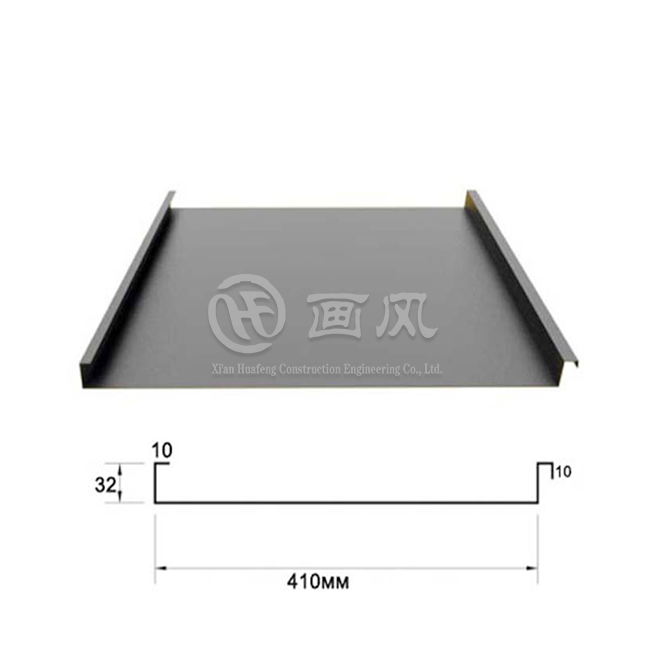
HF makes panels with widths between 300 mm and 600 mm and lengths of up to 13 meters. This means that most industrial roof runs don't need crosswise seams. You can choose a substrate made of 3004/5052 aluminum alloy, AZ150 alu-zinc steel, or stainless steel for coastal areas. Types of coatings like PVDF, HDP, and PE let buyers choose the finish that fits their project budget.
Évaluation de la réactivité des fournisseurs
Please send an example inquiry with the delivery address, panel width, thickness, coating type, and RAL color code. A good company that makes angle lock standing seam roof panels should send you a technical data sheet, a color chip reference, and a proof of the lead time within 48 hours. That reaction time shows how well the seller will do if you need to place an urgent order in the middle of a project.
Conclusion
Snow-country roofing jobs need materials that work under real load conditions, not just the specs listed in a catalog. The mechanical seam shape, floating clip design, and high-performance PVDF coating on HF panneaux de toiture à joint debout à verrouillage angulaire protect against all three main types of failure that happen in cold climates: too much stress on the structure, water getting in, and covering wearing away. With a 30-year guarantee and compliance with ISO 9001 and SGS standards, these panels give procurement managers a plan they can back up and give contractors a system they can install with confidence. The total cost of ownership of mechanically seamed metal roofing is always lower than that of standard options when you consider the longer service life and lower upkeep needs.
QFP
1. What panel thickness is best for heavy snow load regions?
ASCE 7 maps show that a panel thickness of 0.9 mm to 1.2 mm in alu-zinc steel or 3004 aluminum is normal in places where ground snow loads are above 40 psf. These maps cover a lot of the northern U.S. and Canada. HF has this range with rib heights that go up to 115 mm to give the structure more depth.
2. How does installation time compare to snap-lock systems?
Mechanical seaming takes about 10–15% more work per square than snap-lock, but it doesn't cause callbacks because the joints don't come apart when snow loads them. For many workers, that trade-off is just simple math.
3. What is the minimum slope for a mechanically seamed system?
A double-locked mechanical seam can work down to 0.5:12 pitch if there is continuous sealing in the female leg. For 90-degree single-lock designs that don't need an additional sealant, a pitch of at least 3:12 is suggested.
4. How do I prevent batch color variance across multiple shipments?
On your purchase order, ask for the same RAL code and production batch number. The AAMA 2605-22 certification for HF confirms a color delta of E ≤ 0.3, which means that the visual consistency is within acceptable limits even when deliveries happen in stages.
5. Can snow retention systems be attached without penetrating the panel?
Yes. Clamp-style snow guards that don't go through the roof's surface are attached directly to the standing seam with set screws, which protects the protection and the manufacturer's guarantee.
Request a Quote from HF — Your Angle Lock Standing Seam Roof Panels Supplier
HF (Xi'an Huafeng Construction Engineering Co., Ltd.) ships 1,000 tons of panneaux de toiture à joint debout à verrouillage angulaire every month. The lead time is 15–20 days, and the minimum order quantity is only 500 m². Our expert team gets back to you within 48 hours whether you need PVDF-coated panels in a unique RAL color or AZ150 Galvalume substrate for a business project that will be subject to a lot of snow.
Vous pouvez nous envoyer un e-mail à huafeng@hfmetalroof.com to get panel examples, look at our list of certifications, and get bulk prices.
Références
1. Metal Construction Association (MCA). Technical Guide for Cold-Climate Metal Roofing Systems. 2022.
2. Association nationale des entrepreneurs en toiture (NRCA). Manuel de toiture de la NRCA : Systèmes de toiture en panneaux métalliques et en mousse de polyuréthane projetée. 2021.
3. American Iron and Steel Institute (AISI). Manuel de conception des aciers formés à froid. 2020.
4. ASTM International. ASTM E1592 : Méthode d’essai normalisée pour la performance structurelle des systèmes de toiture et de bardage en tôle par différence de pression d’air statique uniforme. 2022.
5. American Architectural Manufacturers Association (AAMA). AAMA 2605 : Spécifications volontaires, exigences de performance et procédures d’essai pour les revêtements organiques de haute performance sur les profilés et panneaux en aluminium. 2022.
6. Sherwin-Williams. PVDF Coatings for Metal Roofing: Performance Data and Field Results in Cold Climates. Architectural Products Report, 2021.





TU PEUX AIMER